






The Convergence of Professional Sports and Interactive Entertainment
The boundaries between professional sports leagues and the digital gaming industry are increasingly blurring, as evidenced by a recent strategic collaboration between the Miami Heat and Rockstar Games. To celebrate the upcoming release of Grand Theft Auto VI, the NBA franchise is orchestrating a thematic transformation for their November 18 game against the Milwaukee Bucks. This event, officially titled “A Night in Vice City,” serves as a high-profile demonstration of how interactive media brands are utilizing large-scale live events to bridge the gap between virtual simulation and physical competition.
Rockstar Games has historically maintained a meticulous approach to its product rollouts, and the promotion of the latest installment in the Grand Theft Auto series reflects this scale. By partnering with a major professional athletic organization, the developers are leveraging the existing cultural footprint of Miami—the real-world inspiration for the fictional Vice City—to build anticipation. This strategy moves beyond traditional advertising, embedding the identity of the game directly into the venue, equipment, and apparel of a professional sports setting.
Technological Integration and Visual Presentation
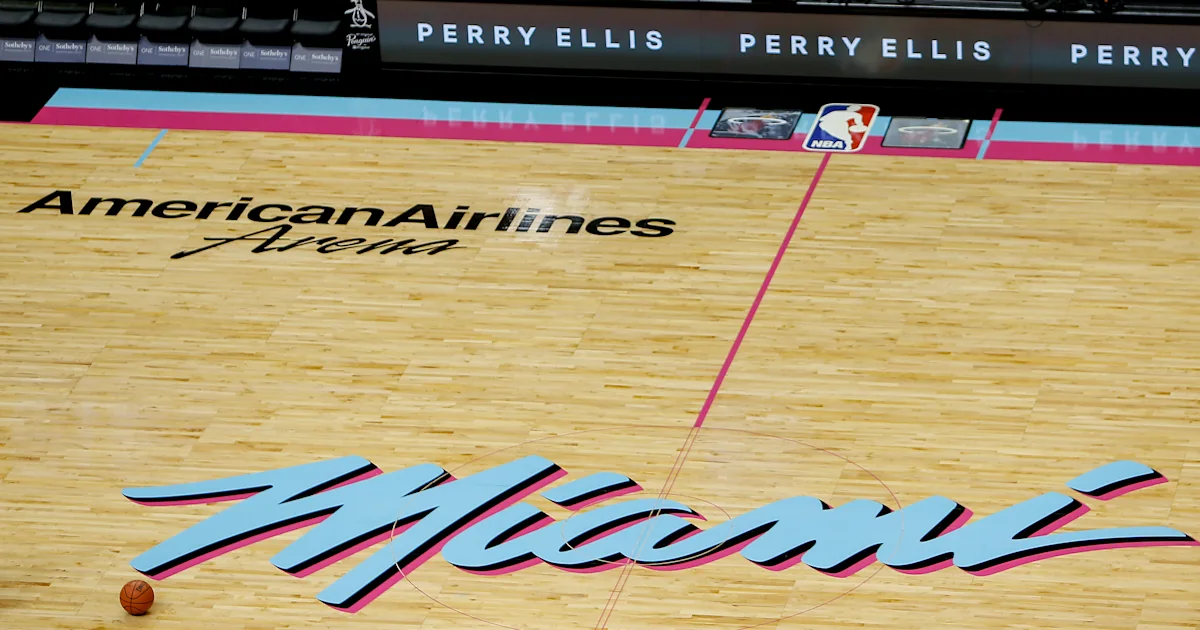
The “A Night in Vice City” event involves a significant visual overhaul of the Miami Heat’s home court. This is not merely a cosmetic adjustment; it requires precise technical planning to ensure the floor reflects the neon-soaked, retro-futuristic aesthetic of the game. For spectators, this represents an immersive experience where the physical basketball court acts as an extension of the digital environment.
This transformation is supported by a bespoke collection of merchandise. The franchise has introduced a limited-edition uniform line that adopts the specific design language associated with the game’s branding. Such efforts rely on high-fidelity graphic design and precise color science to match the specific color palettes that define the Vice City motif. The technical execution of these assets ensures consistency across digital trailers, in-game assets, and physical, high-performance sportswear, reinforcing the connection between the virtual city and the real-world location.
Scale and Impact of Modern Media Launches
To understand the magnitude of this promotion, one must consider the reach of the Grand Theft Auto franchise. Its predecessor, Grand Theft Auto V, remains the highest-grossing media title in history, underscoring the massive global audience for interactive entertainment. The promotional video for the upcoming sequel has already achieved over 296 million views, a figure that dwarfs many traditional theatrical movie trailers.
By integrating this release into an NBA broadcast, Rockstar Games and the Miami Heat are effectively targeting a demographic that heavily overlaps between sports fans and digital gamers. This partnership serves as a case study for modern marketing, where the focus is on creating a holistic environment rather than static advertisements. By hosting this event on November 18—the day immediately preceding the game’s global launch on PlayStation 5 and Xbox Series X/S—the parties involved have successfully synchronized the climax of their promotional cycle with the availability of the hardware-intensive software.
Synergy Between Real-World Geography and Virtual Worlds
The Miami Heat have long capitalized on their city’s identity, most notably through their “Miami Vice” jersey collections. These previous iterations, known for their distinct neon pink and cyan color schemes, laid the aesthetic foundation for this current collaboration. The integration with Grand Theft Auto VI is an evolutionary step, shifting from a generic retro-inspired look to a specific, licensed partnership that reflects the game’s unique digital landscape.
From a development perspective, the attention to detail in mapping the real Miami to the virtual Vice City is a technical triumph. By showcasing this during a high-stakes NBA game—particularly one marking a significant roster change involving prominent athletes like Giannis Antetokounmpo—the Heat ensure that the event captures the attention of millions of viewers. This provides an additional layer of relevance for the game, grounding the fictionalized, high-speed chaos of the series in the reality of professional basketball.
Economic and Cultural Implications
The economic scale of such a collaboration highlights the shifting power dynamics in the entertainment sector. As software titles grow to rival the budgets and promotional reach of global film franchises, the demand for multifaceted marketing increases. The “A Night in Vice City” project illustrates that companies are no longer satisfied with banner ads or television commercials; they are pursuing deep integration within high-visibility cultural hubs.
For the NBA, this provides a pathway to engage younger, tech-savvy audiences who might prioritize digital gaming experiences over traditional television broadcasts. For Rockstar Games, the partnership acts as a form of social proof, cementing their upcoming release as a critical cultural milestone. As we look toward the future of game launches, the success of this integration will likely serve as a blueprint for other developers and sports franchises looking to maximize the intersection of high-performance gaming and live, real-world events. Through this meticulous coordination of product release, visual branding, and professional athletics, the industry is setting a new standard for how media products are introduced to a global audience.
Disclaimer: This content is auto-generated for informational purposes only.
Source: Read Original News