







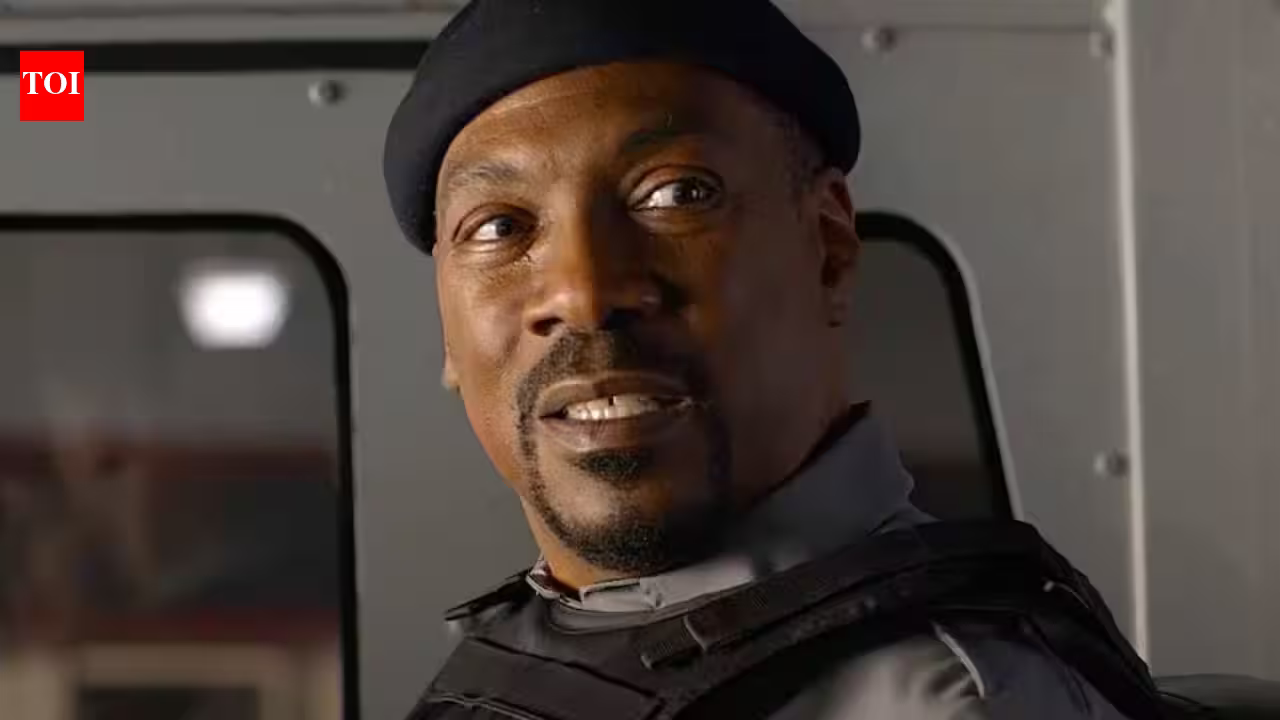
In the high-stakes, hyper-critical ecosystem of Hollywood, where a star’s relevance is often measured by their last opening weekend box office numbers, longevity is the ultimate currency. Few individuals have managed to navigate the turbulent, often unforgiving currents of fame as deftly as Eddie Murphy. From the electric, foul-mouthed wunderkind of Saturday Night Live to the seasoned, introspective legend preparing for his latest role in The Pickup, Murphy has seen it all. Yet, when asked how he maintains his composure and drive after forty years under the microscope, he offers a philosophy that feels less like Hollywood advice and more like a survival manual for anyone dealing with the sting of rejection: “I’ve mastered the art of walking away from the crashed plane.”
The Philosophy of the “Crashed Plane”
When Murphy shared this sentiment during his candid interview with Jane Pauley for CBS Sunday Morning, it wasn’t just a soundbite; it was a distillation of a hard-won mindset. We live in a culture that encourages—or perhaps mandates—that we dwell on our failures. We perform forensic autopsies on our mistakes, analyzing every bad decision and every project that missed the mark until the memory becomes an anchor.
Murphy’s metaphor of the “crashed plane” is visceral. A plane crash is catastrophic; it is public, it is loud, and it is messy. But the comedian’s point is that the wreckage is not a monument to be visited, nor is it a home to be inhabited. Once the smoke clears and the dust settles, the most dangerous thing you can do is stand in the middle of the debris, weeping over what once soared. By mastering the art of walking away, Murphy isn’t suggesting that he ignores his failures. He is acknowledging that the act of “looking back at the wreckage” is a form of paralysis that prevents the next flight from ever taking off.
Failure as a Transit Point, Not a Destination
For many of us, a failure at work or a personal setback feels like a defining narrative. We turn a single “no” into a story about our lack of capability. We turn one project that failed to connect with the audience into a story about our lack of talent. Eddie Murphy’s career trajectory serves as the perfect counterpoint to that internal monologue.
If anyone has earned the right to be precious about their track record, it’s the man who brought us Beverly Hills Cop and Coming to America. But Murphy has also endured the industry’s fickle nature, weathering critical drubbings and projects that simply didn’t land. The brilliance of his approach lies in the separation of the event from the individual. A movie failing is just a business transaction that didn’t yield the intended return; it does not mean that the person who made it has lost their capacity for greatness. By refusing to let the crash become his identity, Murphy keeps his creative engine running. He treats failure as a diagnostic tool rather than a verdict.
The Long Road from Brooklyn to the Big Screen
To understand why Murphy holds this perspective, you have to look at the sheer distance he has traveled. Born in 1961 in Brooklyn, a young Eddie Murphy wasn’t handed a franchise on a silver platter. He was a kid in Roosevelt, Long Island, grinding out observational humor in small clubs, fine-tuning his timing until he could hold an audience in the palm of his hand.
By the time he landed on Saturday Night Live at the age of 19, he was already battle-tested. He wasn’t just another cast member; he was the lightning rod that saved a struggling show. That early exposure to the volatile nature of show business—where a sketch could be comedy gold one week and a disaster the next—was his real training ground. It taught him that the audience’s fickle approval is not something you can control. You can only control your output, your work ethic, and your ability to stand back up when the curtain falls on a bad performance.
Resilience in an Era of Instant Accountability
In today’s digital age, the “crashed plane” is harder to walk away from than ever. Social media ensures that every failure is documented, shared, and mocked in real-time. The pressure to be perfect, or at least to be consistently successful, is amplified by the constant feedback loop of Twitter, TikTok, and review aggregators.
However, Murphy’s advice remains strikingly relevant precisely because of this digital noise. In a world where everyone wants to tell you exactly how you failed, the ability to turn your back on the chatter and move on is a radical act of self-preservation. Whether you’re an entrepreneur whose startup folded, a student who failed an exam, or a creative whose vision didn’t resonate, the “wreckage” is only as big as you allow it to be.
Moving Forward: The Lesson Behind the Metaphor
Ultimately, Eddie Murphy’s wisdom is an invitation to reclaim your focus. If you spend your energy staring at the wreckage of the past, you are inevitably going to trip over the obstacles in your present. The lesson isn’t to be careless or to lack self-reflection—after all, you still need to know why the plane went down so you don’t repeat the same pilot error.
But once you’ve taken the lesson? It’s time to move on. There are other flights to catch. There are other stories to tell. As Murphy prepares for his next chapter, he stands as a living example that your history—even the messy, burnt-up parts of it—doesn’t have to dictate your future. You survive the crash, you walk away, and you refuse to look back. After all, the only thing you’ll find in the wreckage is more smoke; the view is always better from the cockpit of a new plane.
Disclaimer: This content is auto-generated for informational purposes only.
Source: Read Original News