

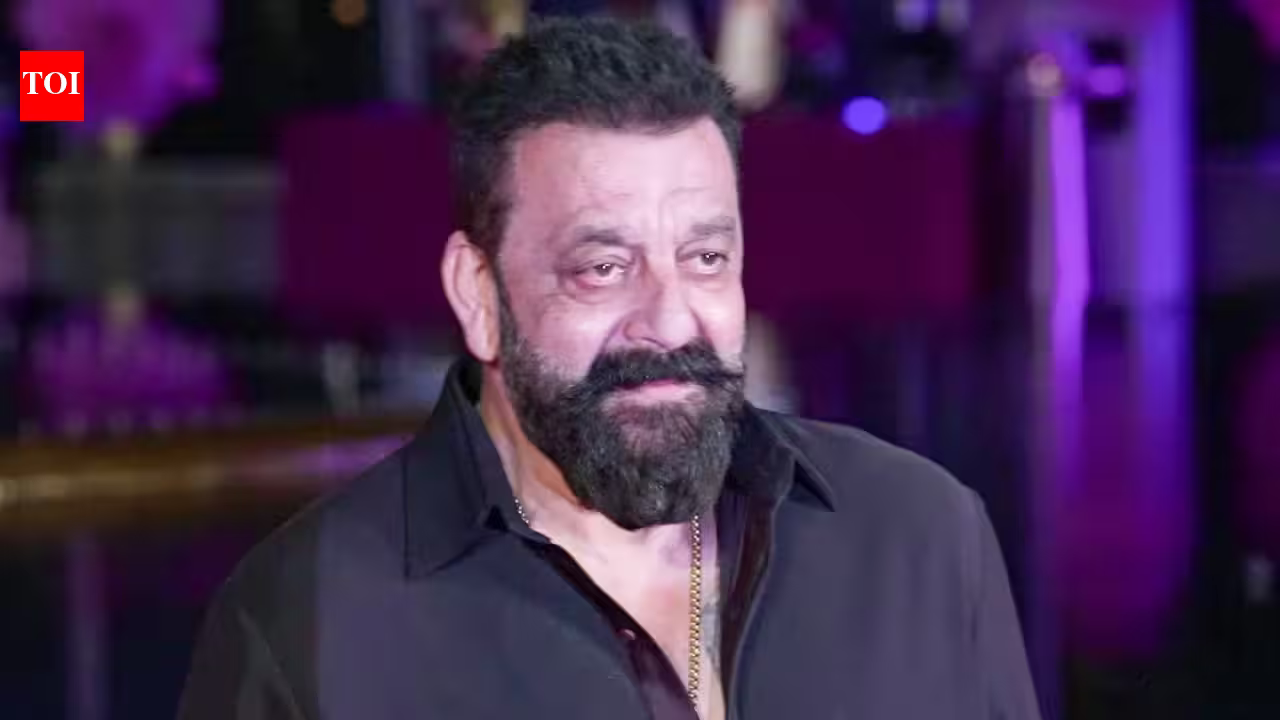
Munna Bhai for PM: Sanjay Dutt’s Satirical Take on India, Gandhi, and the Global Stage
In a landscape where celebrity endorsements and political commentary are often meticulously sanitized, Sanjay Dutt recently decided to throw caution to the wind—and in true Munna Bhai fashion, he did it with a blend of “Gandhigiri,” street-smart wisdom, and a razor-sharp wit.
Appearing on Shekhar Suman’s talk show, Shekhar Tonite, the Bollywood icon didn’t just sit for a conventional interview. He stepped into the shoes of the character that defined his mid-career renaissance, offering a satirical, five-minute monologue that blurred the lines between reel life and real-world frustrations. The result was a viral segment that managed to be both a heartfelt plea for national harmony and a biting critique of modern political theater.
A Lingering Quest for Peace
Before donning the iconic white kurta and invisible stethoscope of the bhai-turned-doctor character, Dutt struck a more somber chord. In a rare, vulnerable moment of candid reflection, he admitted to feeling a sense of unease regarding the current state of India.
“The people of this country are so lovely,” Dutt remarked. “There should be peace here. I can’t feel that peace in our country anymore.” For a man who has lived a life under the intense scrutiny of the public eye—having navigated personal tragedies, legal battles, and a complex family legacy—Dutt’s words carried the weight of someone who has seen the country evolve from the inside out. He urged a return to India’s core values: large-heartedness and hospitality. His call for a return to simpler, more peaceful times struck a chord with an audience currently feeling the heat of polarization and social fatigue.
Enter the ‘Prime Minister’ Munna
The atmosphere shifted instantly when Suman invited Dutt to imagine he had five minutes as the Prime Minister of India. The transformation was instantaneous. With a slight hunch of the shoulders and that signature, charismatic tapori lilt, Dutt became the PM that no political party would ever nominate, yet everyone secretly craves: a leader who prioritizes the street over the senate.
“Mere pyaare deshwasiyo,” he began, his voice echoing the warmth of his beloved onscreen persona. His mock-address to the nation wasn’t about policies or GDP percentages. Instead, it was a critique of optics. He promised to buck the trend of frequent international travel, choosing instead to stay on the ground. It was an unmistakable, albeit lighthearted, jab at current political leaders whose foreign itineraries often eclipse their local presence. “Apun idharich rahega,” he quipped. “Nahi to PM aur janta mein connection kaise banega?”
The Fourth Monkey of Gandhigiri
Perhaps the most poignant moment of the segment occurred when Dutt reimagined the philosophy of Mahatma Gandhi. While Munna Bhai M.B.B.S. popularized the concept of “Gandhigiri”—a gentle, non-violent form of protest—Dutt took it a step further.
He challenged the traditional interpretation of Gandhi’s three monkeys (see no evil, hear no evil, speak no evil). “Today, we need a fourth monkey,” he argued. “If all three sit with their eyes, ears, and mouths shut, how will the country function?”
It was a sharp, biting critique of passive observation in a time of social crisis. Dutt’s fictional PM was essentially calling for active citizenry. He wasn’t suggesting anger or chaos; he was demanding awareness. In a world where silence is often mistaken for cooperation, Munna Bhai’s “fourth monkey” serves as a necessary disruptor.
Taking on the ‘Wall of Photos’
Dutt didn’t shy away from the controversial practice of political iconography either. With a wink to the audience, he suggested that if he were to take the reins of the nation, he would clear the walls of excessive leader-centric photographs.
“Jahaan jahaan uska photo laga hai na, apun usko ekdum kam kar dega,” he declared. His logic was characteristically simple yet profound: the country should be the focus of the imagery, not the face of the politician. He argued that Mahatma Gandhi’s teachings should occupy the space typically reserved for personal ego. It was a refreshing, humorous take on the cult of personality that currently dominates Indian public life—a reminder that in a democracy, the nation belongs to the people, not the man holding the seat.
A Message for ‘Trump Mamu’
No satirical speech would be complete without addressing the geopolitical elephant in the room. Pivoting to international affairs, Dutt turned his attention to the incoming US President, Donald Trump. Labeling him “Trump Mamu,” Dutt offered some unsolicited—but arguably sage—advice on statecraft.
“Dekho Trump mamu, zyada tante nahi paalne ka,” he advised, cautioning against the obsession with missiles and conflict. His solution? Diplomacy, or what he calls “exporting love.” He suggested that instead of threats, world leaders should invite each other for tea to resolve disputes. It’s a simplistic, utopian view of global politics that sounds ridiculous on paper, yet within the context of the Munna Bhai universe, it represents the kind of emotional intelligence often missing from high-stakes international summits. He closed his address by promising a “jaadu ki jhappi” (a magical hug) for America—a characteristically Munna Bhai sign-off that managed to bridge the gap between hard-nosed politics and human empathy.
The Legacy of the Bhai
By the time the segment ended, it was clear that Sanjay Dutt had achieved something difficult: he had utilized a caricature to convey a very real, very human anxiety about the current world.
Whether this was just a promotional appearance or a genuine expression of his personal philosophy, the segment served as a reminder of why the character of Munna Bhai remains one of the most enduring symbols in Indian pop culture. In a time where politicians are often accused of losing touch with the “aam aadmi,” Dutt’s five-minute turn as PM suggests that sometimes, you need a fictional, lovable rogue to remind us that leadership, at its heart, should be about kindness, accountability, and the courage to stop “seeing no evil” and start fixing it.
Dutt may not be running for office anytime soon, but for five minutes, he provided a masterclass in how to address the nation—one jaadu ki jhappi at a time.
Disclaimer: This content is auto-generated for informational purposes only.
Source: Read Original News