







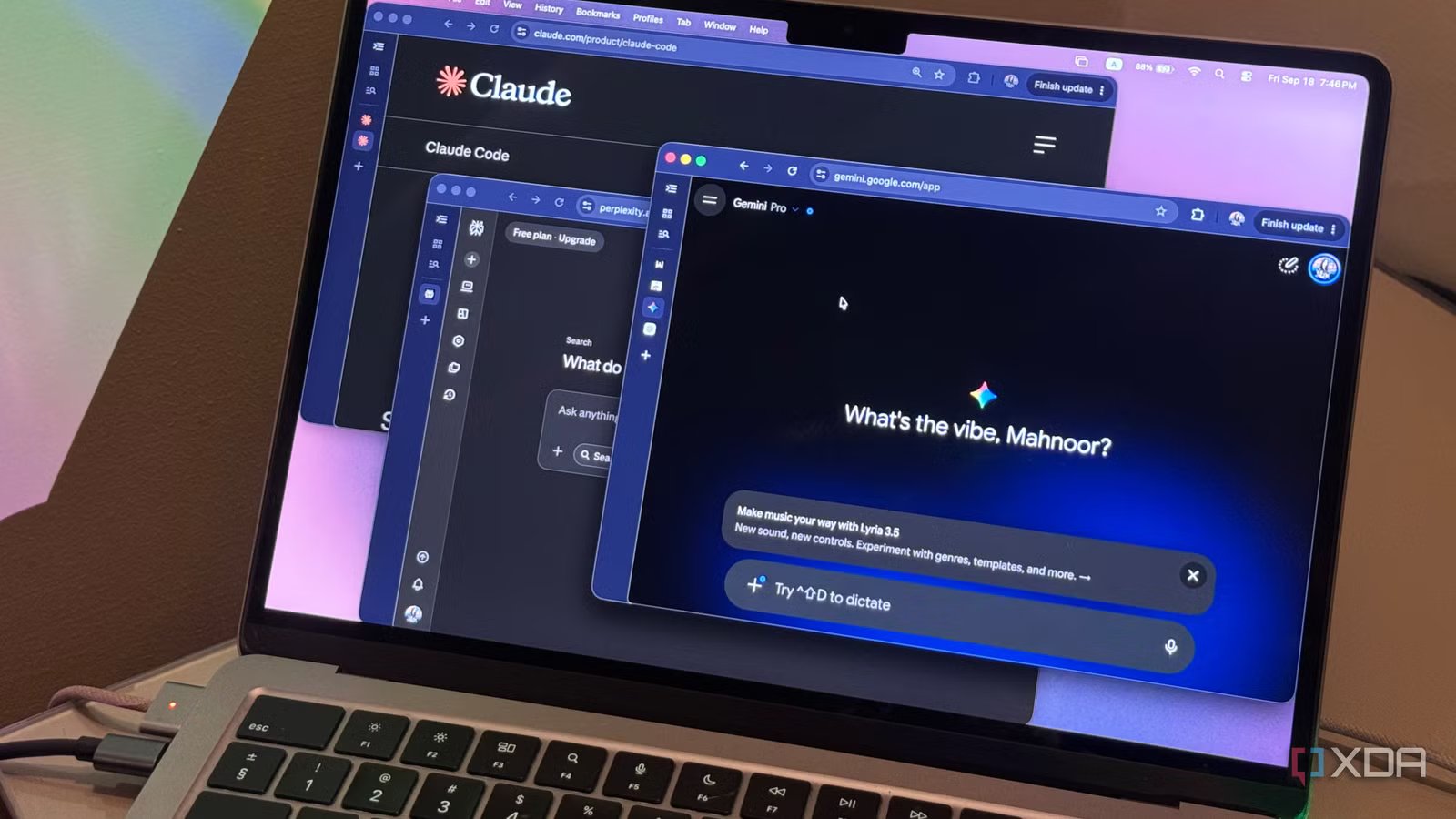
Restructuring the Google AI Subscription Landscape
Google has announced a significant shift in its artificial intelligence subscription tiers, effectively recalibrating the feature sets available to users. Starting in October, the company will implement a tiered model access update that impacts both free users and those subscribed to the AI Plus service. This move marks a departure from previous service levels, placing a clearer distinction between the entry-level, mid-tier, and premium AI offerings provided by Google.
For users who rely on Gemini for high-level reasoning, coding assistance, or complex document analysis, the removal of specific model access from the mid-tier subscription is a notable change. Google has framed these adjustments as a refinement of its model deployment strategy, ensuring that its most capable assets are siloed within the higher-cost subscription plans.
The Impending Changes for Free and Plus Users
The transition begins on October 9th, when free users of the Gemini platform will face a reduction in capability. These users will lose access to the Gemini Flash model, leaving them with Flash-Lite as their primary interface. This restriction suggests a move to reserve the more computationally expensive Flash model for paying customers, while maintaining Flash-Lite as the baseline for non-paying users.
The AI Plus tier, which has historically served as a middle ground for power users, is also undergoing a major reduction in value. While Plus subscribers will retain their increased storage benefits and continued access to both the Flash and Flash-Lite models, they are being stripped of access to the Gemini Pro model. Google plans to roll out this change throughout the month, with affected subscribers receiving specific emails informing them of the exact date their Pro access will terminate.
The New Model Access Hierarchy
To clarify the new distribution of its AI models, Google has established a distinct hierarchy across its four primary tiers:
– Without a plan: Access is restricted solely to the Flash-Lite model.
– AI Plus: Provides access to Flash-Lite and Flash models, but excludes Pro.
– AI Pro: Maintains full access, including Flash-Lite, Flash, and Pro models.
– AI Ultra: Retains full access, including Flash-Lite, Flash, and Pro models.
This table effectively communicates that the “Pro” designation is now officially elevated to a premium-only feature. Users who previously relied on the Plus tier to tap into the analytical power of the Pro model will now have to decide if the remaining features—primarily storage and the standard Flash model—justify the ongoing monthly cost.
Implications for Power Users and Developers
The decision to limit the Pro model to the top-tier plans has immediate implications for those who utilize Gemini for professional or technical tasks. Gemini Pro has been widely recognized for its balanced performance in logic, reasoning, and context retention, making it a staple for many who need more than what lighter, faster models like Flash can offer.
By pushing these users toward the AI Pro and AI Ultra plans, Google is essentially increasing the price floor for accessing their advanced reasoning capabilities. For individuals who primarily use these tools for programming, data synthesis, or advanced writing, the loss of Pro access in the Plus tier may result in diminished productivity or, at the very least, an forced upgrade to a more expensive service level.
Evaluating the Competitive Landscape
The limitation of features within the Google ecosystem is driving many users to re-evaluate their loyalty to the platform. With the AI landscape becoming increasingly crowded, alternatives such as Claude, ChatGPT, and Perplexity are gaining traction. When a core feature—in this case, the Pro model—is removed from a mid-range subscription, the value proposition shifts, often leading consumers to investigate whether competitors offer similar capabilities at a more sustainable price point.
The impact of this update is twofold: it simplifies the model lineup for Google’s internal resource management, but it also creates friction for established users. As Google continues to integrate its AI tools more deeply into its workspace and cloud infrastructure, the cost of entry for advanced capabilities will likely remain a central point of debate. Subscribers now find themselves at a crossroads: remain within the Google ecosystem and pay for higher-tier access, or migrate to platforms that may provide more consistent model availability for their current financial commitment.
The Path Forward for AI Subscriptions
These updates indicate that Google is currently in a phase of experimentation regarding how it monetizes its large language models. The rapid evolution of AI technology means that “premium” features today may be standard tomorrow, yet the immediate reality is a tightening of access. For the average user, these changes require a careful review of how much their specific workflows rely on the performance differences between the Flash and Pro models.
As the October deadline approaches, Google’s communication will be critical in managing subscriber dissatisfaction. While the company aims to optimize its model usage, the loss of a primary tool for mid-tier subscribers suggests that the battle for the most “valuable” AI subscription is only intensifying. Users should prepare to assess their requirements and decide if the current subscription structure aligns with their evolving needs.
Disclaimer: This content is auto-generated for informational purposes only.
Source: Read Original News