









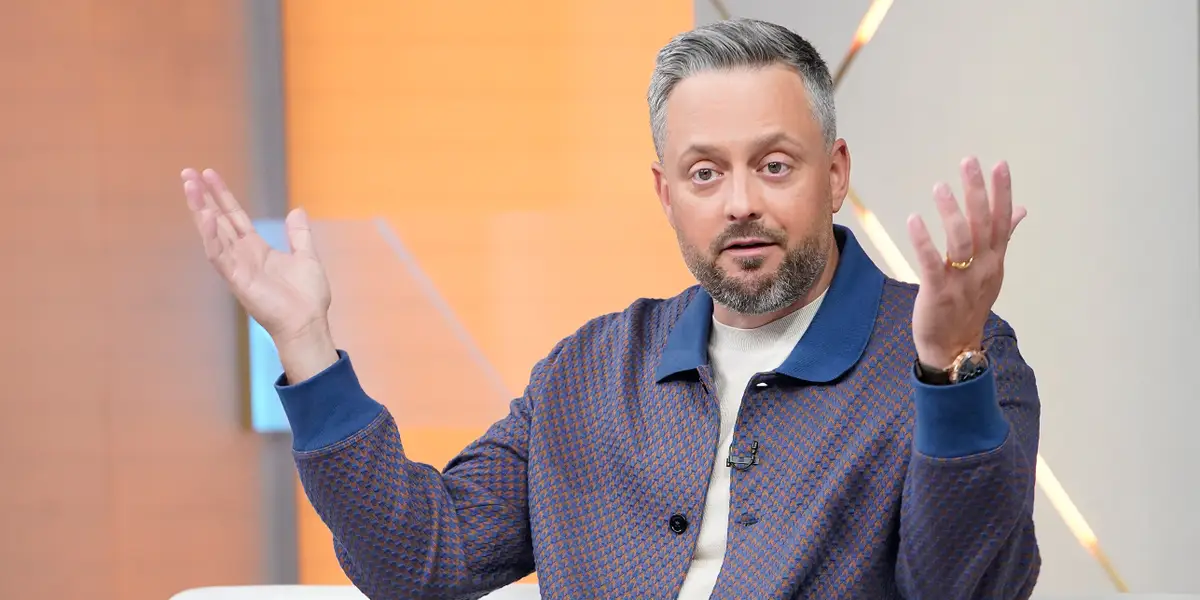
For comedian Nate Bargatze, the climb to comedy stardom wasn’t paved with red carpets or high-profile talent agents. Long before he was selling out arenas, hosting Saturday Night Live, or starring in major commercial campaigns for Ford, his resume looked like a catalog of classic American labor: pizza delivery, valet parking, and moving furniture.
“The job titles were always exactly what the job was,” Bargatze remarked during Ford’s recent “Accelerate” conference in Detroit. While he now navigates a career built on global platforms and digital media, he insists that his trajectory wasn’t the result of a master plan, but rather an accumulation of grit and a willingness to show up for work, no matter how unglamorous.
The Power of the Pivot: CEOs on Career Trajectories
Bargatze was joined at the conference by a cohort of industry titans—including the CEOs of Carhartt, Trane Technologies, and Verizon—who gathered to address a sobering reality: America is facing a critical shortage of skilled-trades workers. Amidst this labor crisis, the executives shared a common philosophy that mirrors the comedian’s own path.
Carhartt CEO Linda Hubbard shared an anecdote about an employee who initially hoped to land a data analytics role but was forced to start in a retail store when no office openings existed. That “humble” beginning, she noted, actually accelerated his growth. By gaining a frontline understanding of the company’s core business, he developed a more nuanced perspective on the brand than a desk-bound analyst ever could.
Other leaders echoed the sentiment. Trane Technologies CEO David Regnery confessed that he originally chased a career in investment banking, only to pivot to factory floor operations. “Here I am, 40 years later,” he said, citing his long-term tenure as proof that success rarely follows a linear path.
Navigating a Tech-Driven Uncertainty
The conference underscored a massive, looming question: How do we build a career in the shadow of rapid artificial intelligence adoption? As AI tools begin to automate tasks across sectors—from software coding to logistics—executives acknowledged that the labor market is in flux. Verizon CEO Dan Schulman admitted that the pace of change is currently “hard to even fathom.”
However, rather than advocating for hyper-specialization, the executives suggested that the best hedge against AI disruption is versatility. They argued that by remaining open to unexpected opportunities—even those that seem “beneath” a candidate’s credentials—workers can build an “enduring skill set” that technology cannot replicate.
Building a “Backstop” of Skills
For Bargatze, the bridge between manual labor and the entertainment industry is the concept of a “backstop.” He credits his early days of performing stand-up on cruise ships—an environment many comedians might avoid—as the proving ground that forced him to sharpen his material.
“If you know how to build and take apart a car, you have an act; you have something you can use,” Bargatze said, drawing a parallel between the trade skills discussed at the conference and his own craft.
His advice to the next generation of workers is simple: treat every role as a foundational layer. Whether it is learning how to manage a fleet of vehicles, analyzing supply chain data, or mastering a stage in front of a difficult crowd, these experiences become tangible assets. In an era where AI can generate content or optimize algorithms in seconds, the executives and entertainers agreed that the most valuable commodity remains a worker who is adaptable, grounded in reality, and ready to solve problems on the ground.
Disclaimer: This content is auto-generated for informational purposes only.
Source: Read Original News