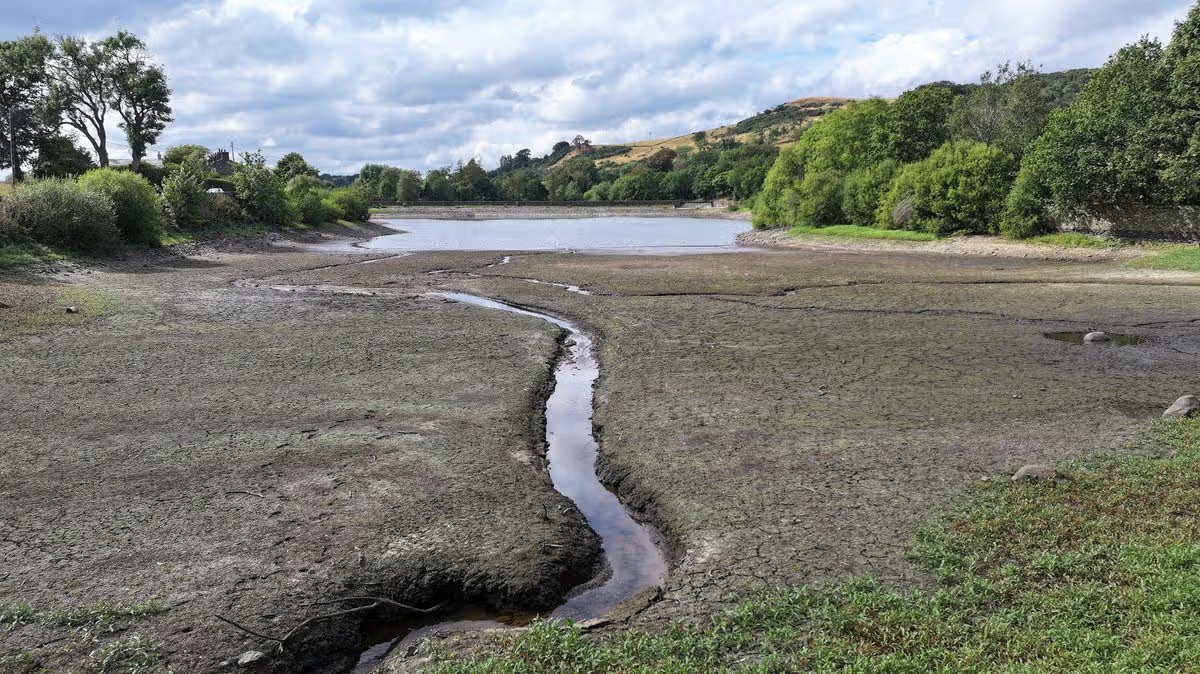









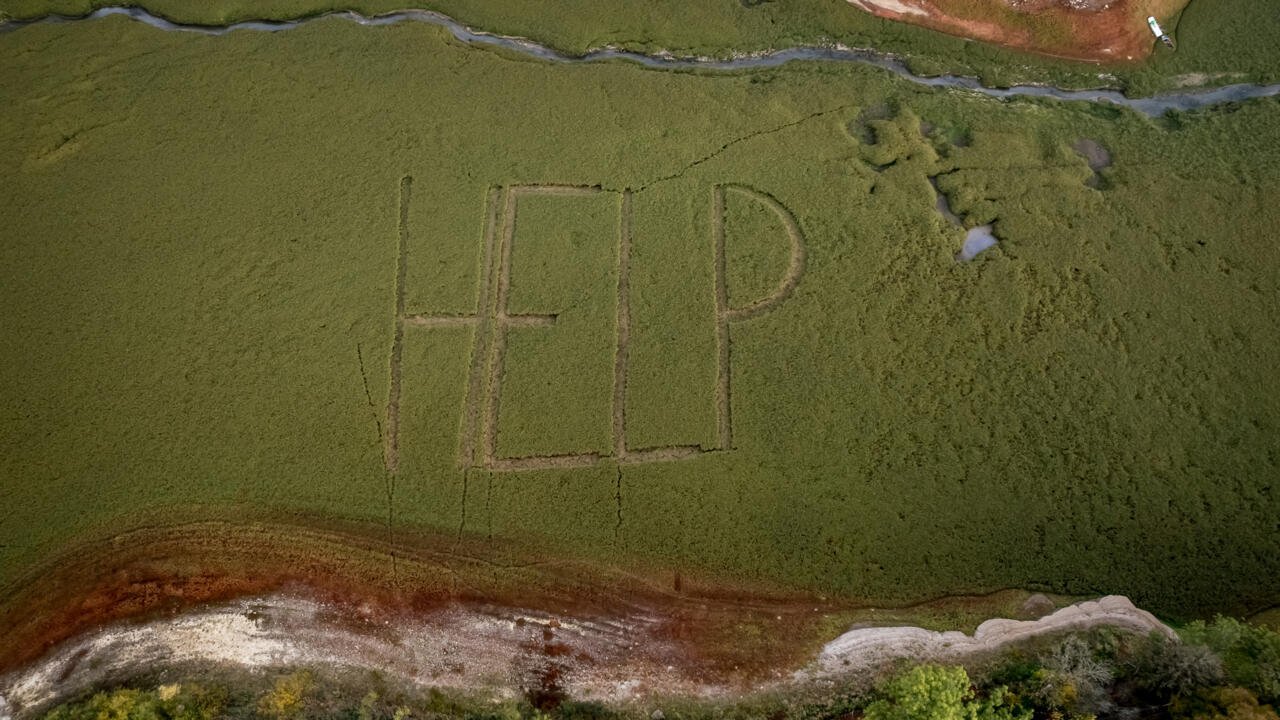
The picturesque Lac des Brenets, straddling the border between Switzerland and France, has been reduced to a parched, weed-choked expanse following an unprecedented summer of extreme heat. As water levels plummet to historic lows, the lakebed has become a grim canvas for local frustration, where the words “HELP” and “SOS” have been etched into the silt by residents desperate for government intervention.
The crisis is a direct consequence of a record-breaking summer. Data from Switzerland confirms that June, July, and August were the hottest months ever recorded in the country since measurements began in 1864. This extreme weather, combined with chronically low rainfall and the geological reality of fissures that drain water into subterranean cavities, has left the once-thriving waterway on the brink of total disappearance.
For the community of Les Brenets, the situation is not merely an environmental tragedy but a cultural one. David Favre, a 76-year-old local historian, described the sight of the dry basin as “emotionally devastating.”
“As children, we used to spend all our summers swimming at the beach, having fun by the water, diving, jumping in and sometimes even fishing,” Favre told AFP. “But since the last major drought in 2018, it’s been a disaster. The lake empties out every couple of years, or perhaps soon, every year.”
The economic impact has been immediate and severe. Yvan Durig, who operates a local navigation company, was forced to cease all boat excursions on July 20—a devastating blow during the peak of the tourism season. Where tour boats once ferried hundreds of passengers daily, only stranded hulls remain, resting on the cracked earth.
Durig now performs a daily ritual of measuring the remaining basin, where the water is retreating at a rate of 20 to 22 centimeters per day. The depth, which typically averages 25 to 30 meters, has collapsed to a mere nine meters, trapping local fish in an dangerously small volume of water. As of October 1, the water level sat 14.66 meters below its standard elevation, placing it on the verge of eclipsing the record low set in 1906.
The 27-meter waterfall that traditionally marks the end of the lake has stopped flowing entirely, signaling the severity of the hydrological collapse. While a joint Swiss-French task force was established in 2022 to examine potential solutions, such as sealing the fissures that drain the lake, critics argue that the response has been agonizingly slow and ineffective.
“We must take action—indeed, be proactive—and seal the lakebed,” Durig urged. “But this can no longer take years. That is simply not an option anymore.”
As the landscape continues to wither, many residents fear that the soul of their village is evaporating along with the water. Without a coordinated, aggressive intervention from authorities to address the structural and environmental factors at play, the community of Les Brenets faces the grim prospect of losing their defining natural landmark forever.
Disclaimer: This content is auto-generated for informational purposes only.
Source: Read Original News