




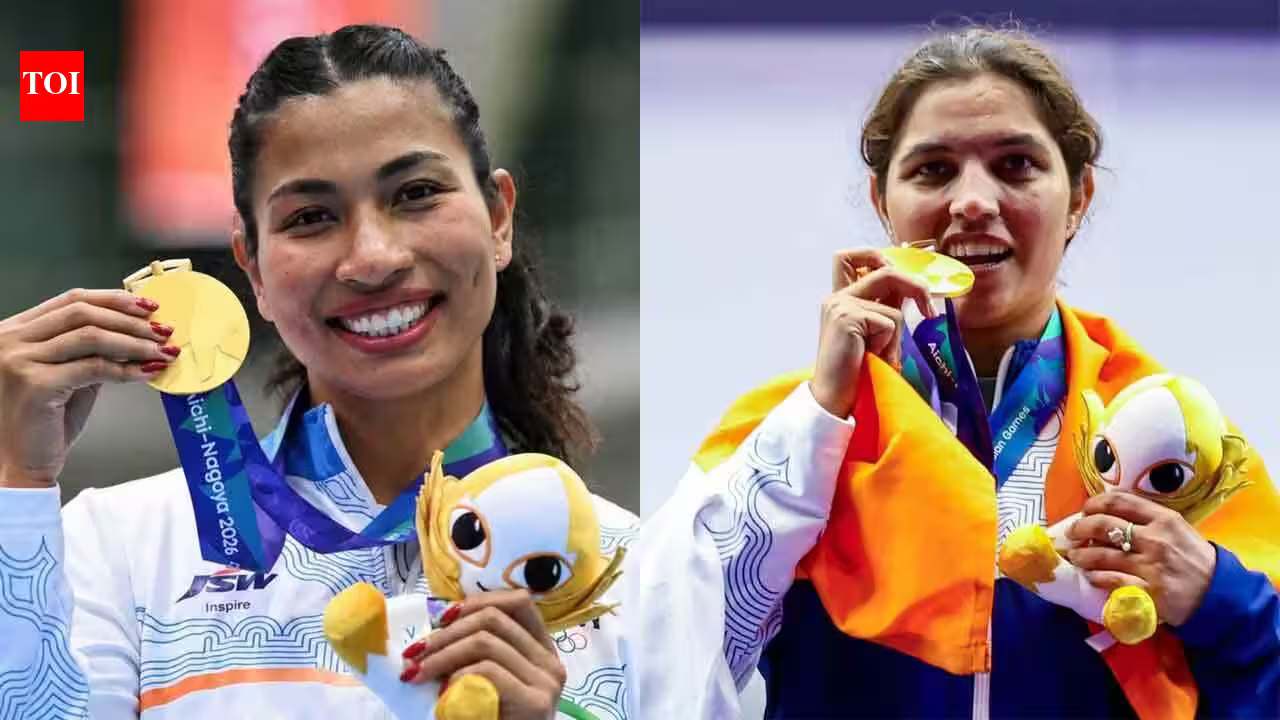

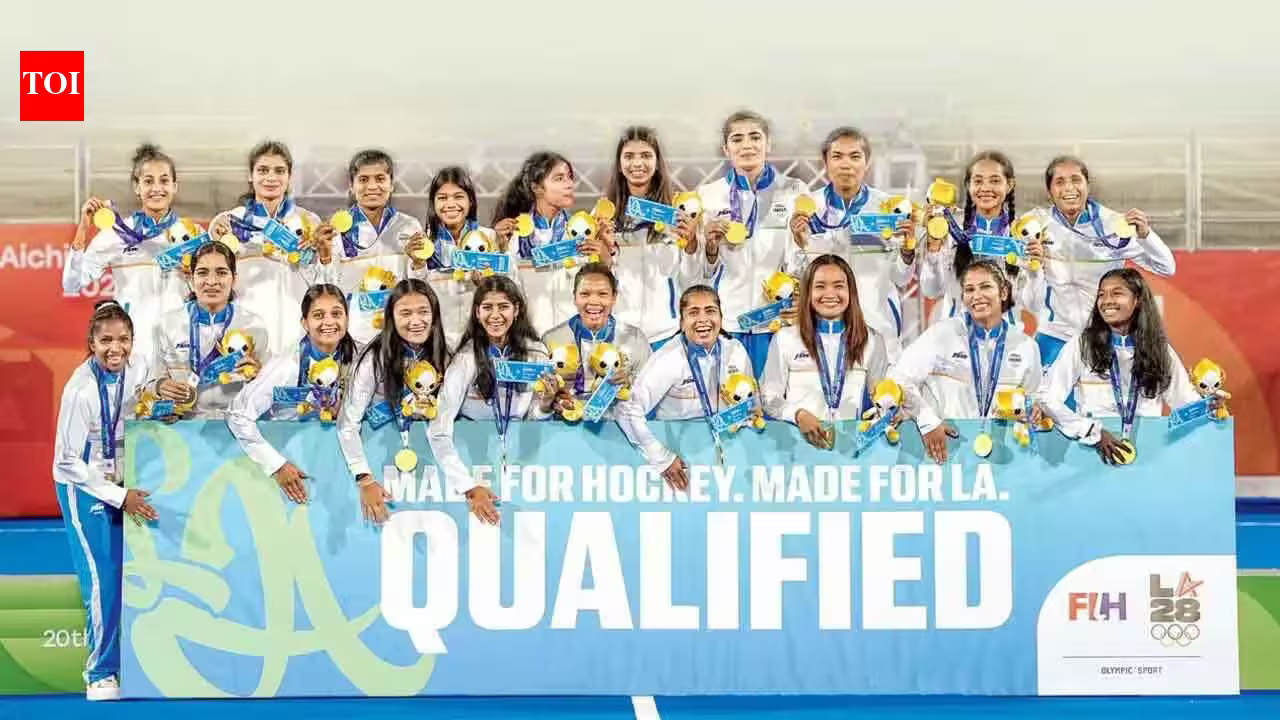
Gifu witnessed a moment that will be etched into the annals of Indian sporting history forever. At the Gifu Prefectural Green Stadium, the final whistle signaled more than just a victory; it marked the culmination of a grueling, systematic resurrection of the Indian women’s hockey team. As tears of joy cascaded down the faces of the players on the turf, the tremors of that celebration were felt over 5,500 kilometers away, where a nation once again turned its collective gaze toward a team that has finally rediscovered its identity.
Winning a gold medal after 44 years is a monumental feat by any standard, but for this specific group, the triumph represented something far more existential: an unprecedented, direct qualification for the Los Angeles 2028 Olympics. It is a golden ticket that, just a short time ago, seemed like a fading mirage.
From Tokyo Highs to Parisian Lows
The journey to Gifu was anything but linear. Following India’s exhilarating, heart-wrenching fourth-place finish at the Tokyo Olympics, interest in women’s hockey reached a fever pitch. A generation of young girls saw their idols stand on the cusp of history, and the program appeared to be on an unstoppable trajectory.
However, sports are rarely kind to those who stand still. The failure to qualify for the Paris Olympics acted as a brutal reality check, puncturing the burgeoning aspirations of the squad. In the vacuum left by that defeat, the team began to fracture. Well-documented internal rifts, swirling allegations, a sharp dip in form, and a devastating wave of injuries threatened to tear the fabric of the team apart. The shadow looming over the road to Los Angeles began to darken, with many critics questioning if the team had hit a permanent ceiling.
The Marijne Doctrine: A Culture of Collaboration
Into this volatile environment stepped Sjoerd Marijne and a revamped support staff. The Dutchman understood from day one that there would be no “magic wand” to fix the psychological and physical decay that had taken root. Instead, he implemented a clinical, methodical approach designed to rebuild the team’s foundation from the ground up.
Marijne, characteristically humble, was quick to deflect the praise away from himself. “There’s a great connection among the staff and the players,” he noted during a recent interview. “I’m doing the interviews, but it’s an achievement from the whole staff. I’m really happy with all the quality I have around me.”
This collaborative ethos became the team’s new heartbeat. The staff realized that to compete at the elite level, individual brilliance—long a staple of Indian hockey—would no longer suffice. They needed to move as a single, cohesive unit.
The Science of Survival
The task of transforming the team’s physical profile fell to Wayne Lombard, the team’s head of athletic performance. Upon his arrival, Lombard faced a stark reality: the squad was physically depleted and prone to injury. The priority was not merely to increase intensity, but to secure the players’ health—a move that required both scientific rigor and delicate human management.
Lombard brought in scientific advisers Rodet Yila and Caira Yila to overhaul the squad’s physical management. “Regardless of what the fitness levels were, the priority was to address the injury concerns,” Lombard explained.
However, science alone cannot change a locker room culture. The staff had to earn the players’ buy-in, persuading them that the physical demands of modern hockey were just as critical as the tactical maneuvers taught on the training pitch. This led to the introduction of the rigorous 30-15 intermittent fitness test. By requiring players to run for 30 seconds followed by 15 seconds of rest across a 40-meter grid—increasing in speed by 0.5 km/h at every stage—Lombard established a baseline of maximum aerobic speed that pushed the players to their physical limits.
A Return to Greatness
As the months turned into seasons, the transformation became visible. The tentative, disjointed play that had characterized the post-Tokyo era was replaced by a fluid, high-intensity style of hockey. Muscle by muscle, the players reclaimed their strength, and with that physical capacity, their psychological confidence soared.
The India team was no longer a collection of talented individuals fighting for relevance; they had become a cohesive force, relentless in their press and disciplined in their structure.
There is a poetic irony in the location of their success. It was Japan that stood as the immovable object in the qualifiers for the Paris Olympics, a roadblock that ultimately derailed India’s journey. Returning to Japan two years later to clear that same hurdle served as the ultimate act of redemption. By silencing their past, the Indian women’s hockey team has signaled their arrival on the world stage, ensuring that when the torch is lit in Los Angeles in 2028, the Indian tricolor will be flying with the confidence of a team that fought its way back from the brink to reach the pinnacle once again.
Disclaimer: This content is auto-generated for informational purposes only.
Source: Read Original News