






Nagoya, Japan — As Neeru Dhanda led the Indian contingent out for one last time at the Mizuho Park Athletic Stadium on Sunday night, her presence as flagbearer was more than just a ceremonial role; it was a powerful symbol of a transformative two-week odyssey. As the curtain fell on the Asian Games, it became clear that while the headlines were written in numbers, the spirit of the Games was forged in the fire of India’s female athletes.
India closed the curtain with 85 medals, including 21 gold. While that tally sits below the historic heights of Hangzhou, where the nation secured 106 medals and 28 golds, a cold look at the stat sheet fails to capture the seismic shift occurring within the ranks. This was a Games defined by a “changing of the guard,” a campaign where glass ceilings weren’t just cracked—they were shattered.
The Rise of the New Generation
If one name is to be etched into the folklore of this tournament, it is 17-year-old archer Kumkum Mohod. In a sport long dominated by the cold, tactical efficiency of South Korea, Mohod provided the breakthrough of a lifetime. By securing the individual recurve gold—a first for an Indian—she dismantled a two-decade-long stranglehold held by her Korean counterparts.
Her final opponent, the formidable Oh Ye-jin, was left to offer rare, high-level praise: “For a 17-year-old, she is very composed and has a very bright future.”
Mohod was not alone in her brilliance. Along with fellow teenager Prithika Pradeep, who also secured two gold medals, the youth contingent proved they were not merely in Nagoya for the experience. Across the board, India’s 83 debutants accounted for a staggering 41 of the nation’s 85 medals. This indicates a pipeline of talent that is no longer content with “participation” labels; they are here to dominate. From Pranavi Urs becoming the first Indian woman to capture an Asian Games golf title to the sheer grit shown in the field, the narrative of the Games was undeniably female-led.
The Comeback Queens
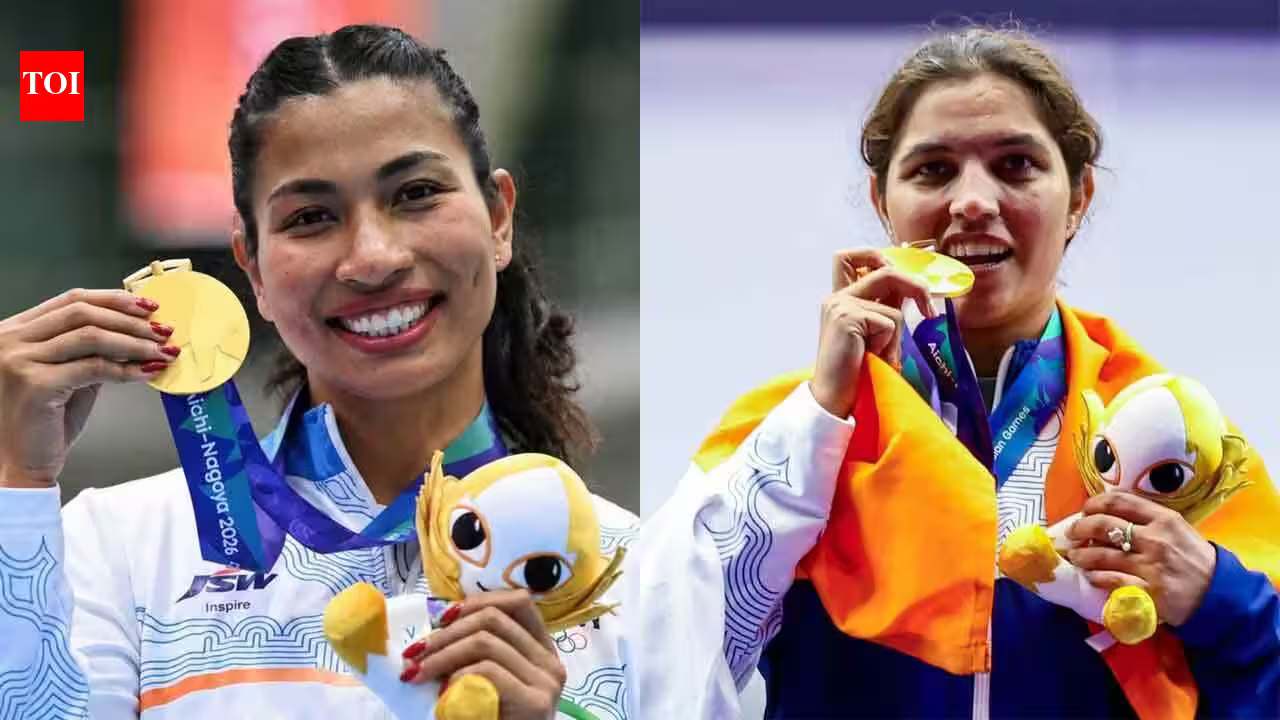
While the youth signaled the future, the veterans reminded the world why they remain the backbone of Indian sport. For athletes like Lovlina Borgohain, Nagoya was a crucible. After a grueling post-Paris 2024 phase that saw the boxer contemplating retirement, her return to the ring to clinch gold was nothing short of cinematic.
Similarly, Parveen Hooda’s journey was one of redemption. Returning from a doping ban, the pressure was immense, but she transformed the heartbreak of previous near-misses into the clarity of a golden finish. Even the legendary Mirabai Chanu, while falling just short of the top step, demonstrated the heart of a champion by securing silver in the 49kg category, finally completing her personal collection of Asian Games hardware.
Beyond the Podium: A Mixed Report Card
The final two days of the competition provided a dramatic surge, with 11 gold medals earned in the eleventh hour, salvaging what had threatened to be a slow start. The collective resolve was palpable: the women’s kabaddi team fought off a fierce challenge from Iran, while the women’s hockey team etched their names into history by ending a 44-year gold medal drought. Not to be outdone, Harmanpreet Kaur’s cricket team ensured the gold trophy returned to Indian soil with clinical precision.
Yet, as the euphoria settles and the flight home beckons, the reality of high-performance sports dictates that there must be an accounting. The Games were not without their shadows. The absence of a medal for shooting star Manu Bhaker left many stunned, and the performance of the badminton contingent—yielding only a solitary bronze—remains a significant point of concern given the world-class talent present in the squad.
Questions regarding administration and selection will surely plague the equestrian and table tennis departments, where internal friction and inconsistency prevented potential medal hauls.
A Legacy of Resilience
When the analysis is stripped away, the core of this Asian Games campaign remains the human story. Behind every medal, there is a narrative of survival—overcoming societal pressures, navigating personal tragedy, and finding ways to thrive in environments that often offer little support.
Neeru Dhanda’s gold in the women’s trap event, which provided the initial spark for the Indian gold rush, seems the perfect metaphor for the team. Whether it was the raw, explosive energy of the teenage sensations or the steely, experienced focus of the comeback queens, India’s athletes proved that they are ready to thrive on the biggest stages.
The numbers may fluctuate between cycles, but the trajectory of Indian sport is clear. The medals were the prize, but the emergence of a fearless new generation—driven by women who refused to back down—is the true legacy of these Nagoya Games. As India turns its eyes toward the next quadrennial, one thing is certain: the bar has been raised, and the women of India have firmly set the standard.
Disclaimer: This content is auto-generated for informational purposes only.
Source: Read Original News