








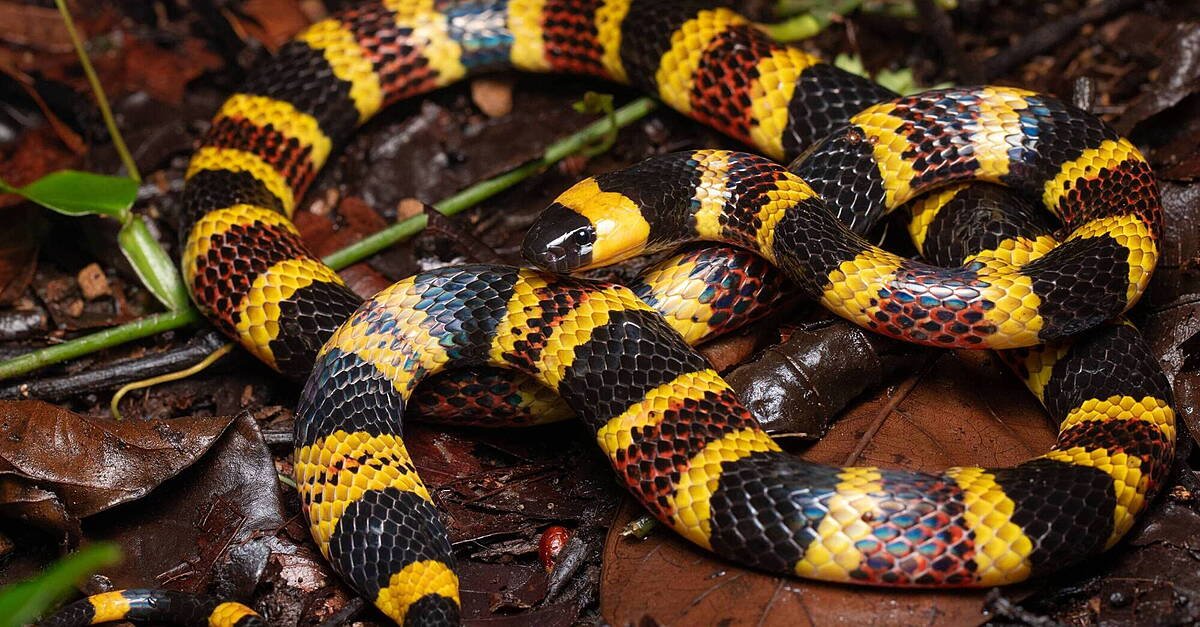
GALWAY, Ireland — Scientists at the University of Galway have unlocked a long-standing evolutionary mystery, discovering that venomous snakes are significantly more likely to display vibrant, striking color patterns than their non-venomous counterparts.
The study, published this week, suggests that these bold displays serve as a sophisticated form of “aposematism”—a biological strategy where an organism uses bright colors to warn potential predators of their toxicity or defensive capabilities. While the link between vivid coloration and chemical defense has been well-documented in other species, such as poison dart frogs and certain butterflies, this is the first time the phenomenon has been confirmed on such a comprehensive scale within the world’s snake populations.
Lead researchers conducted an extensive comparative analysis of thousands of snake species globally. By mapping the evolution of skin pigmentation alongside the presence of venom-delivery systems, the team found a clear evolutionary trajectory: as snakes developed potent venoms, they simultaneously evolved to become more visually conspicuous.
“For years, it was assumed that many snakes relied on camouflage to avoid detection,” said the study’s lead author. “Our findings show that for venomous species, being seen is actually a survival advantage. By signaling their danger through high-contrast colors, they avoid being attacked by predators who have learned to associate those specific markings with a painful or lethal experience.”
The research highlights the complex evolutionary “arms race” between predators and prey. While non-venomous snakes typically employ cryptic coloration—patterns that help them blend into their surroundings to avoid both prey detection and predation—venomous species have evolved to prioritize communication over concealment. This “warning signal” acts as a deterrent, potentially saving the snake from being bitten or killed by a predator that recognizes the threat posed by the vibrant display.
The study also noted that the intensity of the coloration often correlates with the toxicity of the venom. Species with the most potent neurotoxins or hemotoxins were frequently found to possess the most jarring, multi-colored patterns, such as the classic rings of the coral snake.
However, the researchers were quick to point out that this is not an absolute rule. Some venomous species, particularly those that ambush their prey, still rely on stealth and camouflage to remain undetected. The findings also provide insight into the phenomena of “mimicry,” where non-venomous snakes evolve to copy the vibrant colors of dangerous species to trick predators into leaving them alone—a strategy that has perplexed biologists for decades.
This breakthrough provides a new framework for understanding the biodiversity of reptiles and offers a deeper look into the defensive mechanisms that have allowed snakes to thrive in almost every environment on the planet. The team hopes these findings will contribute to further research into how evolutionary pressures continue to shape the appearance of wildlife in an ever-changing environment.
Disclaimer: This content is auto-generated for informational purposes only.
Source: Read Original News