







The FMGE Crisis: Understanding the Barriers Facing Foreign Medical Graduates
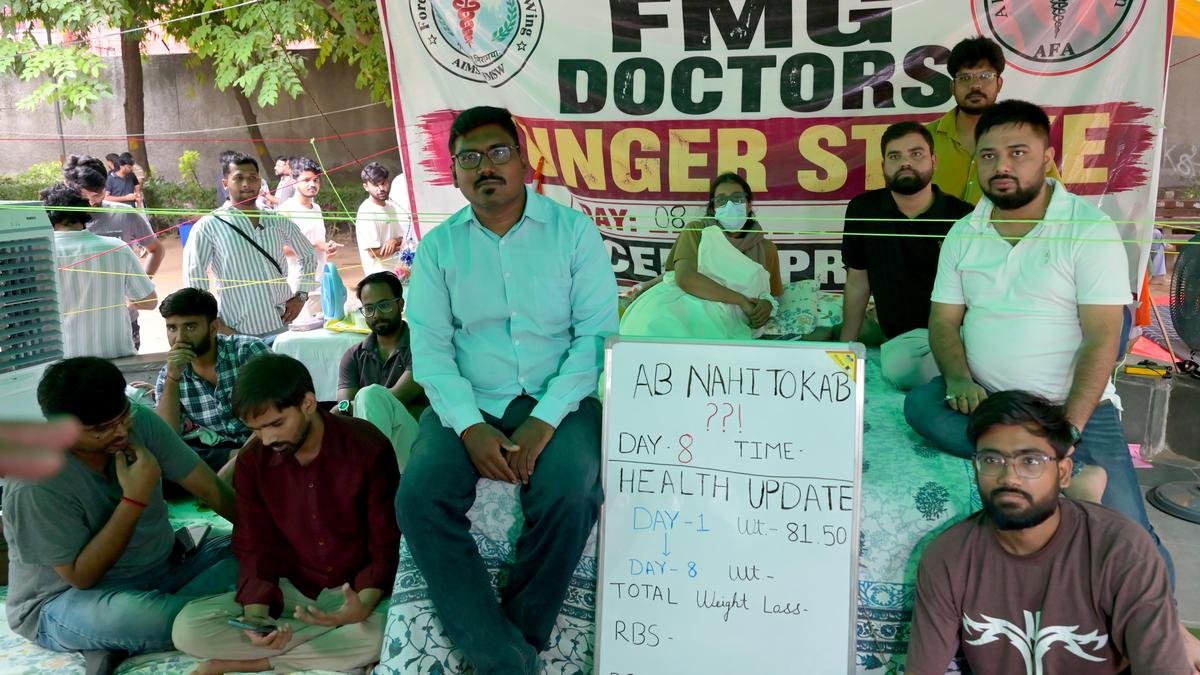
The path to medical practice in India for students who have studied abroad has become increasingly treacherous. With the June 2026 Foreign Medical Graduate Examination (FMGE) reporting a sharp pass rate of just 12.4%, the medical education community is grappling with a profound sense of instability. The exam, conducted by the National Board of Examinations in Medical Sciences (NBEMS), serves as the gatekeeper for foreign-trained doctors seeking to practice in India, yet recent results have triggered widespread protests and calls for systemic reform.
A Shifting Pedagogical Landscape
The core of the recent unrest lies in the disconnect between traditional coaching methodologies and the evolving structure of the FMGE. Aspirants report that the examination has drifted away from rote memorization of previous years’ papers toward a complex, conceptual model that mirrors international standards like the USMLE.
Candidates have expressed frustration over the sudden introduction of video-based questions and high-level clinical scenarios. As Dr. Ruhi Kumari notes, the shift requires a depth of conceptual understanding that existing coaching modules—long considered the industry standard—fail to provide. The exam now demands an integration of basic sciences with advanced clinical reasoning, leaving students who rely on traditional prep materials at a significant disadvantage.
The Gap in Curricular Content
A major institutional hurdle exists in the content of the examination, particularly in subjects like Community Medicine. Foreign medical curricula are often global in scope, whereas the FMGE places heavy weightage on India-specific public health administration, local committees, and domestic health schemes.
For a student trained in Belarus, the U.K., or elsewhere, the exam tests civic administrative knowledge alongside core medicine. While clinical subjects like Internal Medicine and Obstetrics & Gynaecology remain universal, the method of assessment—often utilizing embedded clinical images or scans—requires a level of practical exposure that many overseas students struggle to access during their undergraduate years. This “clinical exposure gap” becomes a primary differentiator in student performance.
Logistics and the Question of Transparency
Beyond academic difficulty, logistical challenges on the day of the exam have compounded student anxiety. Reports of inadequate facilities, such as poorly ventilated centers and a lack of basic amenities during the grueling five-hour assessment, have added a physical toll to the mental strain of the high-stakes test.
Furthermore, there is a vocal demand for institutional transparency. The NBEMS does not release official question papers or answer keys, relying instead on student-reconstructed “recalls.” Because the Board does not disclose why a candidate failed by a specific margin, students argue that the process lacks the accountability necessary for a fair licensing examination. The refusal to provide feedback or transparency regarding the marking process remains a central point of contention for student unions.
Structural Pressures and Career Mobility
The integration of Foreign Medical Graduates (FMGs) into the Indian healthcare system involves more than just a single examination. After clearing the FMGE, candidates often face a scarcity of internship positions, leading to additional delays in obtaining permanent registration. By the time a student completes their degree, passes the exam, and secures an internship, years of professional life may have passed.
This arduous timeline is prompting a “brain drain” of talent. Many students are increasingly viewing the FMGE not as a bridge to Indian practice, but as an unnecessary bottleneck. Consequently, a growing number of graduates are pivoting toward licensing exams in the U.S. (USMLE), the U.K. (PLAB), or Australia (AMC), where paths to residency and practice are perceived as more transparent and structured.
As the policy landscape continues to evolve, the challenge for the National Medical Commission (NMC) and the NBEMS will be to balance rigorous standards with a fair, transparent, and predictable assessment process. Without a bridge between foreign academic preparation and Indian clinical requirements, the FMGE risks becoming a persistent barrier that forces top-tier talent to seek opportunities outside the nation’s borders.
Disclaimer: This content is auto-generated for informational purposes only.
Source: Read Original News