





Jaishankar Defends Strategic Partnership with Moscow, Cites Historic Reliability
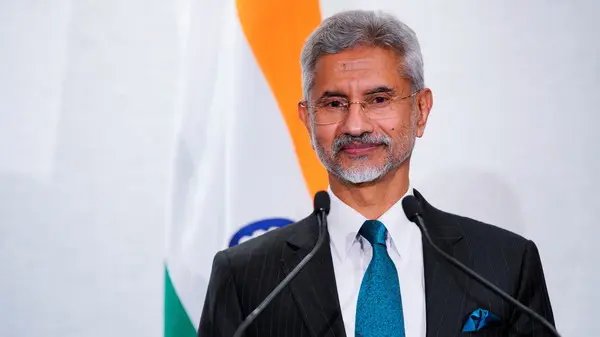
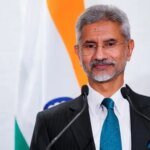
In a strong reaffirmation of New Delhi’s diplomatic autonomy, External Affairs Minister S Jaishankar has articulated the foundational rationale behind India’s enduring partnership with Russia. Speaking at an event mirroring the thematic importance of the Munich Security Conference, the Minister underscored that India’s foreign policy is dictated by long-standing alliances that have proven their worth during the nation’s most precarious moments.
Amidst increasing pressure from Western powers to distance itself from the Kremlin in light of the ongoing conflict in Ukraine, Jaishankar remained steadfast. He reminded the international community that geopolitical loyalty is a two-way street, deeply influenced by the collective memory of how nations behaved when India’s territorial integrity and security were under direct threat.
A Legacy of Unwavering Support
The Minister took the opportunity to cast a light on the mid-20th-century landscape, a period when India often found itself diplomatically isolated. He highlighted that throughout the 1950s and during subsequent decades of geopolitical turbulence, Moscow—and the former Soviet Union—remained a consistent pillar of support.
“People don’t forget good history or bad history,” Jaishankar remarked, signaling that India’s current diplomatic stance is not a reactionary measure, but a calculated continuation of a proven relationship. He pointedly noted that while much of the Western bloc provided support to Pakistan’s military regime during critical junctures, Russia maintained a principled position that favored India’s national interests. This historical context, he argued, continues to serve as the bedrock of the contemporary Delhi-Moscow strategic dialogue.
Strategic Autonomy in a Polarized World
The remarks serve as a significant pushback against the narrative that India must choose sides in an increasingly polarized global order. By prioritizing national security interests over shifting international trends, the Ministry of External Affairs is signaling that India’s foreign policy remains anchored in “strategic autonomy.”
Jaishankar’s comments reflect a growing assertiveness in India’s diplomacy. The government has consistently maintained that its purchase of Russian energy and its ongoing defense cooperation are matters of national necessity, aimed at providing affordable resources to its citizens and maintaining the operational readiness of its armed forces.
Looking Toward the Future
The Minister’s address serves as a reminder that India’s diplomatic landscape is built on decades of institutional trust. While New Delhi continues to cultivate deep, multifaceted partnerships with the United States, Europe, and the Global South, the relationship with Russia remains uniquely insulated from transitory geopolitical currents.
By framing the relationship through the lens of historical reliability, Jaishankar has effectively signaled to the world that India’s partnerships are not transactional in a way that ignores past favors. As the world navigates a period of profound uncertainty, India’s message is clear: while it is open to new alignments and cooperative frameworks, it will not abandon those who stood by it when the international community was largely indifferent to its security concerns. This commitment to continuity in diplomacy is likely to remain a central theme of India’s engagement on the world stage for the foreseeable future.
Disclaimer: This content is auto-generated for informational purposes only.
Source: Read Original News