



The Price of Performance: Sanjay Dutt’s Damage Control Amidst Growing Public Backlash
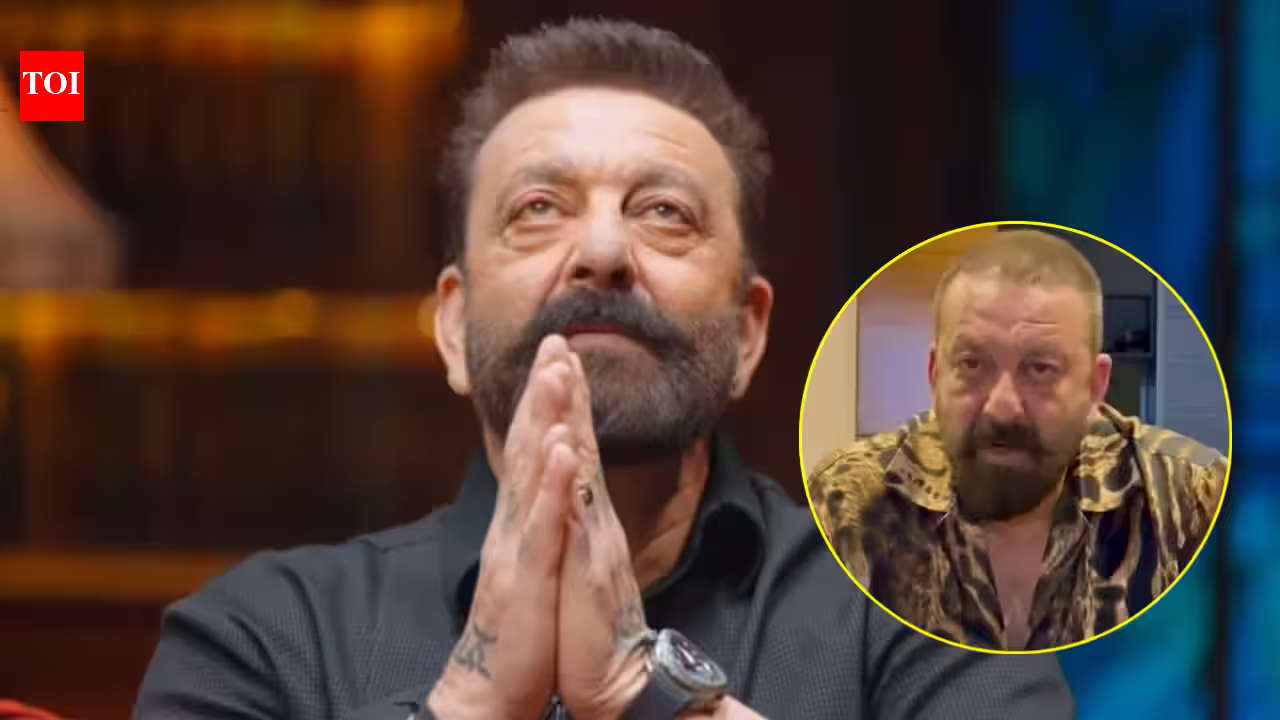
In the volatile world of Indian celebrity, a single soundbite can act as a lightning rod for national sentiment. Sanjay Dutt, an actor whose life has been a perennial tug-of-war between public adoration and intense scrutiny, recently found himself at the center of a firestorm. Following an appearance on Shekhar Suman’s talk show, where his commentary regarding the perceived decline of peace in India struck a discordant chord with a segment of the audience, the veteran star has embarked on a frantic mission to rewrite the narrative.
The actor, known for his portrayal of the lovable rogue in the Munna Bhai franchise, has issued a fresh, pointed clarification, asserting that his controversial remarks were not a reflection of his personal ethos but rather a byproduct of a scripted television segment.
The Viral Moment and the Subsequent Storm
The controversy erupted after clips from Shekhar Suman’s show began circulating on social media. During the broadcast, Dutt remarked on the state of the nation, stating, “The people of this country are so lovely. There should be peace here. I can’t feel that peace in our country anymore. We Indians are large-hearted people, and we are hospitable. We have given so much, and we should always remain that way. I pray to Shivji that those days come back soon.”
While the statement was delivered with the gravitas often expected of a senior actor, it was met with immediate pushback. Social media platforms, the modern-day arena for public discourse, became a breeding ground for frustration, with many users questioning why a prominent figure would cast a shadow over the current state of national tranquility. For a public figure, questioning the peace of a country—even from a place of nostalgia or concern—is a high-stakes gamble, one that frequently results in polarized reactions.
“It Was Scripted”: Dutt’s Official Defense
In an attempt to douse the flames, Sanjay Dutt released a video message directly addressing the backlash. Speaking in Hindi, the actor made a concerted effort to distance himself from the gravitas of his own words. “Namaskar friends,” he began, acknowledging the influx of messages from concerned followers. “Many people have recently contacted me on social media about some of the things I said on Shekhar Suman’s show. Some people said that they are surprised by my words. At the same time, many people also expressed strong disagreement.”
Dutt’s defense hinges on the architecture of reality television, which often blurs the lines between candid conversation and rehearsed performance. “Whatever I said in the show was part of a scripted segment,” he stated. “As is often the case in such TV shows, we were acting according to a script. They were not just my personal thoughts, or my feelings. That is why I respect the trust and love of friends and good thinkers. I would never want any misunderstanding regarding my real thoughts due to a scripted performance.”
The “Gandhigiri” Justification
This wasn’t the first time the Khalnayak star sought to recalibrate his public image this week. Prior to the video, he took to the social media platform X (formerly Twitter) to offer a written apology. In that statement, he sought to contextualize the comments within the realm of satire and light-hearted banter.
“My remarks were made in the context of a scripted conversation intended to be light-hearted and humorous,” he explained. He even invoked the spirit of his most iconic role, Munna Bhai, referencing the film’s central theme of “Gandhigiri”—a philosophy of love, warmth, and non-violent resistance. By connecting his comments to the satire of the Munna Bhai films, Dutt was attempting to frame the discourse as a misunderstanding of his intent. However, the juxtaposition of a serious comment about “the lack of peace” and a claim that it was intended to be “light-hearted” has been, for many critics, a difficult bridge to cross.
The Blur Between Actor and Person
The backlash against Dutt highlights a broader trend in Indian entertainment: the shrinking distance between a celebrity’s professional persona and their political voice. When a star of Dutt’s magnitude—someone who carries the weight of a complex personal history—makes a statement about the state of the nation, the audience rarely separates the man from the screen.
While Dutt insists that his words were simply lines on a page, fans and critics alike are beginning to ask questions about the nature of celebrity participation in media. If a performance is meant to be satirical, does the responsibility lie with the actor to maintain the integrity of that satire, or with the viewer to interpret it correctly? For Dutt, this is a lesson in the fragility of public perception. His attempt to cite a “script” is a strategic maneuver common in crisis management, but it also reveals the precarious position celebrities occupy when they step into the talk-show format.
Moving Forward: The Legacy of a Star
As the dust settles, one must consider the impact of these exchanges on Dutt’s upcoming projects, most notably Khalnayak 2. The actor remains a titan of the Hindi film industry, and his legacy is, for the most part, bulletproof. However, in an era where digital footprints are permanent, the fallout from this incident serves as a reminder that the public, while forgiving, is also highly observant.
Sanjay Dutt’s clarification is likely the final word he will offer on this particular matter. By pivoting back to his work and ending his video with a patriotic “Jai Hind, Jai Bharat,” he has signaled a desire to close this chapter and return to the relative safety of his cinematic career. Whether or not the audience accepts the “scripted segment” explanation remains to be seen, but the incident has undeniably highlighted the high tension that accompanies celebrity opinions in the contemporary Indian socio-political landscape. As he gears up for his next big-screen venture, the challenge for Dutt will be to recapture the audience’s affection without stumbling into the minefield of unsolicited political commentary.
Disclaimer: This content is auto-generated for informational purposes only.
Source: Read Original News