







The Role of Modern Surveillance in Anomalous Sightings
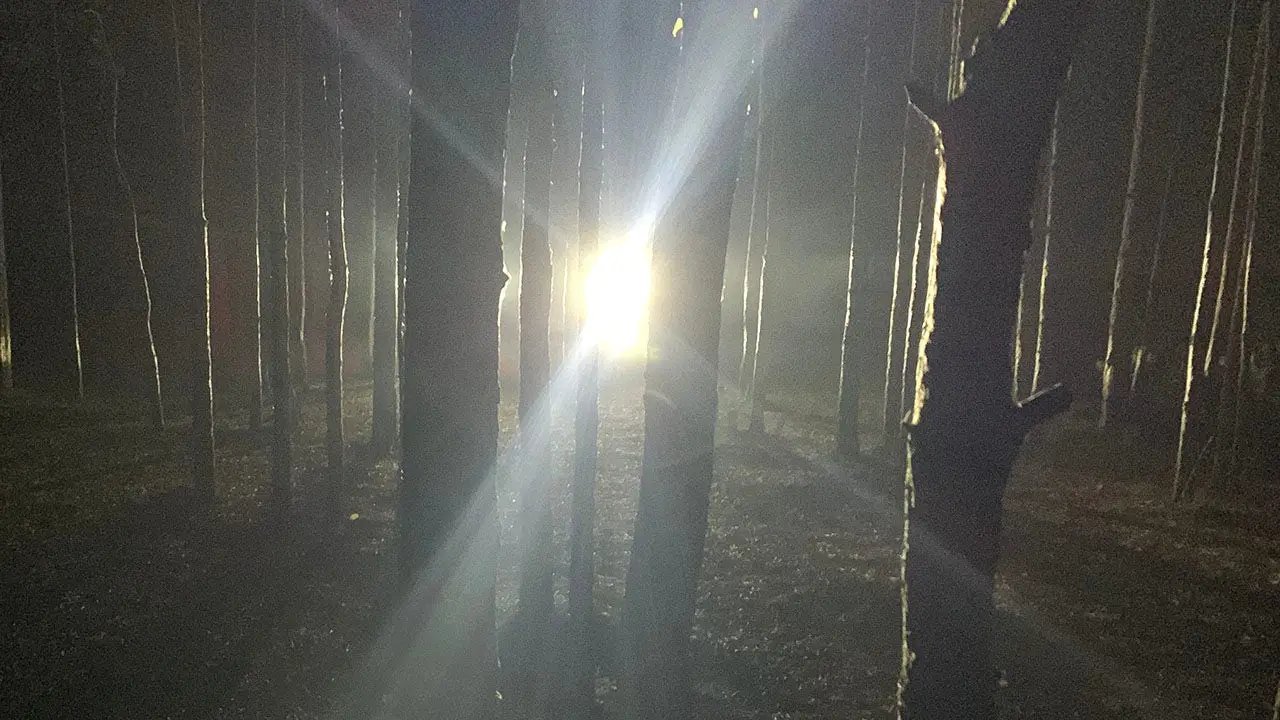
In the modern era, the intersection of advanced technology and wilderness exploration has fundamentally changed how researchers and enthusiasts document unexplained phenomena. As anecdotal reports of elusive creatures like Bigfoot continue to emerge from regions such as the back roads of Kentucky, the reliance on high-intensity illumination and digital recording equipment has become a standard practice for field observers. The incident involving witness Clayton highlights a recurring reliance on high-lumen spotlights to pierce the darkness of dense forest environments. These tools, often characterized by high-intensity discharge or advanced LED technology, allow for the identification of figures at distances of 40 yards or more, providing a clearer look at features such as stature, ocular reflection, and behavioral movement.
The integration of these light sources into the field research process is essential for verifying visual claims. As seen in the recent report submitted to the Bigfoot Field Researchers Organization (BFRO), the ability to illuminate a subject—even in adverse conditions—can distinguish a biological entity from environmental anomalies. While traditional night-vision hardware has long been a staple of the industry, the accessibility of high-powered spotlights ensures that even casual explorers can capture visual confirmation of movement, height, and reflective eye characteristics that would otherwise remain obscured.
Data Collection and Investigative Protocols
The credibility of contemporary cryptozoological reporting relies heavily on a structured approach to data collection. Investigators, such as those associated with the BFRO, utilize specific protocols to vet witnesses and synthesize reports. This investigative framework involves a multi-stage verification process: initial online submission, iterative text-based communication, follow-up phone calls, and formal video interviews. By maintaining a consistent trail of digital documentation, researchers can effectively measure the reliability of a witness’s account.
This methodological rigor serves to mitigate the influence of bias and ensures that reports meet a threshold for further analysis. Experts evaluate factors such as the witness’s willingness to subject themselves to scrutiny, the consistency of the account over time, and the alignment of the reported behavior with established historical documentation. In cases where the witness agrees to video interviews, the investigative process gains a layer of accountability, as the visual record allows for an assessment of the witness’s demeanor and the specific physical characteristics of the location.
Analyzing Behavioral Patterns and Environmental Evidence
Beyond simple visual identification, technological tools are used to document the behavioral patterns of alleged creatures. Reports often include audio-visual evidence of tree-knocking, stick-breaking, or localized vocalizations. Modern field recorders, equipped with high-fidelity microphones and noise-cancellation capabilities, provide a way to capture these auditory anomalies with precision. When paired with visual sightings—such as a creature turning away from or attempting to hide from a spotlight—these logs help form a behavioral profile.
The consistency of these patterns, such as the avoidance of light or the mimicry of human sounds, suggests a level of environmental awareness that some researchers categorize as highly evolved. Furthermore, the physical evidence cited in regional reports—such as tracking collars discovered in unreachable locations or specific gait patterns—complements the digital data. By cross-referencing these physical findings with digital recordings, researchers are attempting to bridge the gap between anecdotal accounts and empirical environmental data, creating a more comprehensive picture of the terrain’s activity.
Advancements in Genomic and Biological Research
A significant technical development in the study of unexplained creatures is the advancement of genomic sequencing and DNA analysis. Recent claims regarding the remains of suspected hominid-like creatures have pushed the investigation into the laboratory. By extracting genetic material from hair, skin, or other organic samples, researchers are now applying high-throughput sequencing methods to determine the phylogenetic origins of the samples. Some proponents argue that these tests have yielded results pointing toward hybrid genetic markers, including potential connections to archaic human lineages like Neanderthals.
While the scientific community remains cautious regarding the origin of these samples, the use of molecular biology represents a definitive shift in the research sector. Moving away from purely speculative visual reports toward hard, laboratory-tested data allows for a more objective debate. The process involves identifying specific mitochondrial or nuclear DNA sequences that can be compared against existing databases of known fauna and hominid sequences. These technological leaps ensure that even if a full physical specimen is not recovered, the trace genetic evidence can contribute to a better understanding of the biological possibilities within remote, unexplored habitats.
The Future of Citizen Science and Field Documentation
The future of documenting these events lies in the democratization of high-performance technology. As mobile devices and portable recording hardware become more compact and powerful, the potential for “citizen science” to contribute to the field grows. The use of drones for aerial reconnaissance, motion-activated thermal imaging cameras, and long-range acoustic monitoring systems is currently transforming the landscape of wilderness observation.
These tools allow for a continuous monitoring of areas known for unusual activity, reducing the need for constant human presence. Thermal imaging, in particular, is highly effective in the deep woods of Kentucky, as it detects the heat signatures of living beings that are invisible to the naked eye. By leveraging these advancements, the next generation of researchers can collect substantial data sets that might finally provide the necessary resolution to distinguish biological reality from folklore. This evolution in technical capability ensures that every encounter is treated as a potential data point, moving the study of the unknown into the domain of modern forensic science.
Disclaimer: This content is auto-generated for informational purposes only.
Source: Read Original News