

EASTPOINTE, Mich. — A major infrastructure overhaul on Nine Mile Road, designed to modernize one of Eastpointe’s primary transit corridors, has ignited a sharp conflict between municipal development goals and the survival of local small businesses. As construction crews continue to reshape the roadway, shop owners and property managers are sounding the alarm, claiming that restricted access and diminished parking are driving away their customer base and threatening their long-term viability.
Infrastructure Improvements vs. Business Reality
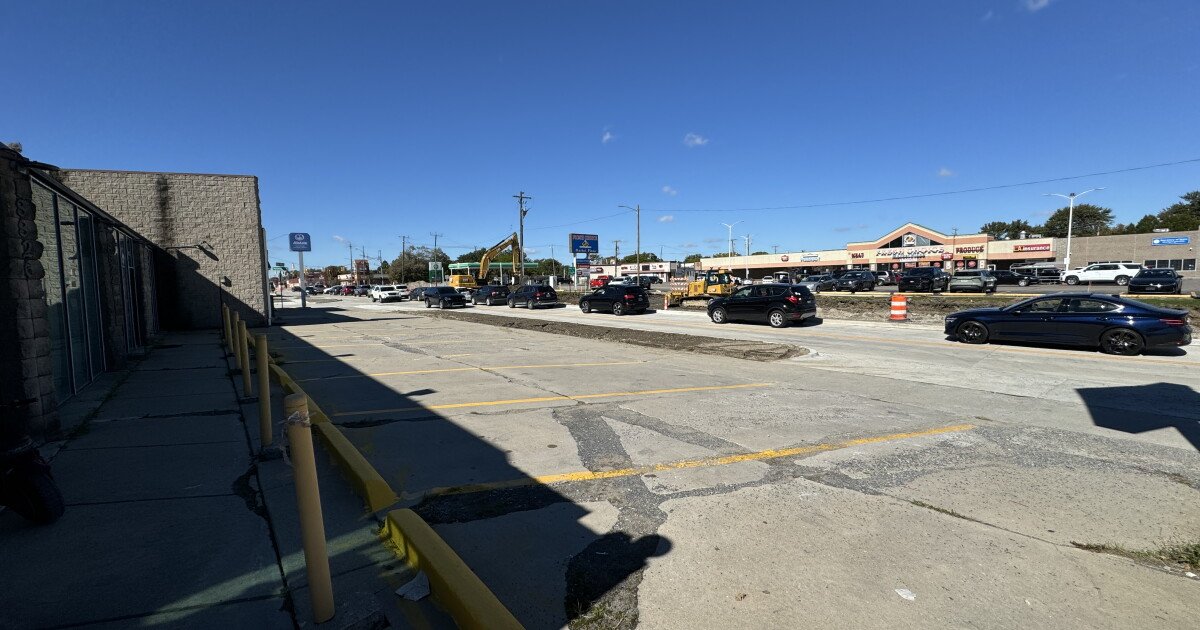
The reconstruction project, touted by city officials as a necessary upgrade for the community, has centered its most disruptive activities near the Petersburg area. For businesses like Mediterranean Flames, a restaurant that relies on ease of access, the project’s design choices have created significant friction. Ahmed Abdoul Malik, the owner of the restaurant, noted that previous site conditions allowed for a seamless “loop” effect, enabling customers to enter and exit from multiple points.
Following the recent modifications, however, a critical portion of pavement has been replaced with grass. This change has not only reduced the physical space available for parking but has complicated vehicle navigation. Malik reported that the current configuration is so tight that motorists frequently become stranded, requiring physical assistance from bystanders to maneuver their vehicles out of the constrained space. “People tell us they love the food, but they aren’t willing to deal with the traffic or the difficulty of getting in and out,” Malik explained.
A Plea for Restorative Design
The frustration is shared by local property managers and building owners who have seen their investments suffer as storefront accessibility vanishes. Alesia Hussey, who oversees a dozen local properties, described the situation as a logistical nightmare that has left some businesses with only two viable parking spots.
Gary Cooper, a 95-year-old property owner with over three decades of history in the corridor, is leading calls for the city to pivot from its current landscape plan. Cooper and his fellow business owners are urging the city to reverse the conversion of paved areas into green space, arguing that restoring the original concrete layout is essential to salvaging their livelihoods. For these owners, the project is less about progress and more about the loss of essential operational infrastructure.
The Role of Data and AI in Urban Planning
The friction in Eastpointe highlights a growing challenge in modern civil engineering: the intersection of AI-driven urban design and the unpredictable needs of local commerce. While municipal planners often utilize advanced simulation software—leveraging Artificial Intelligence to model traffic flow and road safety—these digital tools sometimes fail to account for the nuanced “curbside” needs of small-scale entrepreneurs.
The City of Eastpointe has acknowledged the rising tension, issuing a formal statement that they are “working with local businesses” to mitigate the disruption. However, the disconnect remains clear. As data-heavy infrastructure projects increasingly rely on automated planning systems, there is a mounting expectation for municipal leaders to bridge the gap between algorithmic efficiency and the tangible reality of a business owner’s bottom line.
For now, the project continues to move forward, leaving business owners at a crossroads. While the city views the road as a vital link in the regional transit network, the people who occupy the storefronts along Nine Mile Road hope that future design iterations—whether aided by updated AI projections or manual redesigns—will prioritize parking access before the economic damage becomes irreversible. As the project advances, both the city and the small businesses it serves are looking for a compromise that balances modern road safety with the fundamental necessity of customer convenience.
Disclaimer: This content is auto-generated for informational purposes only.
Source: Read Original News