



India and Switzerland Deepen Strategic Ties with Focus on Mobility, Defence, and Trade Expansion
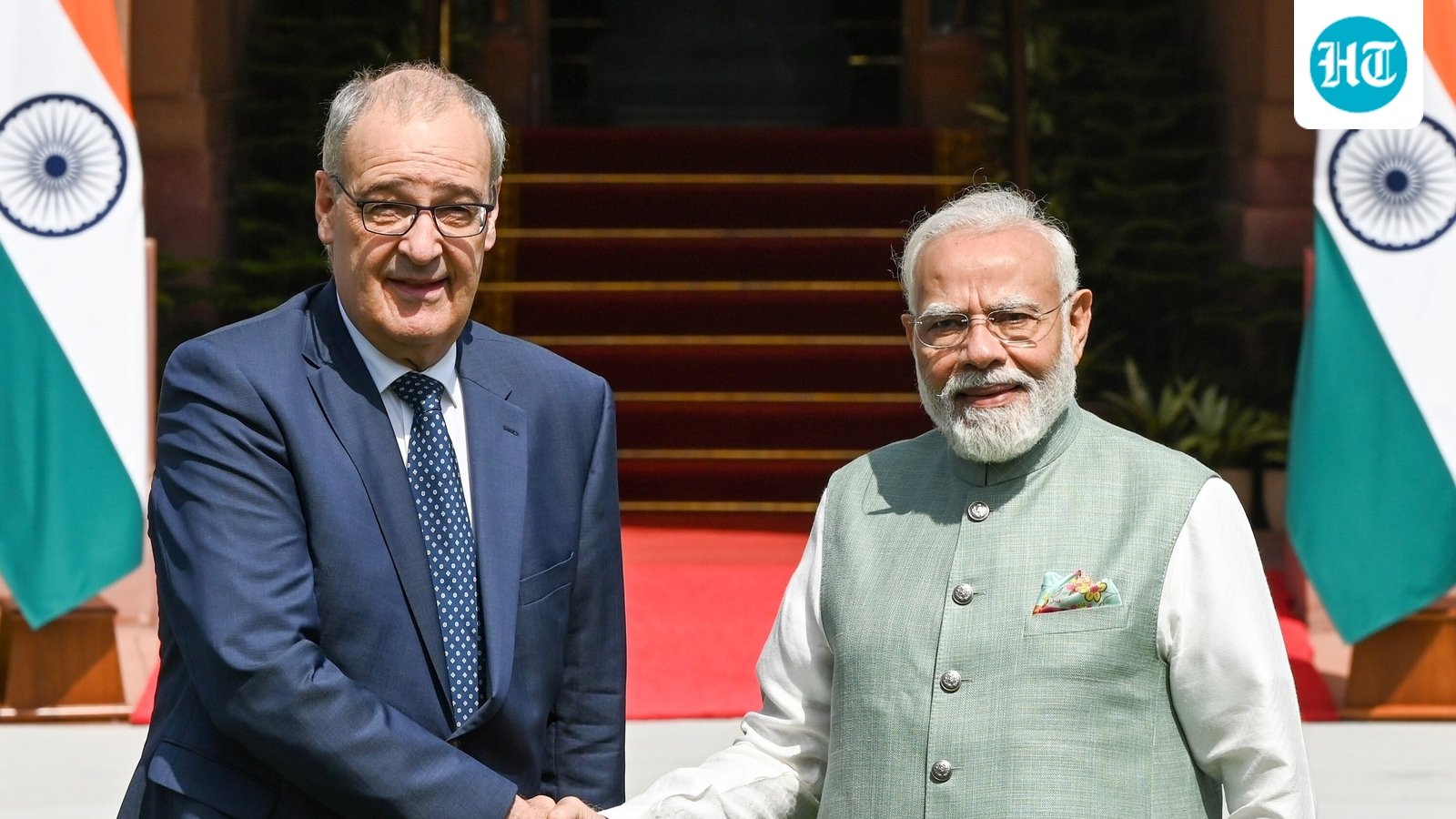
New Delhi: In a significant boost to bilateral relations, India and Switzerland signed a series of high-level agreements on Monday, aimed at enhancing professional mobility and bolstering economic cooperation. The diplomatic summit, held at Hyderabad House, featured Prime Minister Narendra Modi and Swiss President Guy Parmelin, who together charted an ambitious course for future collaboration in defence, nuclear energy, and sustainable technology.
The visit coincides with the first anniversary of the Trade and Economic Partnership Agreement (TEPA), a landmark deal between India and the European Free Trade Association (EFTA). Addressing the media, Prime Minister Modi underscored the importance of the partnership, projecting that the framework will drive $100 billion in investments and generate one million jobs in India over the next 15 years.
New Frontiers in Mobility and Exchange
Central to the day’s outcomes were two major agreements designed to streamline the movement of human capital. A new memorandum of understanding (MoU) on migration and mobility introduces a structure for equal treatment, aiming to curb irregular migration while facilitating easier access for skilled workers. The deal includes provisions for five-year multiple-entry visas and renewable student permits, fostering a more fluid exchange of talent.
Complementing this, a second pact focuses on young professionals, allowing for the temporary exchange of 300 citizens from each nation annually—a number expected to scale to 500. This initiative is geared toward enhancing technical skills and linguistic proficiency within specialized professional fields.
Strategic Defence and Energy Cooperation
Beyond trade and labor, the leaders identified new pathways for security and energy cooperation. Prime Minister Modi announced that the two nations are exploring expanded collaboration in defence production and military exchanges. Furthermore, both leaders committed to deepening their partnership in the nuclear energy sector, a move seen as vital for India’s long-term energy security goals.
President Parmelin emphasized the strategic necessity of this partnership, particularly in an era of global volatility. “Trading with a massive partner experiencing sustained growth is essential when global trade has become unpredictable,” Parmelin noted, while highlighting that Switzerland stands ready to offer technology transfers and capital in exchange for deeper access to India’s high-value markets.
Addressing Investment and Infrastructure
While the economic outlook is bullish, the Swiss delegation expressed a clear desire for further regulatory clarity. President Parmelin stressed the importance of finalizing a bilateral investment protection agreement and making tangible progress on intellectual property rights to fully unlock the potential of Swiss investment in India.
In response, Prime Minister Modi extended a formal invitation to Swiss firms to participate in India’s infrastructure development, particularly in areas like electric vehicles, ropeways, and advanced tunnel construction. This aligns with broader agreements signed on Monday, including an MoU on transportation technologies and a letter of intent to foster long-term synergy between the research communities of both countries.
Regional Stability and Future Outlook
The talks also touched upon critical global issues, with both leaders discussing the ongoing conflicts in Ukraine and West Asia. Reaffirming India’s commitment to diplomacy, the Prime Minister stated that New Delhi remains a staunch advocate for global peace.
With Switzerland serving as India’s largest trading partner within the EFTA bloc, the current visit serves as a catalyst for deeper integration. Currently, over 340 Swiss companies operate in India, with cumulative investments totaling $11 billion. By establishing a dedicated group to address trade constraints and pursuing joint research in AI governance, health, and clean energy, New Delhi and Bern are positioning their bilateral relationship as a cornerstone of international cooperation in a challenging geopolitical landscape.
Disclaimer: This content is auto-generated for informational purposes only.
Source: Read Original News