








Supreme Court to Review Election Commission Decisions Amid Procedural Concerns
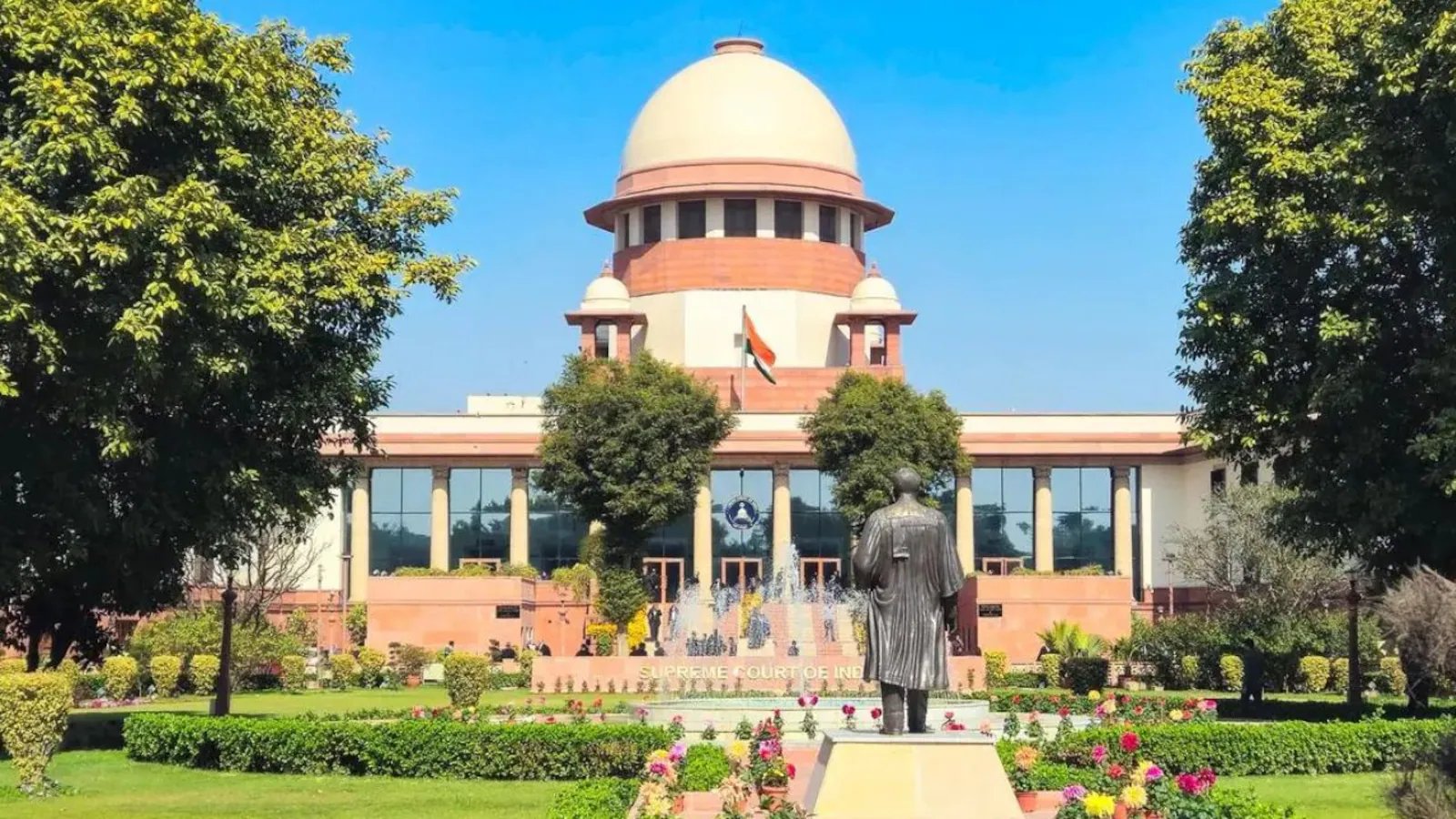
New Delhi: The Supreme Court of India has initiated a significant legal examination into the decision-making processes of the Election Commission (EC), following petitions that allege key choices were made without the consensus of the full body. In a stern observation, a bench led by Chief Justice Surya Kant, alongside Justices Joymalya Bagchi and V Mohana, asserted the judiciary’s authority to scrutinize and, if necessary, invalidate any EC orders that fail to meet legal standards.
The court has formally issued notices to both the Centre and the Election Commission to seek a response on the matter. During the proceedings, the bench emphasized its oversight role, stating, “We will examine all the decisions. If any decision is not in accordance with the law, we will annul it. You know the power of the court.”
Despite the gravity of the allegations, the bench declined to grant an interim stay on Chief Election Commissioner (CEC) Gyanesh Kumar’s operational powers. Chief Justice Kant clarified that the court would not pass preemptive orders based solely on media reports, noting that it must first review the official responses submitted by the government and the poll panel.
Historical Precedent of Judicial Intervention
The current legal challenge brings renewed focus to the history of judicial oversight in Indian elections. Over the decades, the courts have played a pivotal role in ensuring the integrity of the electoral process by reviewing, and occasionally overturning, the outcomes of specific contests.
One of the most consequential moments in Indian democratic history occurred in 1975, when the Allahabad High Court nullified Prime Minister Indira Gandhi’s 1971 Raebareli victory due to allegations of state machinery misuse. The resulting fallout led directly to the declaration of a state of Emergency.
The judiciary’s role has also extended to technical and ethical aspects of campaigning. In 1984, the Supreme Court famously set aside the election of N. Sivan Pillai, who had won by a narrow margin using Electronic Voting Machines (EVMs) in a Kerala constituency where they were not legally sanctioned for use. The court ordered a re-poll using traditional paper ballots, which ultimately changed the outcome.
In more recent years, high courts have grappled with modern challenges such as corrupt practices and financial non-disclosure. Cases involving politicians like KM Shaji, whose 2016 election victory was challenged over the alleged exploitation of religious sentiments, and OP Ravindranath Kumar, whose 2019 Lok Sabha victory was invalidated by the Madras High Court over alleged concealment of assets, highlight the judiciary’s ongoing commitment to enforcing the Representation of the People Act, 1951. While the Supreme Court has frequently stayed these high court disqualifications, the legal battles underscore the strict regulatory environment governing elected representatives.
As the apex court prepares to hear the latest petition, the case serves as a reminder of the delicate balance between the autonomy of the Election Commission and the judicial mandate to uphold the rule of law within India’s electoral framework.
Disclaimer: This content is auto-generated for informational purposes only.
Source: Read Original News