






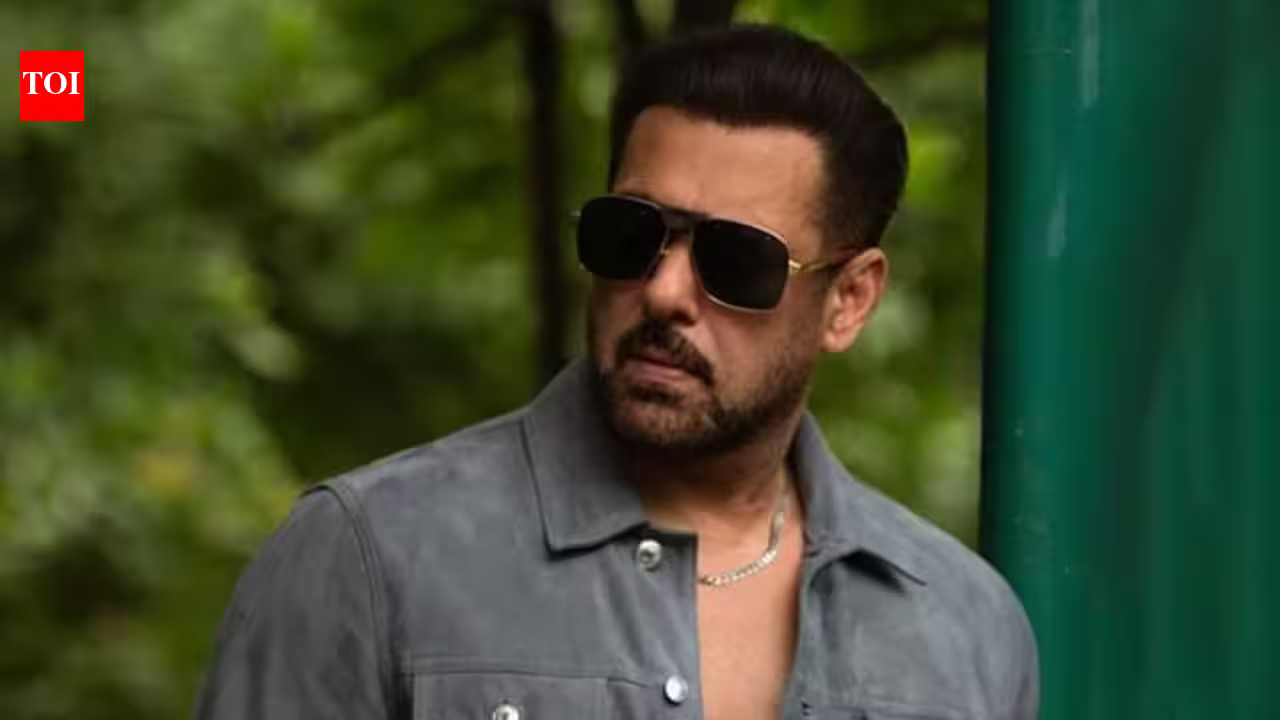
The sprawling, high-stakes legal drama surrounding Bollywood superstar Salman Khan and the upcoming cinematic project Kala Hiran: The Battle for Legal has taken another unexpected twist. This week, the Delhi High Court officially waded into the fray, issuing a formal notice to the “Bhai” of Bollywood, requiring his response to a plea that could fundamentally alter the trajectory of his ongoing litigation.
At the heart of this latest development is an application filed by producer Amit Jani, the man behind Kala Hiran. Jani is effectively asking the court to put a pause on the current proceedings—a move that underscores just how messy, circular, and intricate the battle over personality rights in Indian cinema has become.
The Legal Tug-of-War Intensifies
To understand why the Delhi High Court’s latest notice is making waves, one has to look at the mounting stack of paperwork. Salman Khan, long protective of his image and privacy, has been aggressive in asserting his personality rights. In December 2022, he successfully secured an ex-parte ad-interim injunction from the Delhi High Court, a powerful legal shield designed to prevent the unauthorized commercial exploitation of his name, likeness, and life story.
However, the industry landscape shifted when word began to circulate about Kala Hiran, a film that seemingly mirrors elements of the actor’s high-profile real-life controversies. Khan didn’t wait for a trailer to drop; he moved quickly to file an application for a specific injunction against the film’s release.
Now, the producers are firing back. In their recent plea, they argue that the court is essentially being asked to adjudicate the same issues twice. According to the filing, the legal arguments currently surrounding Kala Hiran overlap so substantially with Khan’s broader, pre-existing case on personality rights that maintaining them as separate, parallel proceedings is not only inefficient but legally precarious.
Personality Rights vs. Creative Liberty
This conflict is a microcosm of a much larger struggle currently rocking the Indian entertainment industry: where does a public figure’s right to control their “brand” end, and where does creative or journalistic liberty begin?
Salman Khan’s legal team has argued that his persona is a carefully curated commercial asset. Any project that utilizes his life story or likeness without explicit permission constitutes an infringement of his publicity rights. Producers, conversely, often lean into the “freedom of expression” argument, contending that films inspired by real-life events or public figures are a staple of cinema and should not be gagged by the heavy hand of celebrity litigation.
By seeking a stay on the current proceedings, Amit Jani is forcing the court to look at the “big picture.” He is essentially telling the bench: “We are already here because of the personality rights lawsuit; let’s not treat this film as a separate, isolated fire to be put out when the root of the argument is the same.”
The Shadow of the “Kala Hiran” Controversy
It is impossible to discuss this case without acknowledging the weight of the name Kala Hiran. For decades, the blackbuck poaching case has been the most polarizing shadow hanging over Salman Khan’s career. A film titled Kala Hiran: The Battle for Legal carries a heavy, unmistakable connotation.
For the filmmakers, the title and subject matter are ripe for cinematic exploration. For Khan, it is a direct encroachment on his privacy and a potential attempt to capitalize on his most sensitive historical baggage. The Delhi High Court’s intervention now moves beyond a simple dispute over a film’s release date and into a procedural debate about how these powerful figures can protect themselves without silencing creative output entirely.
Justice Anup Jairam Bhambhani’s decision to issue notice means that Khan’s legal team must now address these concerns of “parallel proceedings.” If the court decides that the matters are indeed redundant, it could lead to a consolidated trial, significantly changing the stakes for both parties.
What This Means for Bollywood
If there is one thing this situation proves, it’s that the era of the “unrestricted” biopic or life-inspired film is coming to a rapid close in India. Stars are no longer relying on PR firms to combat negative narratives; they are using the judiciary as a primary tool of management.
For the audience, this creates a frustrating wait. The legal back-and-forth ensures that the film—and the questions it asks—stays trapped in a bureaucratic loop. Meanwhile, for the legal community, this case is becoming a landmark study on how personality rights can be invoked in the age of social media and rapid-release cinema.
As we await Salman Khan’s response, the industry is watching with bated breath. Will the court grant the producers their wish to streamline these lawsuits, or will they allow Khan to continue hammering away at the film’s release through individual injunctions? One thing is certain: in this battle for legal, the courtroom has become as much of a stage as the silver screen, and the audience is not going anywhere.
The next hearing is expected to bring more clarity, but for now, the fate of Kala Hiran remains as tangled as the legal documents currently gathering on the judge’s desk. Whether you view this as a necessary defense of privacy or a chilling effect on filmmaking, the Delhi High Court is set to deliver a ruling that will echo through the corridors of Bollywood for years to come.
Disclaimer: This content is auto-generated for informational purposes only.
Source: Read Original News