







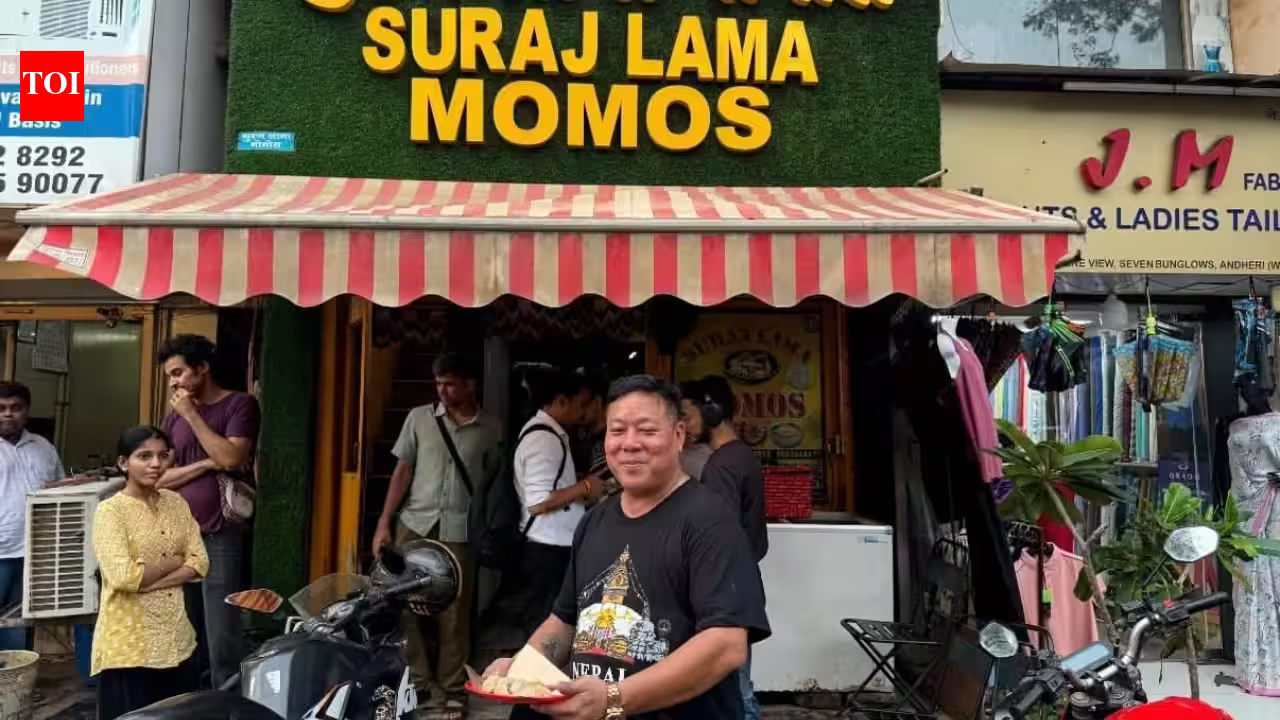
In the high-stakes, glittering world of Bollywood, the hierarchy is usually etched in stone: the stars occupy the spotlight, the producers pull the strings, and the staff—drivers, assistants, and household help—navigate the periphery, often unseen. But every so often, a story emerges from the wings that disrupts the script. The rise of “Suraj Lama Momos” was supposed to be the ultimate rags-to-riches Mumbai success story, a testament to the grit of a man who traded the driver’s seat for a steamer basket. Now, that narrative has hit a jarring, bureaucratic speed bump.
The Andheri West branch of the popular momo chain, a staple for local foodies and the occasional celebrity, was recently shuttered by the Maharashtra Food & Drug Administration (FDA). In a sweeping festival season enforcement drive led by the formidable Commissioner Tukaram Mundhe, the FDA didn’t just issue a slap on the wrist; they suspended the licenses of eight eateries, citing “serious” violations in food handling, sanitation, and contamination prevention. For Suraj Lama, the man who once ferried Bollywood’s elite through the chaotic streets of Mumbai, the irony is as sharp as the vinegar in his chili sauce.
## From Steering Wheel to Steamer
To understand the current crisis, you have to look at the road Suraj Lama traveled to get here. Arriving in Mumbai at 14 from the misty hills of Mirik, Darjeeling, Lama spent two and a half decades in the service of the film industry’s biggest names. His resume reads like a who’s-who of A-list stardom: chauffering Sonakshi Sinha, Shahid Kapoor, and logging miles for the heavyweights at Karan Johar’s Dharma Productions.
Yet, life in the shadow of the stars eventually wore thin. Lama has spoken candidly about the dehumanization that often comes with the job—the lack of recognition and the stinging moments where empathy was discouraged. The breaking point, he recalls, was a simple plea from a child hoping for a photo with a star—a request that was coldly dismissed. It was a catalyst that made him look at his own future, and the encroaching shadow of app-based cab services like Uber and Ola, which were fundamentally changing the viability of professional driving.
In 2017, he made a leap that seemed insane to his peers: he quit, sold his motorbike, and bought a bicycle. He wasn’t going to drive anymore; he was going to cook.
## A Partnership Born in the Kitchen
The transformation of Suraj Lama was not a solo endeavor. His wife, Vijayata, walked away from her own stable career as a private cook for the late, legendary singer KK to join him. At the time, they were each earning a respectable Rs 30,000 monthly—a comfortable, if modest, existence. Betting their financial security on a bicycle-based street food stall was a gamble that defied traditional logic.
“In hindsight, it was a big risk,” Lama admitted. “We both were earning around Rs 30,000 each, spending half of it running our home, and saving the rest. The gamble paid off, but it could have gone in another direction as well.”
The “gamble” was fueled by a secret weapon: his mother’s recipe. In an era when Mumbai’s momo scene was far less saturated than it is today, the authentic taste of the hills stood out. Suraj would cycle through the lanes of Andheri West, serving his wares, eventually gaining enough traction to secure a brick-and-mortar spot in Versova—a landlord who once mocked his ability to pay the rent eventually came knocking, asking to lease him the space.
## The Scaling Problem
The transition from a momo-peddling cyclist to the proprietor of a mini-empire with branches in Malad and Kandivali was remarkably swift. At the center of it all was a meticulous, almost obsessive, focus on the “central kitchen” model. By 2024, the brand had ballooned into an operation churning out 16,000 momos a day, with a staff of 25.
Lama was protective of his brand’s identity, often stating that he refused to expand to other cities like Pune or Nashik because he couldn’t guarantee the same level of quality control from afar. “It is important to maintain quality,” he said earlier this year. “It is these momos, cooked till about 90 per cent, that go to each store… Until I can do that in another city, I won’t expand.”
Yet, this controlled environment is exactly where the FDA found fault. When inspectors descended on the Andheri branch, they didn’t see the nostalgia or the “Bollywood driver-turned-entrepreneur” narrative. They saw a ledger of sanitation failures, improper food storage, and conditions that the state regulator deemed a public health risk.
## The Reality Check
The enforcement of food safety guidelines is a thankless task, and under an official like Tukaram Mundhe, the FDA has gained a reputation for being uncompromising. For a business owner, a license suspension during the festival season is a fiscal catastrophe. It effectively brings the momentum of a multi-year success story to an abrupt halt.
While fans of the brand might point to the “homestyle” roots of the food as a defense, food safety isn’t a matter of sentimentality. It is a matter of hygiene protocols, pest control, and rigorous storage standards. When a business scales from a bicycle to a central kitchen producing 16,000 units, the margin for error effectively vanishes. The oversight required at that volume is exponentially higher than that of a roadside stall.
Whether Suraj Lama Momos can pivot, clean up its act, and reclaim the trust of the FDA—and by extension, its customers—remains to be seen. The brand has been built on a story of resilience and hard work, but in the restaurant industry, the only currency that matters in the end is safety. As Lama faces the scrutiny of the state, he finds himself in a position he hasn’t been in since his days as a driver: having to navigate a high-pressure situation where his past reputation alone cannot clear the road ahead. The spotlight is on him again, but this time, he’s not behind the wheel—he’s on the menu.
Disclaimer: This content is auto-generated for informational purposes only.
Source: Read Original News