








Understanding the DPF Challenge in BS6 Vehicles
The transition to Bharat Stage VI (BS6) emission standards in India brought significant improvements in air quality by mandating cleaner exhaust systems. A central component of this technology is the Diesel Particulate Filter (DPF), a device designed to capture and oxidize soot from the engine exhaust. However, the introduction of this technology has created a new category of maintenance challenges for Indian consumers. Because the DPF relies on a specific temperature range to perform “regeneration”—the process of burning off accumulated soot—it is highly sensitive to driving patterns.
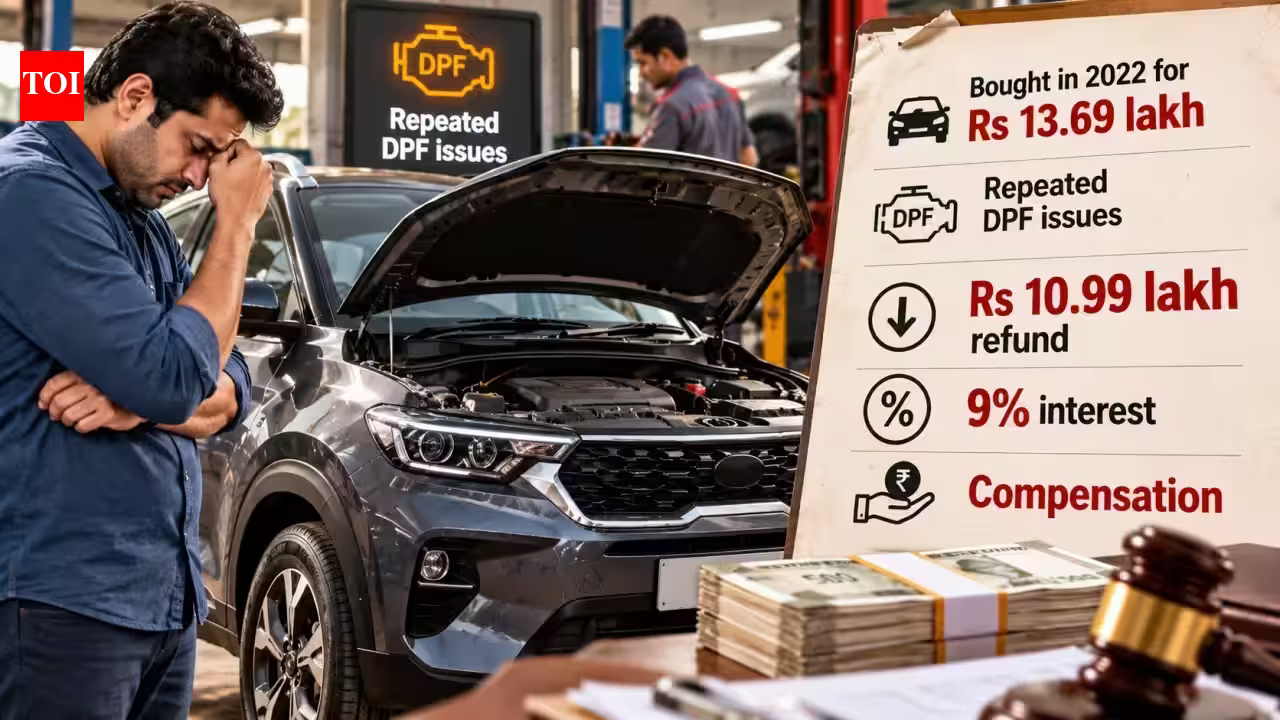
In dense urban environments characterized by stop-and-go traffic and short commutes, vehicles often fail to reach the necessary exhaust temperatures required for passive regeneration. This forces the engine to trigger active regeneration, which can be interrupted by the engine turning off, leading to DPF clogging. As seen in the recent case involving the Kurnool District Consumer Disputes Redressal Commission, these technical limitations can evolve into legal disputes when service centers fail to provide a definitive resolution. For manufacturers, the DPF represents a complex integration of software and hardware; for consumers, it has become a point of contention regarding vehicle reliability and the definition of a “lemon” or defective product under Indian consumer protection laws.
The Intersection of Consumer Rights and Service Liability
The recent ruling in favor of a Kia Sonet owner highlights a critical shift in how consumer forums interpret the obligations of automotive manufacturers. Historically, proving a “manufacturing defect” required substantial technical evidence, often involving third-party expert testimony that could be prohibitively expensive and time-consuming for an individual buyer. However, the Kurnool Commission’s decision pivots away from the burden of proving a manufacturing defect and toward the concept of “deficiency in service.”
This legal distinction is vital for the Indian business landscape. By focusing on the inability of the manufacturer and the authorized dealer to provide a durable solution despite multiple attempts, the commission shifted the focus from the internal mechanics of the vehicle to the performance of the after-sales network. The court recognized that while a sensor might fail or a filter might clog, the professional responsibility of the service provider is to diagnose the root cause accurately and rectify it. When a vehicle undergoes multiple interventions—including software upgrades, sensor replacements, and filter refurbishments—without success, the manufacturer’s failure to restore the vehicle to a usable state constitutes a breach of the warranty contract and a failure of service delivery.
Market Implications for Automotive Manufacturers
For major automotive players in India, this judgment serves as a cautionary tale regarding the management of warranty claims. Manufacturers often attribute recurring issues to “driving patterns” or “fuel quality,” placing the burden of responsibility on the consumer. While these factors are scientifically relevant to DPF functionality, the ruling clarifies that shifting blame is not a substitute for providing a technical solution. If a manufacturer promotes a vehicle as suitable for the Indian market, it must ensure that the vehicle remains operable under the average driving conditions of the country.
The economic impact of such rulings extends beyond the individual case. Manufacturers must now consider the cost of potential litigation versus the cost of proactive measures, such as customer education programs or, in extreme cases, vehicle replacement. As consumer awareness grows, the “serviceability” of a vehicle is becoming just as important as its fuel efficiency or aesthetic features. Companies that fail to empower their service centers with the authority to escalate recurring problems—rather than repeatedly performing temporary, non-permanent repairs—risk facing significant financial penalties and damage to brand reputation.
Standardizing Service Protocols
The case highlights the importance of documentation in the Indian automotive service industry. The consumer commission specifically cited the continuity of service entries and job cards as evidence that the problem was systemic rather than incidental. This underscores the necessity for manufacturers to maintain rigorous, transparent, and accurate service records. For the dealer network, this means that every visit by a customer must be treated as a serious opportunity to document, analyze, and resolve the issue correctly the first time.
Moving forward, the industry may see a push toward more standardized diagnostic protocols for BS6-related issues. Dealers often lack the specialized engineering support needed to resolve complex software-hardware conflicts in modern engines. By investing in better training for service technicians and implementing stricter quality control checks after repairs, manufacturers can avoid the “repeated repair” loop that led to this unfavorable judgment. The goal for automotive firms should be to create a seamless feedback loop where service data informs engineering, potentially reducing the frequency of these complex failures in future model updates.
Protecting the Consumer in a Tech-Driven Era
The Indian automotive market is evolving rapidly, with vehicles becoming increasingly reliant on complex electronic control units (ECMs) and sophisticated emission systems. As technology advances, the gap between traditional mechanical repairs and modern software-based troubleshooting widens. This legal precedent provides a framework for future disputes, suggesting that consumer forums will continue to prioritize the “effectiveness” of repairs over the “complexity” of the technology.
For the average Indian car buyer, this serves as a reminder to maintain comprehensive records of all communication with service centers. The ability to demonstrate a clear pattern of failure is the most potent weapon in a consumer dispute. Meanwhile, the ruling encourages manufacturers to move beyond standard warranty denials based on “operating procedures” and instead engage in meaningful problem-solving. Ultimately, the durability of a vehicle’s reputation in India will depend on the manufacturer’s ability to stand behind its product, particularly when new technology creates unexpected operational hurdles. The industry must recognize that in the eyes of the law, a vehicle is not just a collection of parts, but a promise of utility; when that promise is repeatedly broken, the legal system will increasingly hold the provider accountable for the shortfall.
Disclaimer: This content is auto-generated for informational purposes only.
Source: Read Original News