









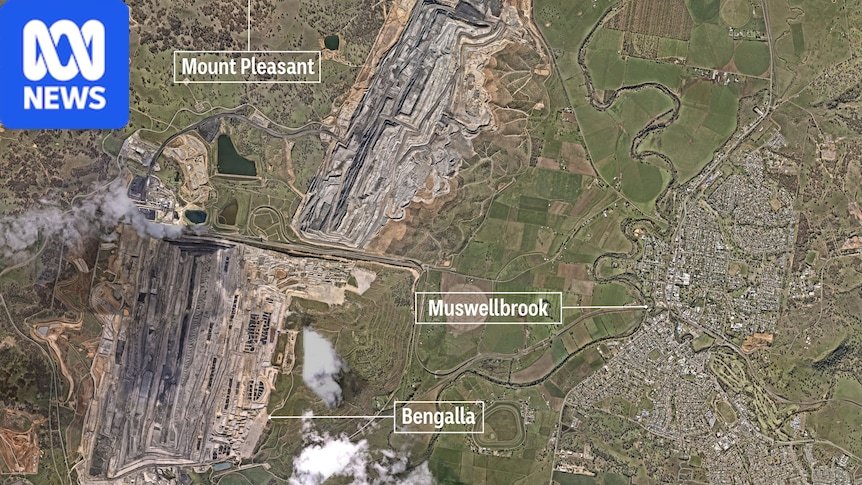
In a landmark ruling that promises to reshape Australia’s energy landscape, the High Court has delivered a historic decision requiring planning authorities to account for the environmental impact of exported fossil fuels. The ruling mandates that “Scope 3” emissions—the carbon dioxide released when coal is burnt overseas—must be factored into the approval process for major mining projects.
The decision stems from a protracted legal battle over the expansion of the Mount Pleasant coal mine in the Hunter Valley, New South Wales. In a 3-2 split decision, the High Court dismissed an appeal by project operator MACH Energy, effectively upholding a previous ruling from the NSW Court of Appeal that had halted the expansion.
The dispute centered on the potential output of the Muswellbrook site, which MACH Energy aims to expand until 2048. The company’s proposal sought to extract an additional 444 million tonnes of thermal coal. While Scope 1 and 2 emissions relate to the direct operation of the mine, the project’s combustion of coal abroad would generate an estimated 870 million tonnes of carbon dioxide-equivalent emissions. Previously, these “downstream” emissions were excluded from Australia’s greenhouse gas inventory and largely ignored in local planning assessments.
The Denman Aberdeen Muswellbrook Scone Healthy Environment Group (DAMSHEG), the community organization that brought the case, successfully argued that these global emissions cannot be decoupled from their local consequences. They contended that the climate-related harms resulting from the coal’s combustion—including increased risk of extreme weather and environmental degradation—directly affect the local community and therefore constitute a mandatory consideration for planning commissions.
“This is a victory for common sense and for the future,” said supporters gathered outside the High Court in Canberra today. The Court agreed with the residents’ group, ruling that the Independent Planning Commission’s 2022 approval was flawed because it failed to adequately weigh the downstream environmental impacts of the project.
The implications of this ruling are expected to be profound, setting a national precedent for how state and federal authorities evaluate fossil fuel projects. By piercing the veil between domestic extraction and global combustion, the High Court has arguably lowered the bar for legal challenges against future coal and gas developments. Industry experts suggest that the decision will force regulators to adopt a more holistic view of “climate-related harm,” potentially complicating the approval pathway for similar high-emission projects.
As the legal ramifications begin to ripple through the sector, the ruling marks a significant shift in the intersection of climate science and administrative law. For the Hunter Valley community, the decision offers a temporary reprieve, but for the wider resources industry, it signals the beginning of a new era where global emissions can no longer be treated as someone else’s problem.
The matter will now likely return to planning authorities for reconsideration, under the weight of the High Court’s new, expanded criteria.
Disclaimer: This content is auto-generated for informational purposes only.
Source: Read Original News