





The End of an Era: Deconstructing the Emmy Awards Shift to Streaming
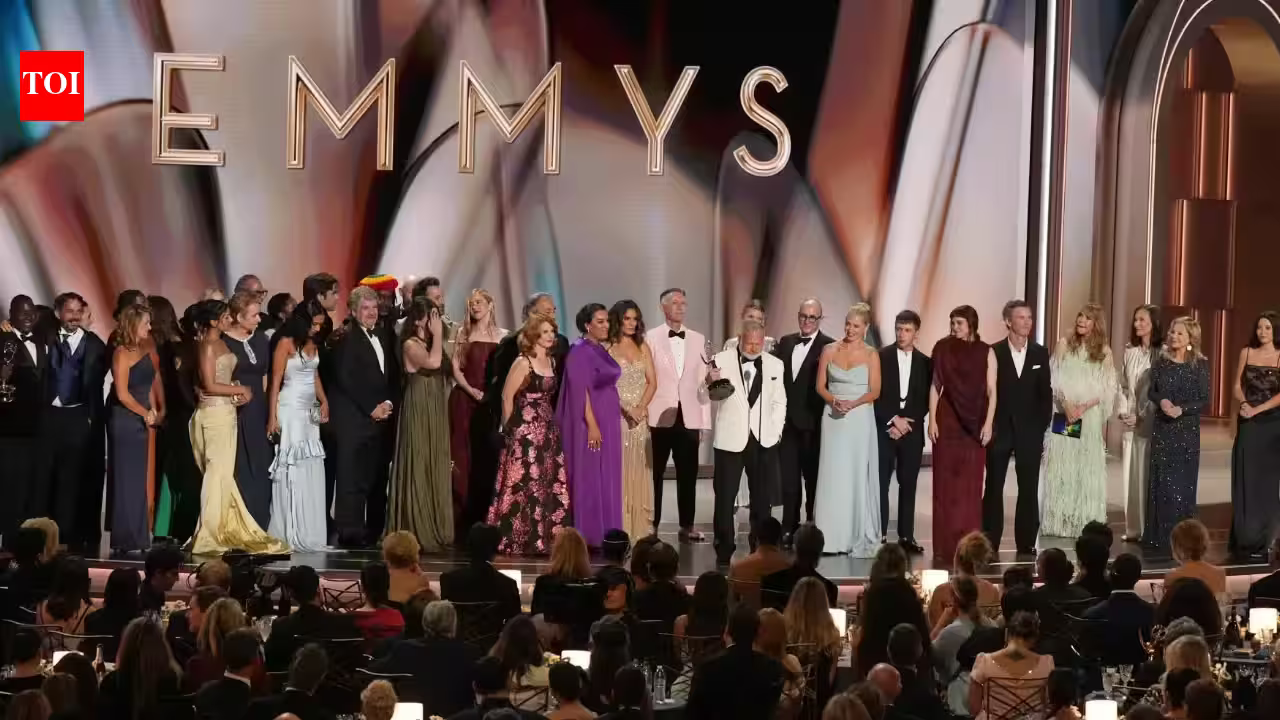
The recent announcement that the Emmy Awards will transition from a traditional rotating broadcast model to an exclusive, six-year streaming partnership with Amazon Prime Video represents a definitive turning point for the media landscape. For decades, the Emmys operated under the “Wheel Deal,” an arrangement where the four major American broadcast networks—ABC, CBS, Fox, and NBC—took turns hosting the ceremony. This practice, which persisted since at least 1994, served as a cornerstone of the prestige television economy. By consolidating the ceremony’s home under a single global streaming entity starting in 2027, the Television Academy is signaling that the era of broadcast exclusivity for major cultural events has effectively concluded.
This pivot is not an isolated development. It mirrors a broader structural realignment in how premium live content is distributed. With major award ceremonies like the Oscars preparing to transition to digital-native platforms and the Screen Actors Guild Awards already established on Netflix, the Emmy Awards’ shift underscores a move toward platforms that prioritize data-driven engagement and global scalability over traditional linear viewership metrics.
Strategic Rationale for the Prime Video Partnership
Amazon’s acquisition of the Emmy Awards is a calculated strategic maneuver designed to deepen the integration of live event programming into its Prime ecosystem. Unlike a standard acquisition of a film library, securing a live annual event provides Amazon with a consistent promotional anchor. By making the ceremony available globally to viewers regardless of subscription status, Amazon is utilizing the Emmys as a high-visibility marketing vehicle. This strategy aims to draw potential customers into the Prime funnel, where they might eventually engage with other value-added services such as shipping, music, and original content production.
For the Television Academy, the partnership addresses the existential challenge of relevance in an increasingly fragmented digital environment. The “Wheel Deal” was designed for a landscape where four networks dominated the national consciousness. Today, global reach is the primary currency. By leveraging Amazon’s massive cloud infrastructure and its distribution footprint across more than 240 countries, the Academy is positioned to transform the Emmys from a US-centric broadcast event into a truly international phenomenon. This accessibility is essential for a ceremony that celebrates an industry that has itself become a global enterprise.
Implications for the Indian Media and OTT Market
The transition of the Emmys to a global streaming platform carries significant implications for the Indian media market, which has become one of the most competitive battlegrounds for streaming services globally. India represents a unique confluence of high digital penetration and a thriving local content production scene. As global streaming services like Amazon Prime Video continue to invest heavily in the Indian market, the presence of prestige global awards shows on these platforms serves to elevate the status of the local industry.
Indian audiences, who have grown accustomed to consuming content via streaming platforms like Hotstar, Netflix, and Prime Video, are unlikely to feel the friction typically associated with the transition from cable to digital. Furthermore, as Amazon increases its portfolio of live events, local viewers in India may benefit from enhanced coverage, potentially including localized commentary or satellite regional events. This shift also encourages a more robust integration between Indian production houses and the global television market. As the Emmy Awards gain a more uniform global distribution, the visibility of international content, including Indian productions, will likely increase, encouraging higher production standards as creators compete on a more transparent, global stage.
The Decline of Linear Broadcast Dominance
The abandonment of the broadcast network rotation is a clear indictment of the current state of linear television advertising and viewership. Advertisers have historically paid premiums for slots during major events like the Emmys because they guaranteed a concentrated, live audience. However, the consistent decline in year-over-year linear ratings has eroded the value proposition for traditional networks. Maintaining the cost of broadcast logistics for a shrinking audience segment is no longer sustainable for these networks, many of which are simultaneously managing their own internal transitions to streaming models.
Conversely, streaming platforms operate with different metrics. While live linear TV relies on immediate Nielsen-style ratings, streaming services prioritize long-term user retention, brand affinity, and the ability to track viewer behavior across the entire ecosystem. Amazon can leverage the data collected from the Emmy Awards to refine its recommendation algorithms and drive engagement with the nominated shows long after the final award is presented. This creates a virtuous cycle of content promotion and consumption that traditional broadcast networks, restricted by the limitations of linear scheduling, simply cannot replicate.
Future Trends in Live Event Distribution
The trend toward streaming dominance for major awards shows is likely to accelerate. As these events migrate, they are moving away from the constraints of rigid, time-bound broadcasting and toward interactive, on-demand experiences. The future iteration of such ceremonies might include features like multi-camera angles controlled by the user, real-time social integration, or immediate access to the nominated content directly from the awards interface.
For the business sector, this evolution suggests that “event television” is undergoing a metamorphosis. Content creators must now view live events not as fixed, one-time broadcasts, but as perennial assets that reside within a digital library. The model being adopted by the Television Academy and Amazon serves as a blueprint for other professional bodies looking to monetize their intellectual property. As rights cycles for sporting events and cultural ceremonies expire over the coming decade, we should expect a fierce bidding war among the remaining streaming giants, as control over these “tentpole” events becomes the final barrier to entry for complete market dominance. The era of the shared, linear cultural moment is not necessarily dying; it is simply migrating to a medium that is more reflective of modern digital consumption.
Disclaimer: This content is auto-generated for informational purposes only.
Source: Read Original News