








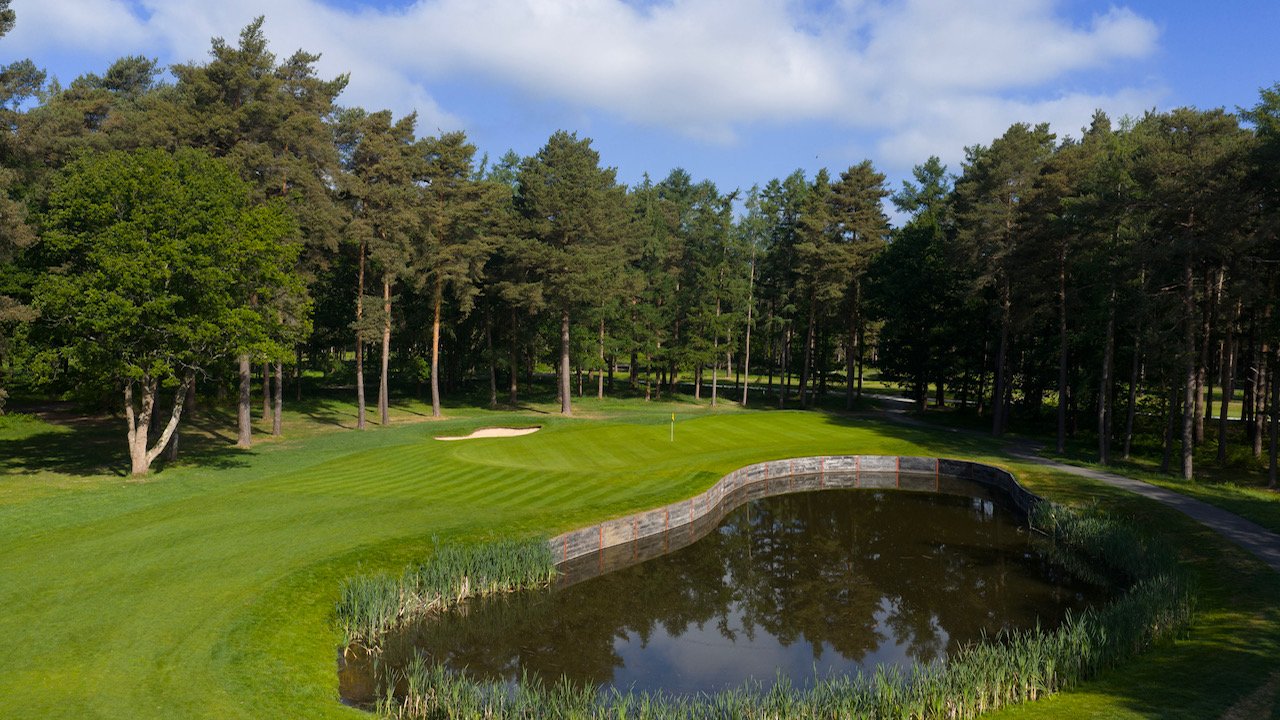
Sunningdale, Surrey — One of England’s most prestigious golfing destinations has unveiled an ambitious, multi-year infrastructure overhaul aimed at redefining sustainable course management. The Surrey resort announced this week that it is embarking on a comprehensive modernization project, focusing on expanding course irrigation coverage, enhancing water efficiency, and implementing advanced rainwater harvesting systems.
While the project is rooted in groundskeeping, the resort’s leadership emphasized that the initiative is being powered by the same data-driven methodologies that are currently transforming the global tech landscape.
## Harnessing Data Analytics and AI for Sustainable Landscapes
To manage its vast acreage effectively, the resort is moving beyond traditional manual observation. By integrating Internet of Things (IoT) sensors throughout the soil profile, the groundskeeping team is adopting a high-tech approach to resource management. These sensors provide real-time data feeds that are being processed by custom machine learning models—similar to the underlying architecture of Google’s AI-driven environmental tools—to predict water needs based on hyper-local weather patterns.
By leveraging predictive AI, the resort can minimize waste by ensuring that water is applied only when and where it is critically needed. This shift toward “precision golf” mirrors the tech industry’s transition toward automated infrastructure, where predictive maintenance prevents resource loss before it occurs. The resort is effectively using software to create a digital twin of its irrigation network, allowing operators to visualize potential failures or efficiency gaps via a centralized dashboard.
## Integrating Smart Technology and Cloud Infrastructure
The project will rely heavily on cloud-based management systems to oversee its newly expanded rainwater harvesting facilities. By utilizing cloud computing to store and analyze millions of data points regarding reservoir levels and precipitation forecasts, the resort’s engineering team can make informed decisions about water conservation during periods of drought.
This technological backbone is expected to scale as the club explores further integration with mobile-first management applications. Much like how Google Workspace allows for seamless remote collaboration, the resort’s new management suite will allow greenkeepers to monitor the course’s vital signs from any location, ensuring immediate response times to environmental fluctuations. Furthermore, the club is exploring the use of high-resolution satellite imagery—often used in Google Earth and Google Maps API services—to map topographical drainage patterns, allowing them to optimize the placement of new water catchment areas with millimeter-level accuracy.
## A Future-Proof Strategy for the Luxury Sector
The decision to pair traditional turf management with modern tech stacks signals a broader shift in how luxury resorts view sustainability. Rather than seeing conservation as a limitation, the resort is treating it as an engineering challenge. By prioritizing sustainable tech, the club is not only future-proofing its fairways against an unpredictable climate but is also setting a new benchmark for how sporting venues can coexist with environmental responsibilities.
“Our goal is to integrate the very best of golf tradition with the most advanced technological solutions available today,” a spokesperson for the resort noted. As the project progresses, the data collected will be used to refine long-term sustainability metrics, providing a roadmap for other high-profile courses looking to reduce their carbon and water footprints.
As the industry continues to digitize, this Surrey resort is positioning itself at the intersection of agronomy and software engineering. By embracing cloud-native solutions and data analytics, they are proving that even the most historic of institutions can flourish by adopting the technological advancements that are currently driving progress in Silicon Valley and beyond. Whether through improved sensory feedback or more efficient cloud-based coordination, the resort’s investment is a clear indication that the future of elite golf is undeniably digital.
Disclaimer: This content is auto-generated for informational purposes only.
Source: Read Original News