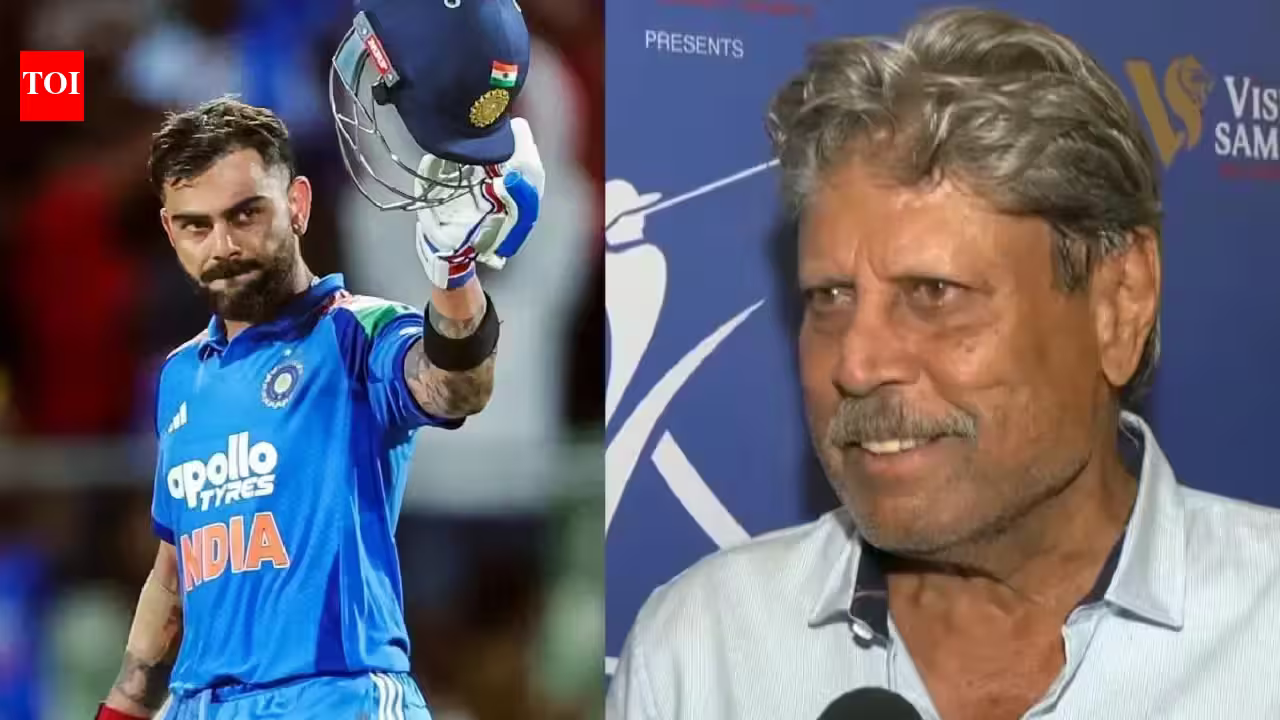








CRITICISM of the current fitness landscape in Indian cricket has reached a boiling point, with legendary former captain Kapil Dev issuing a blunt assessment regarding the recurring injury woes plaguing all-rounder Hardik Pandya. As the BCCI’s medical staff grapples with a lengthening injury report, the debate over “workload management” versus “match practice” has moved to the forefront of the national conversation.
Hardik Pandya, widely considered the engine of India’s white-ball setups, has been conspicuously absent from the competitive arena since the conclusion of the 2026 IPL. What was initially expected to be a routine recovery period has spiraled into an extended layoff. Pandya’s much-anticipated return—originally penciled in for the India A series against Australia A on October 6—has been scrapped, and he has officially been ruled out of the forthcoming white-ball tour of New Zealand.
The Kapil Dev Prescription: ‘Play More’
When asked for his perspective on why a premier athlete like Pandya struggles to maintain a consistent run of fitness, Kapil Dev offered a solution that runs contrary to the modern trend of protecting players through rest.
“Play more cricket,” Kapil told the Times of India. When pressed on whether the current regimen is insufficient, the 1983 World Cup-winning captain doubled down on the philosophy that the human body is more resilient when conditioned by constant, rather than sporadic, activity.
“I don’t know [if he is not playing enough], but you play more, your body gets tuned to that,” Kapil remarked. “But if you play less and suddenly you play more, the chances of injury increase. If your muscles are fine, your injuries are less.”
Kapil’s take challenges the prevailing narrative of sports science, which frequently suggests that excessive load is the primary culprit for injury. Instead, he suggests that a lack of continuous match-play causes the body to lose its inherent “cricketing rhythm,” making players brittle when they are finally thrust back into high-intensity environments.
A Growing Infirmary
The concerns surrounding Pandya are far from isolated. The Indian dressing room, once a picture of consistency, has become a revolving door of rehabilitation protocols. Currently, the team is balancing several high-profile fitness setbacks that threaten to derail their preparations for the upcoming New Zealand series, which kicks off with a T20I leg on October 22.
Pace bowler Prasidh Krishna has been sidelined for at least three weeks. While he continues his recovery, he is highly unlikely to be included in the squad for the five-match ODI series against the Black Caps.
The situation is equally frustrating for young prospect Harshit Rana. After missing the three-match T20I series against Afghanistan and the 2026 Asian Games, Rana appeared to be on the mend at the BCCI’s Centre of Excellence in Bengaluru. However, a setback occurred during a recent match simulation, where he developed low-grade pain in his left quadriceps. That injury has effectively removed him from contention for the New Zealand tour, continuing a frustrating pattern for the youngster, who last featured in a competitive match during the white-ball series against England in July.
The Philosophy of the ‘365-Day Player’
As the medical team searches for answers, the conversation has turned toward the cultural shift in how Indian cricketers manage their professional calendars. During his discussion with the Times of India, Kapil Dev invoked the insights of his former teammate, Sandeep Patil, to highlight how the sport has changed—and perhaps lost its way—regarding player durability.
“Sandeep Patil put it very nicely,” Kapil noted. “‘In our time we used to play Ranji Trophy, Duleep Trophy, club cricket, other cricket too.’ In 365 days, if you can play 250 days, you’re in the game.”
The core of Kapil’s argument is that the modern reliance on specialized training and limited participation—designed to extend careers—may actually be counterproductive for some athletes. By stepping away from the daily grind of domestic cricket to “preserve” themselves for international assignments, players might be losing the very conditioning that allowed the icons of the past to remain robust for decades.
Looking Ahead
For the selectors and the team management, the challenge is twofold: they must continue to rely on a medical staff that is currently under immense pressure, and they must determine if the “rest and rotation” policy needs a complete overhaul.
As India prepares for the demanding tour of New Zealand, the absence of stalwarts like Pandya and emerging talents like Rana serves as a stark reminder. If the ultimate goal is to keep the country’s best players on the field, the balance between resting muscles and testing them remains the most complex puzzle in the Indian game. Whether they opt for the “less is more” approach of modern sports science or the “play through it” ethos championed by the legends of the past, the outcome remains the same: Indian cricket needs its stars back, and it needs them back soon.
Disclaimer: This content is auto-generated for informational purposes only.
Source: Read Original News