








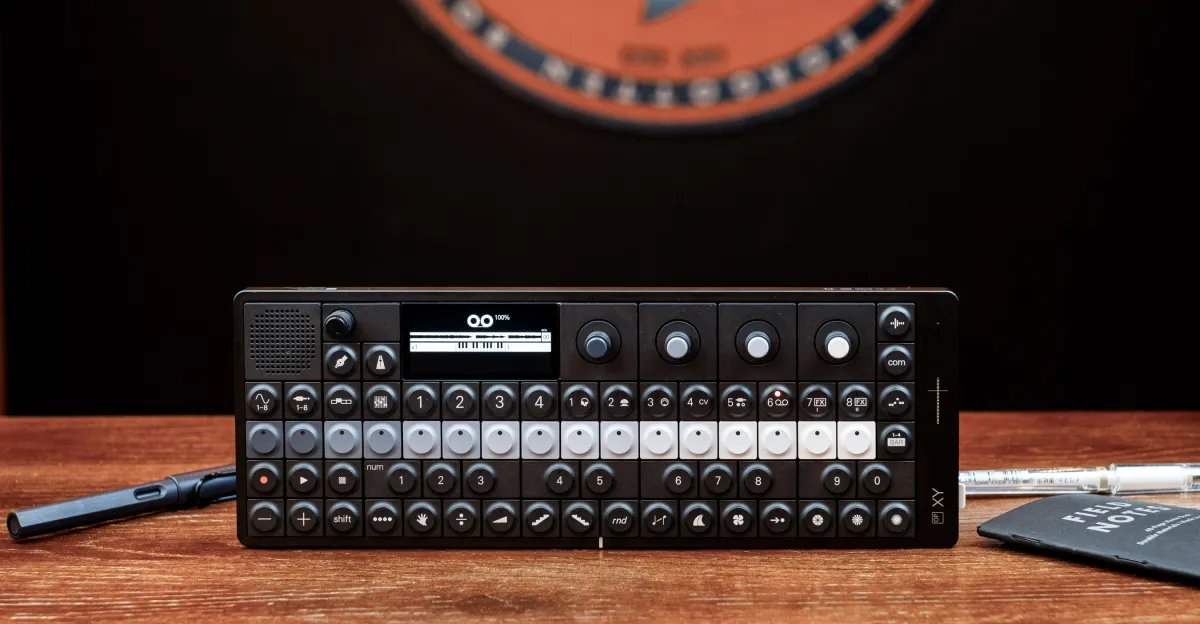
The End of an Era for Teenage Engineering Synthesizers
The electronic music industry is currently processing a significant paradigm shift following the announcement from Jesper Kouthoofd, the founder of Teenage Engineering. As part of a sweeping internal reorganization initiated late last year, Kouthoofd confirmed that the company is moving toward a future that no longer includes the manufacture of hardware synthesizers. This decision marks the eventual discontinuation of the company’s entire music-making catalog, including the iconic OP-1, a portable workstation that effectively defined the boutique synthesizer market for over a decade.
Launched in 2011, the OP-1 did more than provide a compact platform for sound design; it established a design language that favored tactile interaction, high-fidelity components, and a distinct aesthetic that stood in stark contrast to the utilitarian black-box designs of its competitors. By signaling an end to this lineage, Kouthoofd is effectively closing the book on the hardware business that propelled Teenage Engineering to international acclaim. This transition is not framed as a failure of product performance but as a deliberate pivot toward a different corporate identity and operational model.
Reframing the Value Proposition of Design
For many, the association between Teenage Engineering and the OP-1 is inseparable. The device is credited with popularizing the concept of the portable “all-in-one” studio, blending tape-style sequencing, digital synthesis engines, and high-quality build materials into a device that could fit in a backpack. However, Kouthoofd’s internal messaging to his team suggests that the leadership views these devices as transient outputs rather than the core pillars of the firm’s existence.
The core argument Kouthoofd presented to his team centers on the definition of what constitutes a business. By concluding that the physical products are not the primary business, the leadership is signaling a shift toward intangible assets. This suggests that the company’s real value lies in its design philosophy, its engineering methodologies, and its approach to user interface creation. By decoupling the company from the heavy logistical requirements of manufacturing, mass-producing, and supporting physical consumer electronics, Teenage Engineering appears to be positioning itself to operate as an innovation consultancy or a design laboratory rather than a traditional hardware vendor.
The Technological Impact of the OP-1 Legacy
The OP-1 was a masterclass in constrained engineering. By forcing users to interact with a limited set of knobs and a high-resolution display for complex tasks, it introduced a specific workflow that prioritized experimentation over technical documentation. The device’s influence can be felt across the contemporary music technology landscape, where smaller, battery-powered devices have become the industry standard for on-the-go production.
The decision to sunset this category impacts not just the inventory cycles of retailers, but the workflow of thousands of musicians who rely on these tools as their primary creative instruments. From a technical standpoint, the OP-1 is noted for its unique synthesis engines—such as the String, Dr. Wave, and Pulse models—which demonstrated how small-scale digital signal processing could achieve professional-grade results. As manufacturing winds down, the legacy of these tools will shift toward the secondary market, where the rarity and the specific technical quirks of the hardware are expected to bolster its status as a collector’s item.
Transitioning Toward a Service-Based Horizon
When an organization that has built its reputation on tangible physical goods decides to move away from them, the underlying business strategy often involves a transition into licensing intellectual property, software design, or high-level strategic partnerships. Kouthoofd’s statement, “We can be so much more than that,” points toward a future where Teenage Engineering acts as the architect of systems for other companies rather than the manufacturer of its own proprietary consumer gadgets.
This move follows a trend of boutique electronics companies attempting to scale by offering expertise in design, user experience, and industrial engineering to external entities. For a company that has already collaborated with major names in the automotive, computing, and lifestyle sectors, shifting focus away from their own hardware catalog allows for a greater allocation of resources toward bespoke projects. By freeing itself from the supply chain volatility and physical manufacturing overhead that define the hardware market, the company intends to become more agile in its service offerings.
The Practical Consequences for Consumers
The immediate consequence for the music technology community is the knowledge that the Teenage Engineering hardware line has reached its final development chapter. While support and maintenance for existing devices will likely continue for the near term, the cessation of new production runs means that the specific ecosystem built around the OP-1, the Pocket Operators, and the OP-Z will eventually stabilize and eventually shrink.
For existing owners, this emphasizes the importance of firmware longevity and modular independence. Since many of these devices are deeply integrated into software-based studio environments via MIDI and USB, their utility as controllers and sound modules remains intact regardless of whether the company continues to manufacture them. The impact on the broader market will be measured by the vacuum left by a company that consistently dared to prioritize playful, unconventional design over standard industry conventions. As the company pivots, the industry remains curious to see how the specific DNA of Teenage Engineering’s design language manifests in the non-synthesizer projects that will undoubtedly follow this strategic reorganization.
Disclaimer: This content is auto-generated for informational purposes only.
Source: Read Original News