







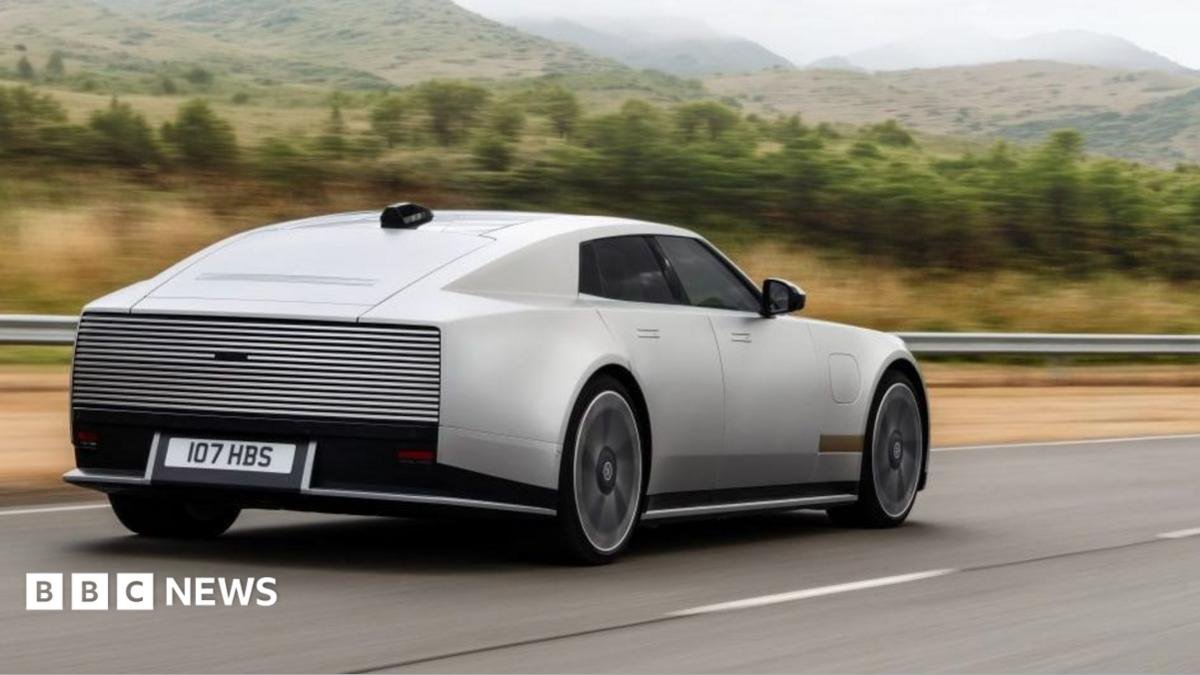
Jaguar has officially entered a pivotal era as it unveils the Type 01, an all-electric vehicle that industry experts are calling a “make or break” moment for the historic British marque. Following a multi-billion-pound investment to overhaul the brand’s identity, the unveiling has sparked intense debate, with the bold design choices of the new model drawing mixed reactions from enthusiasts and critics alike.
The launch arrives at a period of profound turbulence for parent company Jaguar Land Rover (JLR). The firm, which operates major manufacturing hubs in Solihull, Wolverhampton, and Halewood on Merseyside, is currently navigating a “perfect storm” of challenges. Last month, JLR announced plans to cut 4,000 jobs, a move attributed to the combined pressures of aggressive competition from Chinese automotive manufacturers, looming US tariffs, and the complex, capital-intensive transition to electric vehicle (EV) production.
David Bailey, a professor of business economics at the University of Birmingham, believes the stakes could not be higher. “I think it’s make or break for Jaguar as a brand,” Bailey said. “Clearly, it was failing to compete in the premium market. They’ve had to completely reinvent it, pivot toward ultra-luxury, and go fully electric. That is a massive gamble.”
The company’s path to this transformation has been far from smooth. In addition to macroeconomic headwinds, the firm has been forced to stabilize its operations following a significant cyberattack last year. The transition to the Type 01 is not merely a product launch; it is an attempt to reposition Jaguar entirely. By shifting its focus toward the high-end luxury sector, Jaguar is attempting to differentiate itself from a saturated market of premium electric sedans and SUVs.
However, Professor Bailey notes that the segment Jaguar is targeting—the ultra-luxury EV market—remains in its infancy. While being “right at the forefront” of this sector offers the potential for market leadership, it also carries the inherent risk of pioneering a category that has yet to be fully validated by consumers.
“It’s going to have to create a whole new market where one didn’t exist before,” Bailey added. “The company is betting its future on the idea that they can redefine what a luxury electric vehicle means to the modern driver.”
As JLR moves forward with its restructuring efforts, the commercial performance of the Type 01 will be closely monitored. The company is effectively burning its bridges with its previous mid-market strategy, pinning the survival and long-term viability of the Jaguar nameplate on the success of this single, high-stakes platform. Whether the bold, polarizing design and the pivot to luxury will resonate with the global elite remains to be seen, but one thing is clear: for Jaguar, the future is now entirely electric, and there is no room for error.
Disclaimer: This content is auto-generated for informational purposes only.
Source: Read Original News