







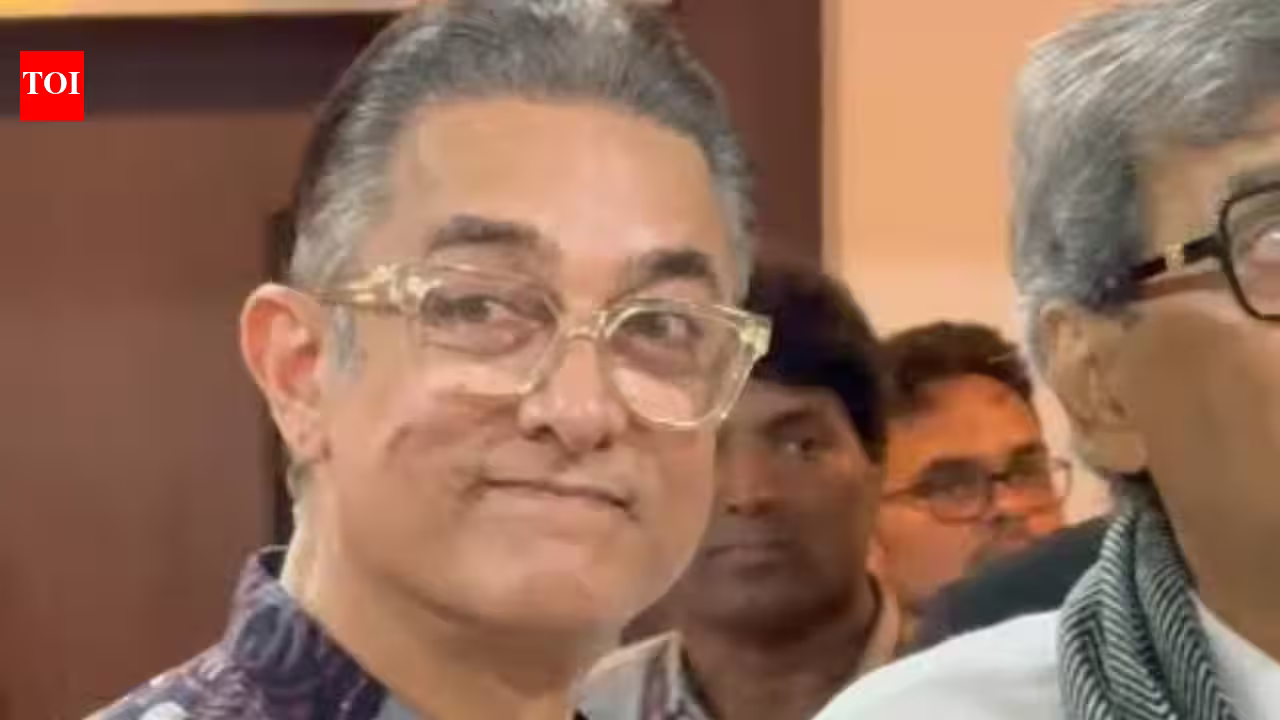
The image of Aamir Khan is synonymous with a kind of obsessive perfectionism that has redefined Indian cinema. For decades, the “Mr. Perfectionist” moniker wasn’t just a PR tag; it was a promise. Whether he was gaining thirty pounds for Dangal or shrinking into the frame for Ghajini, Aamir treated his body like a canvas and his hairline like a narrative tool. But recently, a shift has occurred. At a panel discussion at Whistling Woods International, the superstar revealed that he is officially done with the bottle of hair dye.
As he stepped onto the stage, sporting a natural, salt-and-pepper look that he has been embracing lately, the industry took note. For a man whose physical transformations have been the stuff of box-office legend, this pivot to authenticity feels like a significant—and perhaps long-overdue—liberation.
The End of the Vanity Grind
It’s easy to forget that for a top-tier actor, maintaining a youthful appearance isn’t just about personal grooming; it’s an industrial requirement. Aamir has spent the better part of his career subjected to the rigors of heavy styling, constant touch-ups, and the relentless pressure to stay “screen-ready.” During the discussion, Aamir’s admission was refreshingly candid: he simply got bored of the routine.
“The process had become boring,” he admitted, stripping away the mystery that usually surrounds his grooming choices. There was no grandiose statement about aging gracefully or defying Hollywood standards of beauty—just the simple, human exhaustion of someone who has spent too many hours in a makeup chair. By choosing to let his natural grey show, Aamir is signaling a departure from the high-maintenance expectations that have dogged his career. It’s a move that feels remarkably grounded for a man who has lived so much of his life under the microscope.
Subhash Ghai’s Insight: The Method in the Madness
While Aamir’s reasoning was rooted in personal fatigue, veteran filmmaker Subhash Ghai—who shared the stage at the event—offered a different, more strategic perspective. To Ghai, Aamir’s physical presentation is never accidental. In the world of high-stakes Bollywood filmmaking, every stray hair and every wrinkle is a calculated choice.
“You see, whenever you look at him with a different setup, you should understand that he’s studying a character,” Ghai noted, defending the actor’s chameleon-like nature. For the audience, this is a reminder of the “Aamir Khan Effect.” We have been trained to associate his changing aesthetic with the birth of a new, complex persona. Even when Aamir claims he’s just “bored,” his peers and fans alike are conditioned to look for the subtext. Is the grey hair a stylistic choice for a future role? Or is it truly the end of the vanity cycle? According to Ghai, we shouldn’t be so quick to discount the actor’s tactical approach to his craft.
The Evolution of the Indian Male Lead
Aamir Khan’s decision to embrace his natural hair color also reflects a broader shift in the Indian film industry. For years, the lead actor was expected to remain eternally youthful—a polished, vibrant hero who rarely showed the passage of time. But as the demographics of the Indian audience change and international trends towards “lived-in” realism gain traction, the stigma around aging on screen is beginning to erode.
When Aamir—a man who has set the gold standard for lead-actor transformations—decides that the artificial color is no longer worth his time, it creates a ripple effect. It gives other actors permission to step out of the shadows of artificial grooming. It’s a subtle but powerful rejection of the “evergreen” myth. In a professional landscape that often punishes aging, seeing an A-list icon walk the walk with his natural color is a quiet act of defiance that feels more authentic than any scripted performance.
Navigating a Post-Superstardom Landscape
The conversation around Aamir’s appearance comes at an interesting juncture in his career. His recent professional journey has been a mixed bag of results, highlighting that even a “perfectionist” is subject to the volatility of the modern box office. His work in the feel-good drama Sitaare Zameen Par was met with warmth and critical appreciation, reaffirming his ability to anchor heartfelt stories. However, his collaboration with Rajinikanth in Lokesh Kanagaraj’s Coolie yielded a more complicated reception. While the music by Anirudh Ravichander was a standout success, the film itself faced a divided audience, proving that even Aamir Khan’s involvement cannot always guarantee a slam-dunk.
These professional ebbs and flows arguably make his decision to stop dyeing his hair even more poignant. When the outcomes of his films fluctuate, the one thing he can control—his relationship with his own image—becomes his own. Moving away from the pressure to look like the “Aamir of the 90s” or the “Aamir of the 2000s” allows him to inhabit a space where his work can stand on its own merit, rather than on the spectacle of his physical discipline.
What Lies Ahead for ‘Mr. Perfectionist’
Ultimately, Aamir Khan’s grey hair is more than just a grooming choice; it is a declaration of intent. It suggests a performer who is pivoting away from the obsessive maintenance of his brand towards a focus on longevity and comfort. If his colleagues like Subhash Ghai are correct, this “natural” look will eventually be absorbed into a character study. But for now, it’s refreshing to see the actor drop the pretense.
As we look toward his upcoming projects, the curiosity remains. Will this new, unvarnished Aamir lead to a shift in the types of roles he takes on? Will we see him move toward grittier, more age-appropriate narratives that don’t require him to “become” a different person through physical extreme? For someone who has spent his life refining the art of the transformation, the most radical performance yet might just be the one where he finally stops trying so hard to hide who he really is. The dye is gone, and for the first time in a long time, the man behind the screen seems to be enjoying the view.
Disclaimer: This content is auto-generated for informational purposes only.
Source: Read Original News