







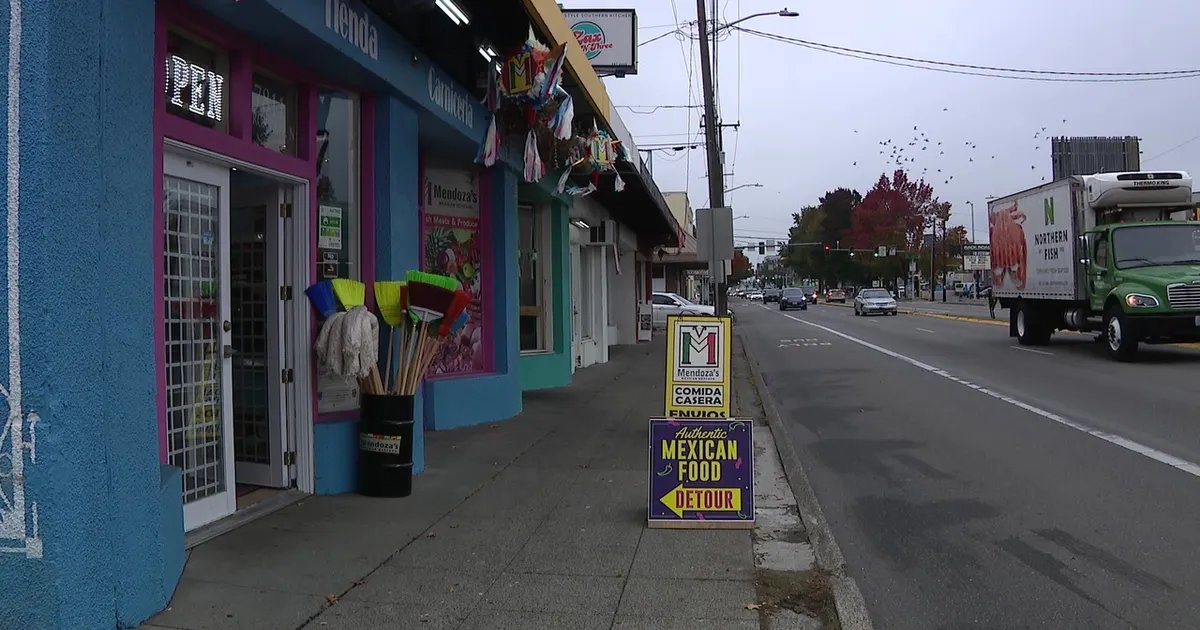
Seattle’s independent business landscape is facing a new, complex challenge as mounting economic pressures converge with heightened anxieties surrounding federal immigration enforcement. Mendoza’s Mexican Mercado, a neighborhood fixture on Aurora Avenue for over 15 years, has reported a sharp 30% decline in annual sales. According to general manager Carlos Cervantes, the downturn is directly linked to a climate of fear within the community, which has caused foot traffic to plummet as customers avoid public spaces.
While immigration enforcement agents have not entered the market directly, reports of increased activity in the surrounding corridor—including the apprehension of individuals near the nearby Evergreen Washelli Cemetery—have created a palpable sense of unease. For business owners in immigrant-heavy neighborhoods, these external fears translate into immediate, measurable losses that threaten the viability of long-standing local establishments.
## The Broader Economic Squeeze on Local Commerce
The struggles faced by Mendoza’s Mercado are emblematic of a broader crisis hitting small retailers throughout the Pacific Northwest. Beyond the localized impact of immigration concerns, entrepreneurs are battling a relentless surge in operational costs. Laura Clise, founder and CEO of Intentionalist, a platform dedicated to supporting small, diverse businesses, highlights a troubling trend: the cost of simply keeping the doors open has reached a breaking point.
“It has become increasingly unaffordable to own and operate a business in Seattle and beyond, and that’s something that should give all of us cause for concern,” Clise noted. This economic precarity is often exacerbated by rapid urbanization and rising tax burdens. Recent reports suggest that business taxes in the Seattle area have escalated at five times the rate of population growth, leaving thin-margin businesses with little room to absorb external shocks or drops in consumer attendance.
## Navigating Uncertainty Through Digital Integration
To remain operational, many small businesses are turning to technology and community-based support programs to stabilize their revenue streams. In an era where digital presence is paramount, storefronts like Mendoza’s are relying more heavily on partnerships with food assistance programs, such as the Fresh Bucks initiative, and supplying institutional pantries like the one at Seattle Children’s Hospital.
The tech industry, meanwhile, continues to play a dual role in this landscape. While AI-driven logistics and digital storefront management can help businesses reach a wider audience, many small owners find themselves struggling to keep pace with the technical demands of modern inventory management and marketing. For these businesses, the challenge is twofold: leveraging new tools to cut costs while simultaneously navigating an increasingly volatile social and political environment that keeps their core customer base away from physical storefronts.
## The Official Stance on Enforcement and Safety
The federal perspective, provided by U.S. Immigration and Customs Enforcement (ICE), underscores the deep ideological divide regarding how such enforcement actions impact the economy. In a statement addressing the concerns of business owners, the agency maintained that its primary objective is the removal of criminal elements from the population, asserting that these actions ultimately foster a safer environment for legitimate commerce.
“Removing these criminals from the streets makes communities safer for business owners and customers,” the statement read, adding a critique of current national economic conditions. This stark contrast between federal policy objectives and the lived reality of business owners underscores the friction felt at the local level. As these businesses seek a path forward, the combination of rising costs and community apprehension remains a hurdle that neither technology nor local programs have fully addressed, leaving the future of iconic neighborhood markets in a state of continued uncertainty.
Disclaimer: This content is auto-generated for informational purposes only.
Source: Read Original News