







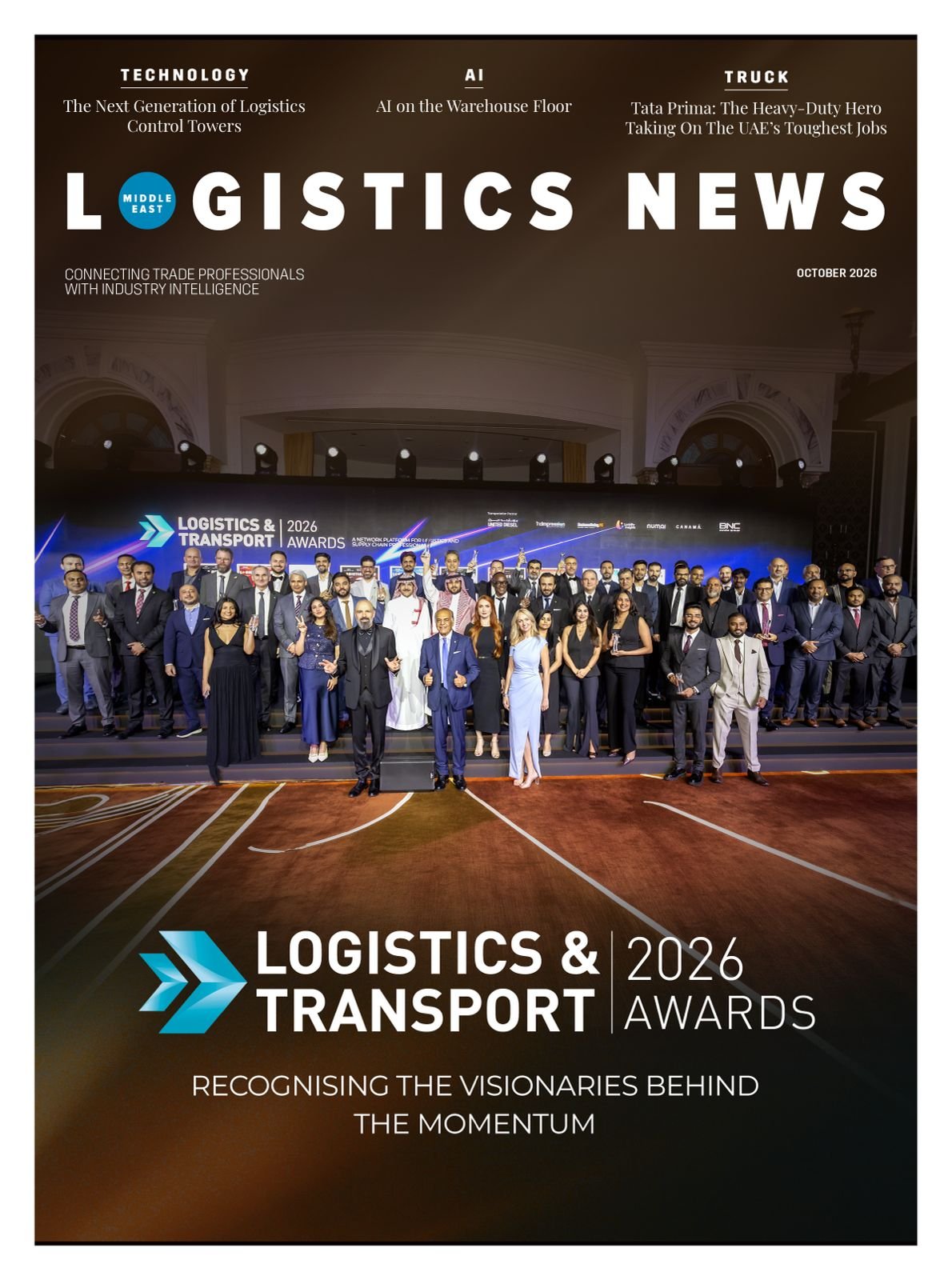
The October 2026 edition of Logistics News ME has officially hit the stands, placing a spotlight on the industry’s most transformative figures. With the recent conclusion of the Logistics & Transport Awards 2026, the industry is recalibrating its focus toward a future defined by high-speed digital integration, advanced infrastructure, and intelligent automation.
Celebrating Excellence at the Logistics & Transport Awards 2026
The industry’s most prestigious night, held on 16 September, served as a benchmark for innovation in supply chain, e-commerce, and mobility. The awards ceremony acted as a catalyst for professional networking, bringing together regional leaders who are actively redefining how goods move across the Middle East. Beyond the trophies and accolades, the event highlighted a collective shift in priorities: moving away from traditional shipping models toward integrated, tech-centric ecosystems. By honoring companies that prioritize agility and resilience, the awards have set a high bar for operational standards in the final quarter of the year.
The AI Revolution: Driving Smarter Supply Chains
A central theme of this month’s coverage is the profound impact of artificial intelligence and advanced analytics on logistics infrastructure. As noted by Mehtab Gilani of EY MENA, the energy sector is undergoing a massive digital overhaul. AI is no longer a peripheral tool; it is now central to the way energy resources are managed, tracked, and delivered. By utilizing predictive modeling and real-time data processing, firms are reducing the inefficiencies that once plagued long-haul distribution.
This technological wave is further bolstered by the application of computer vision. Sara Zetterström of Vizioneer emphasizes that AI-powered visual recognition is becoming an essential asset for fulfillment centers. By allowing for instantaneous error detection, computer vision allows warehouse teams to intercept minor disruptions before they snowball into systemic failures. In this new era, data is not just being collected—it is being converted into actionable intelligence that minimizes downtime and maximizes throughput. This transition represents a shift from reactive logistics to proactive, software-led optimization.
Redefining Connectivity through Infrastructure and Tech
While digital tools are leading the charge, physical infrastructure remains the backbone of regional progress. Dr. Lijo John of Heriot-Watt University Dubai has offered an in-depth look at the proposed 1,750-kilometer land bridge, a project that promises to fundamentally alter regional connectivity. Such massive infrastructure projects, when coupled with the latest fleet advancements—such as the strengthening presence of Tata Prima vehicles supported by United Diesel—highlight the necessity of a hybrid approach.
The industry is effectively merging the “hard” assets of logistics with “soft” digital capabilities. Whether it is the integration of high-performance commercial vehicles or the deployment of advanced software stacks, the message is clear: the modern logistics provider must be as adept at managing lines of code as they are at managing shipping routes.
As the sector moves forward, the traditional definition of logistics—simply moving goods from one point to another—has become obsolete. The industry is now a complex web of predictive technology and high-stakes infrastructure. With AI-driven foresight and a commitment to resilient, interconnected transport networks, the winners of the 2026 awards represent a new generation of leaders prepared to navigate the complexities of a globalized, digital-first economy. The October issue captures this evolution, offering a roadmap for companies aiming to remain relevant in an environment where technology and trade are increasingly inseparable.
Disclaimer: This content is auto-generated for informational purposes only.
Source: Read Original News