









A Technical Overview of Patch 5.01
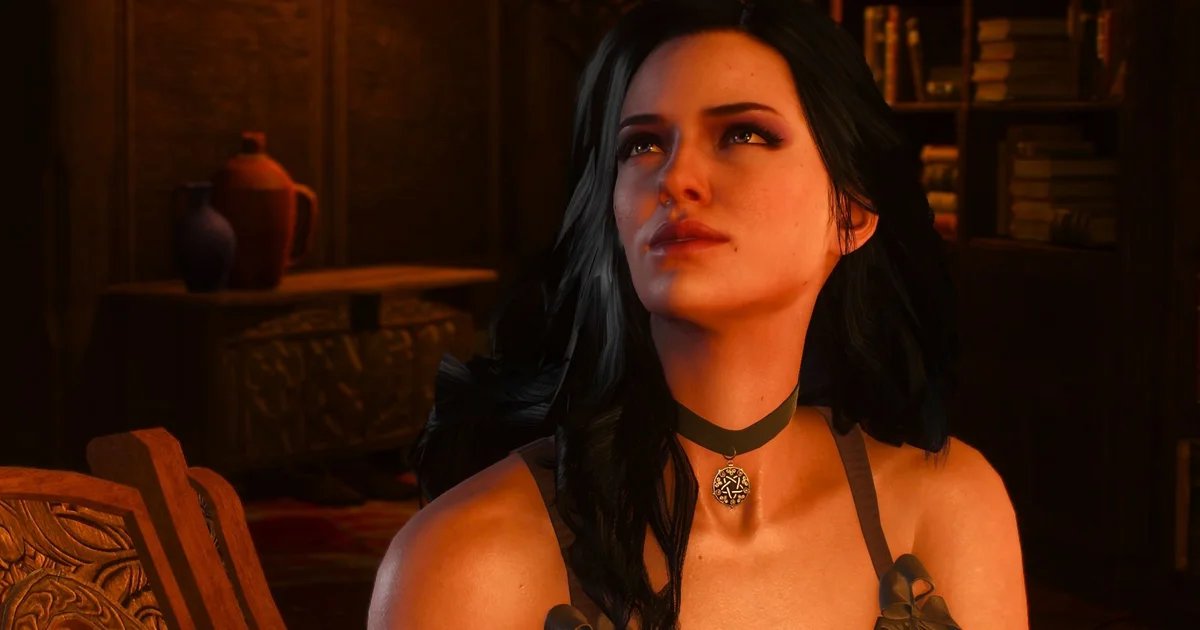
CD Projekt Red has released a comprehensive update, version 5.01, for the Remastered edition of The Witcher 3: Wild Hunt. This patch serves as a response to community feedback and technical hurdles following the game’s recent visual and performance overhaul. The update spans across PC, PlayStation 5, and Xbox Series S/X platforms, focusing on stability, bug resolution, and user-defined graphical adjustments. By addressing foundational issues that hindered smooth navigation and combat, this deployment aims to standardize the experience for the millions of players returning to the Continent.
Granular Control for Console Hardware
A significant component of the 5.01 update involves expanding the graphical configuration menu for console users. Responding to feedback regarding the visual presentation of the Remastered edition, developers have introduced granular control over lighting effects. Players on PlayStation 5 and Xbox Series S/X can now independently toggle Bloom, Light Shafts, and Depth of Field.
This level of customization addresses concerns where certain players found the post-processing effects overly aggressive, impacting the game’s overall aesthetic balance. Additionally, the patch resolves persistent issues on PlayStation 5 where graphics settings would inadvertently reset upon each game launch. By providing these specific toggles, CD Projekt Red allows users to prioritize either a cinematic look or a clearer, more neutral presentation, catering to varying displays and personal preferences.
Refining Combat Mechanics and Physics
The update introduces several critical fixes to core gameplay loops that previously impeded player performance. Combat, particularly the integration of stamina management and evasion, has received substantial attention. A persistent bug that caused Geralt’s stamina to deplete prematurely when executing simultaneous sprint and dodge maneuvers has been rectified. Similarly, responsiveness issues during dodging have been smoothed out to ensure more precise character control.
Navigation and environmental interactions also see improvement. Players previously reported difficulty with ladder animations and instances where boats would move uncontrollably, often ignoring terrain collisions. These physics-related bugs have been addressed to ensure consistent movement. Furthermore, the update fixes erroneous skill behaviors, such as the synergy skill displaying incorrect values and the Exploding Shield skill failing to reflect damage, ensuring that character builds function as intended by the game’s mathematical design.
Technical Stability and PC Optimization
On the PC front, the patch resolves complex configuration errors, including instances where the game would erroneously select the incorrect GPU for rendering. Such issues are particularly problematic in systems with multiple graphics adapters or hybrid laptop configurations. The update also corrects the behavior of Dynamic Resolution Scaling, which previously showed misleading settings after adjustments to Anti-Aliasing, and fixes potential crashes related to the incorrect application of DLSS or XeSS upscaling on unsupported hardware.
Other technical refinements include standardizing the default state of Dynamic Resolution Scaling to “OFF” to prevent visual artifacts and ensuring that graphics presets do not accidentally trigger hardware-intensive features that the user’s specific GPU cannot support. By tightening these backend processes, the developer aims to prevent the common pitfalls associated with the diversity of PC hardware architectures.
Future-Proofing for Switch 2
Beyond the current generation of consoles and PCs, CD Projekt Red has signaled its intent to optimize The Witcher 3 for the upcoming Switch 2 platform. The development team is actively working to ensure the portable version reaches a state of parity with other platforms, specifically targeting enhanced image clarity and sharpness.
This initiative represents a significant commitment to maintaining a uniform experience across a broad spectrum of hardware, ranging from high-end desktop GPUs to mobile chipsets. Details regarding this specific update are expected to materialize in the following days, indicating that the studio is prioritizing the integration of modern rendering techniques onto the new hardware to maintain the high standards set by the main Remastered release.
Preparing for the Songs of the Past Expansion
The urgency behind these updates is partially attributed to the upcoming release of “Songs of the Past,” a significant expansion scheduled for the following year. This addition is notable for its historical timing, arriving 12 years after the original title’s debut. The expansion will introduce a new region, Letten, and center its narrative on the character Dandelion and his lineage.
By stabilizing the underlying code and addressing visual feedback through patch 5.01, the developers are establishing a reliable foundation for this expansion. The technical overhead of introducing a new map, updated character models, and complex scripted events requires the current engine to operate at peak efficiency. These maintenance efforts ensure that the game remains technologically viable, allowing players to engage with the upcoming content without the interference of legacy bugs or unstable settings that characterized the initial launch of the Remastered edition.
Disclaimer: This content is auto-generated for informational purposes only.
Source: Read Original News