







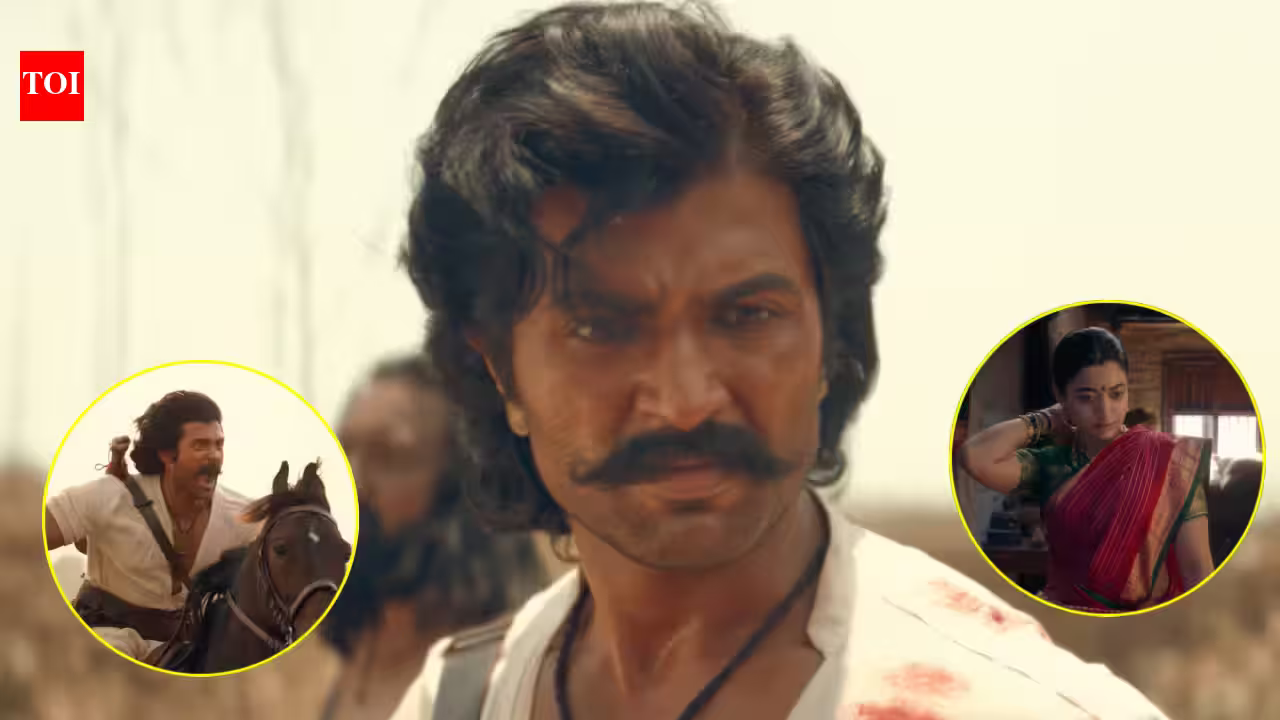
The air in the Indian film industry has been thick with anticipation, but with the arrival of the Ranabaali trailer this past Thursday, that anticipation has officially curdled into something far more intense: historical fervor. Vijay Deverakonda and Rashmika Mandanna, a pairing that already holds a special place in the hearts of pan-Indian cinema fans, have stepped out of their usual commercial comfort zones. They aren’t just starring in a period piece; they are anchoring what appears to be a sweeping, visceral exploration of colonial trauma and local resistance.
Directed by Rahul Sankrityan, the man who previously showcased his ability to blend the mystical with the modern in Taxiwaala, Ranabaali feels like a massive leap in scale. Clocking in at just under four minutes, the trailer doesn’t just tease a plot—it demands an emotional investment. By centering on the 1870s famine in South India, the film positions itself in the increasingly popular “folk-epic” subgenre, following the path blazed by films like Kantara and Pushpa, yet it adds a layer of British-era conflict that promises a much darker, sharper edge.
A Folktale Reborn for the Big Screen
The trailer opens with a haunting, rhythmic folk performance, anchoring the audience in the legend of Ranabaali of Singanamala Hill. We are told the story of his birth in a cave, a narrative device that immediately elevates the protagonist from a mere man to a messianic figure. It is the classic hero’s journey archetype, but it’s anchored by the grim reality of the 19th century.
The central conflict is stark: a village, starving and exploited, is caught in the iron grip of a famine manufactured by the colonial machine. While the people are promised wages for their labor, they are met with systemic cruelty. Vijay Deverakonda, shedding the “Rowdy” persona that defined his early career, portrays a man who realizes that the British presence is not a mandate of heaven, but a choice that can be challenged. When he questions the legitimacy of their rule, the tension shifts from survival to rebellion.
The Chemistry Behind the Chaos
While the backdrop is one of high-stakes revolution, the emotional heartbeat of the film seems to rest on the relationship between Ranabaali and his wife, Jayamma, played by Rashmika Mandanna. The trailer offers fleeting, tender glimpses of their domestic life, shadowed by the societal pressures of the time—specifically, a mother-in-law desperate for an heir.
It is a brave choice for a film of this magnitude to balance grand-scale insurrection with the claustrophobia of familial expectations. Rashmika, who has proven her mettle in both emotional and high-octane roles, appears to bring a grounded, stoic strength to Jayamma. Their chemistry, which has historically been a draw for audiences, seems more mature here, tempered by the desperation of their circumstances. They aren’t just lovers in a story; they are two people trying to carve out a life in a world that wants them dead.
A Global Stage for Local Oppression
Perhaps the most surprising—and chilling—addition to the cast is the inclusion of Arnold Vosloo. Known to global audiences as the formidable antagonist from The Mummy franchise, Vosloo steps into the role of Sir Theodore Hector. Seeing him square off against the gritty, earth-bound intensity of Deverakonda is a masterstroke in casting.
Vosloo doesn’t just play a villain; he embodies the cold, calculated bureaucracy of the British colonial machine. The contrast between the visceral, dusty, sweat-drenched environment of the Indian village and the rigid, aristocratic coldness of Hector creates a visual and narrative friction that is undeniably compelling. The makers have clearly aimed for a “global” aesthetic, signaling that while the story is deeply rooted in the soil of South India, the themes of exploitation and resilience are meant to resonate on a worldwide scale.
The Folklore Factor: A New Cinematic Language
The film’s marketing team has leaned heavily into the “folklore” narrative, stating clearly: “A story that deserves to be told right.” This phrase is telling. It implies that previous depictions of this era have either been sterilized or ignored. By framing the film as a legend preserved through generations, Sankrityan is inviting the audience into an immersive experience rather than a history lesson.
The closing seconds of the trailer are designed to leave the audience breathless, leaning into the raw, primal energy that defined the success of Pushpa and Kantara. It’s a bold gamble, but given the creative pedigree involved—with Mythri Movie Makers backing the project and the legendary duo Ajay-Atul handling the score—the film has all the ingredients for a cinematic juggernaut.
The October Clash: A David vs. Goliath Battle
As we look toward the release date of October 16, the box office stakes couldn’t be higher. Ranabaali is set to open in Telugu, Hindi, Tamil, Kannada, and Malayalam, positioning itself as a true pan-Indian event. However, it is stepping directly into the path of a titan: the sequel to Nelson Dilipkumar’s Jailer, starring the legendary Rajinikanth.
While the competition is fierce, the distinct identities of the two films might be their saving grace. Jailer 2 promises the high-octane star power of a living legend, while Ranabaali offers a gritty, period-authentic epic that feels like a piece of history reclaimed. Whether or not it can successfully claim its share of the market remains to be seen, but one thing is certain: the trailer has successfully turned a piece of forgotten local history into the most anticipated conversation of the season.
Deverakonda has been waiting for a role that solidifies his transition from heartthrob to heavyweight actor. With the wild, untamed intensity teased in the Ranabaali trailer, it seems he may have finally found the role that defines his legacy. Now, we wait to see if the full film lives up to the weight of the history it claims to tell.
Disclaimer: This content is auto-generated for informational purposes only.
Source: Read Original News