








The Shift from Fire OS to Standardized Android
For over a decade, Amazon maintained a walled garden with its Fire tablet series. These devices utilized Fire OS, a heavily modified, forked version of Android that stripped away Google services in favor of an Amazon-centric experience. While this ecosystem kept users within the Amazon marketplace, it suffered from limited application availability and a fragmented user experience. The recent shutdown of the Amazon Appstore signaled the end of this era, forcing a strategic pivot in how the company approaches tablet hardware.
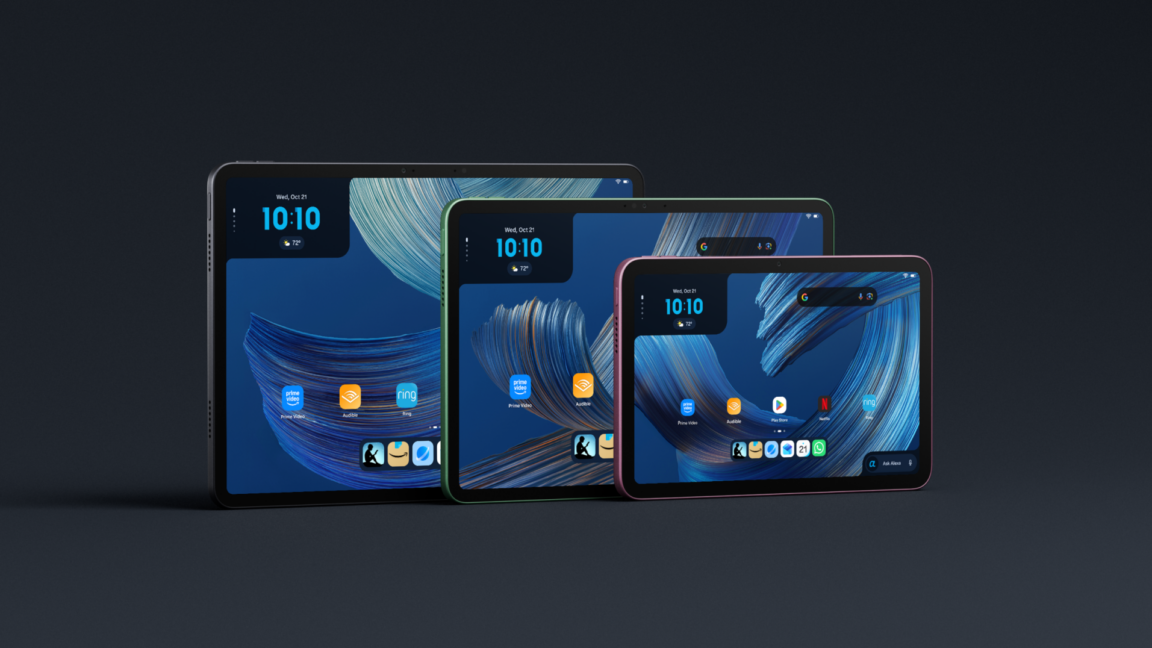
The transition to the new Alexa Tablet lineup represents a fundamental architectural change. These devices are fully Google-certified, meaning they ship with the Google Play Store pre-installed and support the complete suite of Google mobile services. This move aligns Amazon tablets with the broader Android ecosystem, allowing users to install standard applications without needing to navigate the compatibility hurdles that plagued the legacy Fire line. By abandoning the proprietary fork, Amazon has essentially transformed its hardware into mainstream Android tablets, prioritizing software compatibility over platform exclusivity.
Hardware Evolution and Industrial Design
The move toward modernization extends beyond the software layer. Amazon has completely retired the plastic chassis that characterized its budget-focused legacy tablets, replacing them with high-quality, unibody aluminum housings. This change gives the new devices a premium feel that is more competitive with current industry standards. The aesthetic shift suggests that Amazon is targeting a more professional demographic rather than just the casual, entry-level media consumer.
The lineup is divided into three distinct tiers: the Alexa Tablet 8, the Tablet 11, and the flagship Tablet 12 Pro. The Tablet 8 and 11 serve as the standard bearers, utilizing the MediaTek 8189 processor. While these chips are oriented toward the budget segment, they provide a measurable performance increase over the previous generation of Fire tablets. By utilizing a 16:10 aspect ratio for the lower-end models, Amazon is clearly signaling that the primary use case for these units remains high-definition media consumption and video streaming.
The Alexa Tablet 12 Pro and Productivity
The standout of this release is undoubtedly the Alexa Tablet 12 Pro. Priced at $500, it marks Amazon’s first serious foray into the high-end productivity market. Unlike its smaller siblings, the 12 Pro features a 3:2 aspect ratio, a choice favored by power users for document editing and split-screen multitasking. This ratio provides more vertical space, which is critical for reading long-form content or managing multiple windows simultaneously.
Internally, the 12 Pro is significantly more robust than the rest of the lineup. It is powered by the MediaTek Dimensity 8400 processor and 8GB of RAM, providing the necessary overhead for demanding applications. The screen technology is equally impressive, featuring a resolution of 2800×1840 pixels and a 120 Hz refresh rate. The addition of a matte display option—a feature typically reserved for premium e-readers or high-end professional monitors—shows that Amazon is paying close attention to user ergonomics and glare reduction. By offering a dedicated keyboard and stylus, the company is positioning the 12 Pro as a direct competitor to mid-range productivity tablets from established hardware manufacturers.
Strategic Differentiation in the Tablet Market
It is worth noting the divergence in Amazon’s product strategy. While the new tablets have embraced the standard Android ecosystem, the company’s streaming devices, such as the Fire TV Stick, are moving in the opposite direction. These streaming peripherals have officially abandoned Android in favor of Vega OS, a custom Linux-based platform. This split indicates a clear segmentation in Amazon’s hardware portfolio: tablets are designed to be general-purpose computing devices, while streaming hardware is being streamlined for media-specific tasks.
The integration of Google services into the Alexa Tablet lineup removes the primary barrier to entry for many consumers who previously avoided Amazon hardware due to the absence of the Play Store. By adopting a “Google-y” version of Android, Amazon is essentially outsourcing its app ecosystem management to Google while focusing its own efforts on hardware build quality and its proprietary Alexa voice assistant integration. This change turns these devices into legitimate contenders in a market previously dominated by Samsung and Lenovo.
Impact on Users and Developers
For developers, the impact of this change is immediate. They no longer need to maintain separate builds for the Amazon Appstore. Applications created for the standard Android platform will now work seamlessly on Amazon hardware. This interoperability ensures that software updates, security patches, and feature parity with the rest of the Android world will be maintained without manual intervention from Amazon’s software teams.
For the end user, this transition brings long-overdue stability. Users can now sync their Google accounts, access their existing libraries of apps and media, and utilize standard Android features that were previously restricted. The combination of improved hardware, a premium aluminum build, and a standardized, high-performance software experience makes this new generation of tablets a significant improvement. As Amazon continues to iterate on this unified platform, the brand is poised to capture a larger share of the tablet market, offering a compelling alternative to more expensive counterparts without sacrificing the core functionality that modern users expect from a mobile computer.
Disclaimer: This content is auto-generated for informational purposes only.
Source: Read Original News