







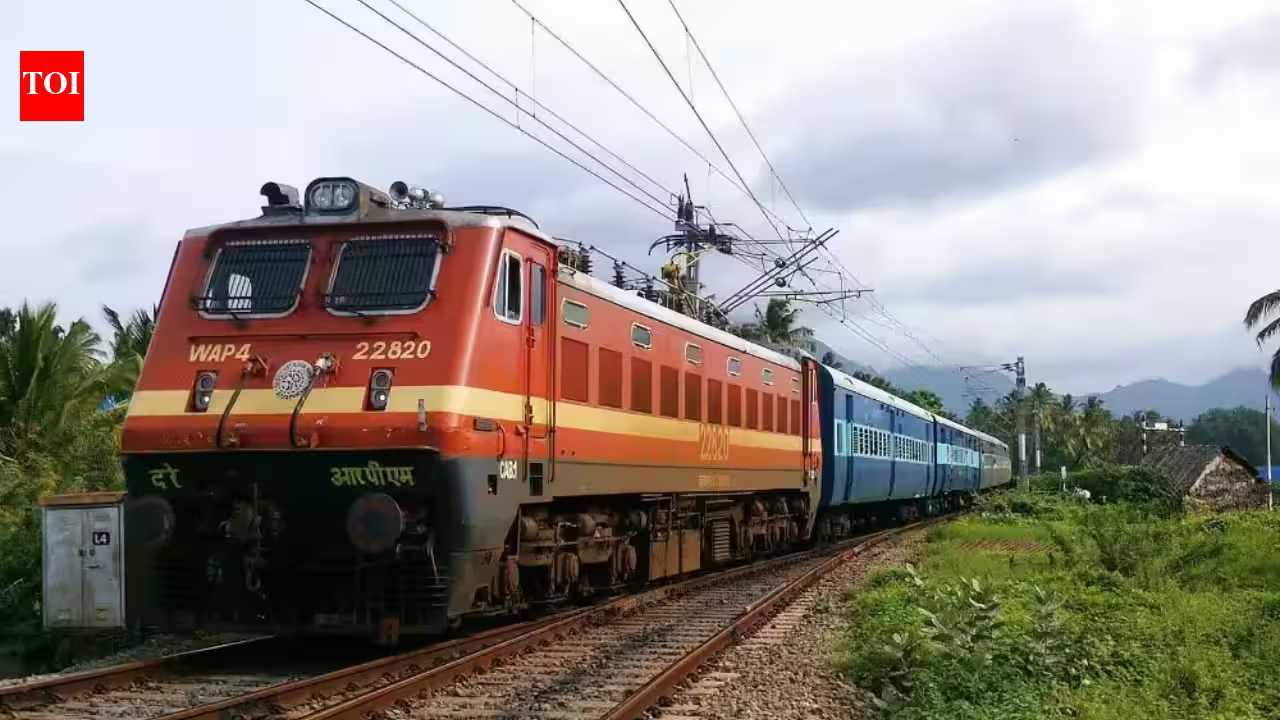
The Structural Challenge of Indian Railways’ Locomotive Fleet
Indian Railways, the lifeline of the nation’s logistics and mass transit, is currently navigating a complex operational bottleneck. Recent data indicates that the national transporter is grappling with a persistent shortage of passenger-certified locomotives. To maintain service continuity, railway zones are frequently deploying freight-specific engines to haul passenger coaches. This mismatch between equipment and function has resulted in a recurring pattern of delays, with official records documenting 80 to 100 such instances every month.
As of September 2026, the total locomotive fleet stands at approximately 17,900 units. While the sheer size of this fleet is substantial, the composition reveals a critical imbalance. The inventory consists of roughly 13,700 electric locomotives and 4,200 diesel engines. Among the electric fleet—the backbone of modern, electrified rail infrastructure—only about 3,400 are specialized for passenger operations (primarily the WAP series). The remainder are WAG series engines, which are engineered for heavy-haul freight transport. When passenger engines are unavailable, these WAG units are pressed into service, leading to immediate impacts on train velocity and scheduling.
Operational Consequences of Freight Engine Deployment
The technical disparity between passenger and freight engines is significant. Passenger locomotives, such as the WAP-7, are designed for rapid acceleration and sustained high-speed performance, often capable of reaching 130 kmph or higher. In contrast, freight locomotives like the WAG-9 are optimized for high-tractive effort, allowing them to pull heavy tonnage at lower, steady speeds, typically capped at 100 kmph.
When a freight engine replaces a passenger locomotive, the train is forced to operate at a lower maximum velocity than its track speed authorization allows. This discrepancy creates a “loss on run” scenario, where trains fall behind their schedules across long distances. A prime example occurred in September 2026, when the Ballia-Dadar Central Express faced a detention of over five hours due to a locomotive mismatch. Similarly, routes serviced by the Kanpur Central-Prayagraj Sangam InterCity Express and the Kacheguda-Shri Ganganagar service have experienced delays as a direct result of these substitutions. For a network that prides itself on increasing the frequency of high-speed offerings, these gaps in asset availability represent a primary hurdle in maintaining service reliability and passenger satisfaction.
Historical Context and Electrification Dynamics
The current situation is, in part, a byproduct of the massive transformation the Indian rail network has undergone over the past decade. Since 2014, the Ministry of Railways has prioritized rapid electrification, a policy shift that has fundamentally altered the locomotive manufacturing landscape. While the total number of engines has grown from 10,456 in 2013-14 to the present count of nearly 18,000, the transition away from diesel has been aggressive.
As diesel production slowed to align with environmental and efficiency mandates, the manufacturing focus shifted entirely to electric engines. However, the surge in passenger demand—driven by an expanding middle class and the introduction of new train series like the Vande Bharat—has outpaced the production capacity of passenger-specific electric locomotives. The legacy of manufacturing delays experienced before the current modernization push remains a point of contention for planners. The Ministry acknowledges that the expansion of train operations over the last 12 years has been manifold, requiring a scaling of the asset base that is proving difficult to synchronize with the immediate day-to-day requirements of the zones.
Strategic Outlook and Procurement Plans
To mitigate these disruptions, the Railway Ministry has outlined a multi-year procurement roadmap. The production schedule for 2026-27 and 2027-28 is heavily weighted toward rectifying the specific deficit in passenger-carrying assets. The government has approved the production of 679 new passenger locomotives over this two-year window, with a significant allocation for the proven WAP-7 variant.
Beyond simply adding more units to the fleet, the ministry is pursuing a dual-pronged strategy. First, it is focusing on the rapid adoption of modern trainsets—self-propelled units that do not require a separate locomotive, such as the Vande Bharat series. By shifting the passenger segment toward these modern sets, the dependency on traditional locomotive-hauled coaches is expected to diminish over time. Second, the administration is focusing on asset utilization metrics, aiming to extract higher efficiency from the existing fleet through digitized monitoring and predictive maintenance.
Impact on National Infrastructure Goals
The challenges faced by Indian Railways are characteristic of a system undergoing a high-speed transition. The government’s broader agenda, which includes an investment of Rs 16 lakh crore in seven new bullet train corridors and expanded regional connectivity, indicates a high level of ambition for the rail sector. Yet, the current struggle to maintain standard passenger services highlights the tension between legacy operational models and the requirements of a modernizing network.
For the Indian economy, the reliability of rail transit is a macroeconomic imperative. Frequent delays on mainline routes impact not just individual travelers but also the predictability of the workforce and the movement of human capital. As the network attempts to integrate high-speed projects with its traditional services, the immediate goal must remain the stabilization of the current fleet. The upcoming production of hundreds of new passenger engines is a necessary step, but the speed at which these assets are commissioned into the zones will determine how quickly the national transporter can resolve the current reliance on freight-class equipment.
In conclusion, while the locomotive shortage presents a genuine concern for current service quality, the infrastructure investment is already in motion. The focus must now shift toward accelerating the induction of new assets while concurrently optimizing the distribution of the existing fleet to ensure that passenger transit remains competitive, timely, and efficient in an era of rapid rail modernization.
Disclaimer: This content is auto-generated for informational purposes only.
Source: Read Original News