









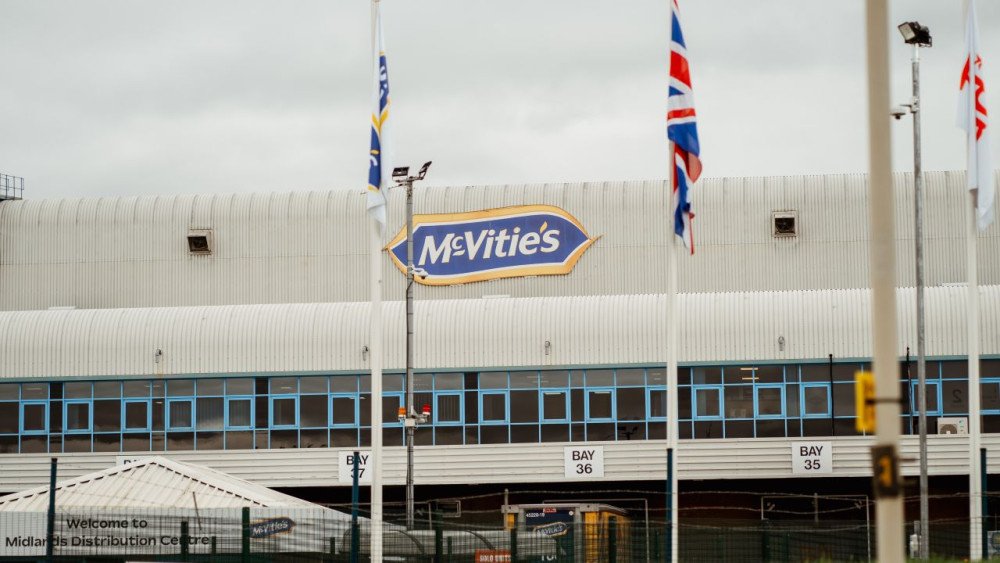
Pladis UK&I, the global snacking giant behind household names such as McVitie’s, Go Ahead, Haansbro, and Flipz, is set to significantly lower its environmental footprint through a major expansion of its rainwater harvesting initiatives. By scaling up the technology used at its manufacturing and distribution hubs, the company is making measurable progress toward more sustainable operational practices within the UK.
The latest sustainability drive centers on the company’s Ashby distribution centre, a vital hub in its supply chain. Building on the proven success of a pilot program at another of its distribution facilities, Pladis is integrating advanced rainwater collection systems designed to minimize reliance on the public water supply. The company anticipates that this expansion will reduce the Ashby facility’s mains water consumption by approximately 25%.
The initiative arrives at a time when industrial water management is under increased scrutiny. As climate patterns become more volatile, large-scale manufacturers are facing mounting pressure to reduce their impact on local water tables and municipal infrastructure. By capturing and repurposing rainwater—typically for non-potable uses such as site maintenance, cooling, or facility cleaning—Pladis is effectively decoupling a portion of its production requirements from the mains grid.
This strategy is not merely theoretical; it is backed by concrete data from the company’s previous implementation. At its first distribution center to adopt this method, the technology successfully cut mains water usage by 50%. The scale of this achievement is substantial, with the company confirming that the program has already saved 2.5 million litres of mains water over the past twelve months. This volume of water represents a significant saving for a single facility, illustrating the potential impact when such measures are applied across a global supply network.
For a manufacturer of the size of Pladis, which operates across multiple high-volume production lines, water security is an essential component of long-term operational resilience. The ability to harvest, treat, and store rainwater provides a buffer against seasonal water shortages and reduces the facility’s overall utility overheads. Furthermore, the move aligns with the broader industry trend of “circular manufacturing,” where businesses are increasingly looking for ways to capture and reuse resources rather than relying exclusively on depletable inputs.
The Ashby distribution centre, which manages the logistics for some of Britain’s most beloved snack brands, serves as a strategic testing ground for these environmental improvements. By optimizing the utility infrastructure of its distribution network, Pladis is demonstrating that large-scale industrial logistics can be re-engineered to support broader ESG (Environmental, Social, and Governance) targets.
While 2.5 million litres represents an impressive start, industry experts suggest that such initiatives are becoming the new baseline for responsible manufacturing. As Pladis continues to roll out these harvesting systems, the focus will likely shift toward maintaining the efficiency of these systems while exploring further water-saving technologies in their primary production plants.
The success of the Ashby project highlights a critical pathway for the food and beverage industry: the transition from traditional, linear consumption to a more efficient, self-sustaining model. As Pladis UK&I continues to expand these systems, the company reinforces its commitment to balancing the high demand for its products with a professional and proactive approach to environmental stewardship. By harnessing the rainfall collected at its sites, the snack manufacturer is proving that even small-scale infrastructure changes can yield substantial benefits for the planet’s vital water resources.
Disclaimer: This content is auto-generated for informational purposes only.
Source: Read Original News