








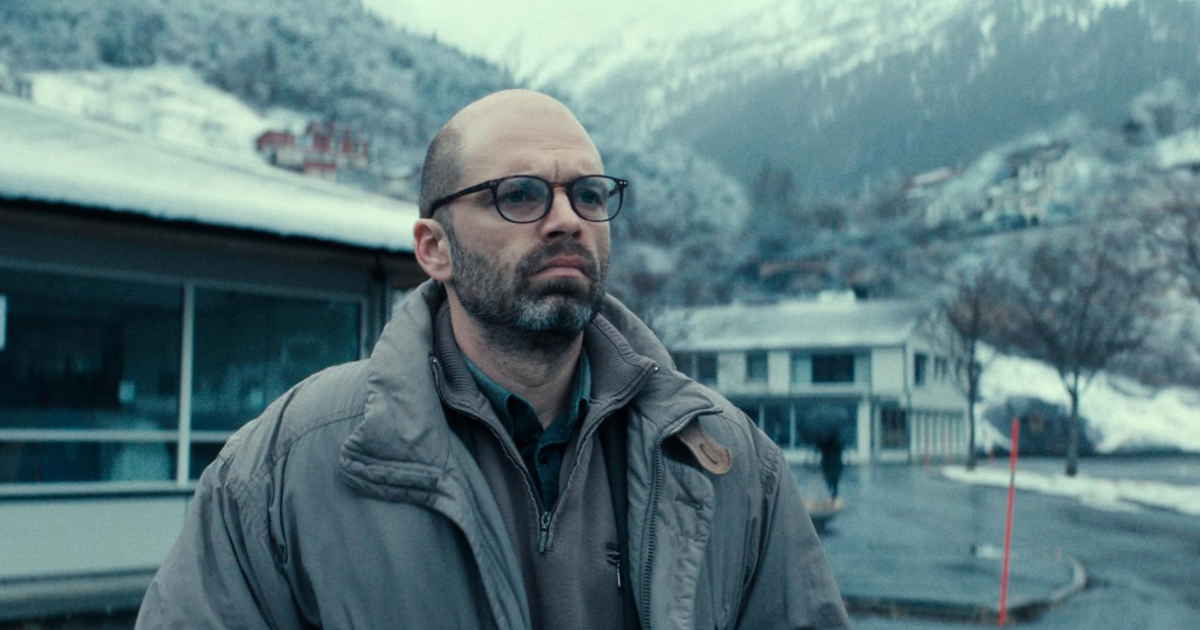
CANNES — In a historic achievement for European cinema, the master of Romanian realism, Cristian Mungiu, has captured his second Palme d’Or for his latest drama, Fjord. While Mungiu is long established as a titan of international film—having previously stunned audiences with his 2007 masterpiece 4 Months, 3 Weeks and 2 Days—his latest work represents a bold evolution, marking the first time the director has moved his lens outside of Romania.
Despite the change in geography, Fjord retains the director’s signature, unflinching scrutiny of institutional power and the fragility of the individual against the state. The film, which has already sparked fierce critical debate, centers on a Romanian couple, Mihai and Lisbet Gheorghiu, played with profound, tightly coiled intensity by Sebastian Stan and Renate Reinsve.
The narrative follows the family as they relocate to a picturesque, isolated town nestled in the Norwegian fjords. The Gheorghius, deeply observant Christians, find their lives upended when a school administrator reports concerns regarding the eldest daughter’s physical well-being. What follows is a harrowing, rapid-fire sequence of events: Child Protective Services intervenes, and all five of the couple’s children are placed into state custody.
The remainder of the film unfolds as a grueling courtroom battle, pitting the parents against the rigid structures of the Norwegian legal system. As the trial progresses, the story moves beyond a simple question of physical abuse—which the film leaves strategically ambiguous—to a deeper, more volatile inquiry into the clash between secular-humanist values and religious conservatism.
The film has proven remarkably divisive, echoing the controversy surrounding a high-profile 2015 real-life case involving a Romanian-Norwegian family. Critics remain split: some argue Fjord unfairly paints the European welfare state as a monolithic, overreaching villain. Others contend that the film perfectly captures how, even in supposedly inclusive communities, tribalism and institutional intolerance can silence those who hold dissenting beliefs.
Mungiu’s direction remains as coy as it is precise. By keeping the alleged incidents of abuse off-screen and providing only fragments of information, the director forces the audience to confront their own biases. Are we witnessing the state saving children from a patriarchal home, or a family being punished for failing to assimilate into a secular ideal?
Perhaps the film’s most nuanced performance belongs to the neighbor-turned-attorney Mia, who takes on the Gheorghius’ defense. Her character serves as the film’s moral compass, challenging the binary of “us versus them” by acting on a secular interpretation of the biblical commandment to “love thy neighbor.”
With Fjord, Mungiu has once again proven that he is not interested in providing easy answers. Instead, he has crafted a masterful, manipulative, and deeply unsettling look at how easily a family can be dismantled when individual faith clashes with the machinery of the modern state.
Disclaimer: This content is auto-generated for informational purposes only.
Source: Read Original News