






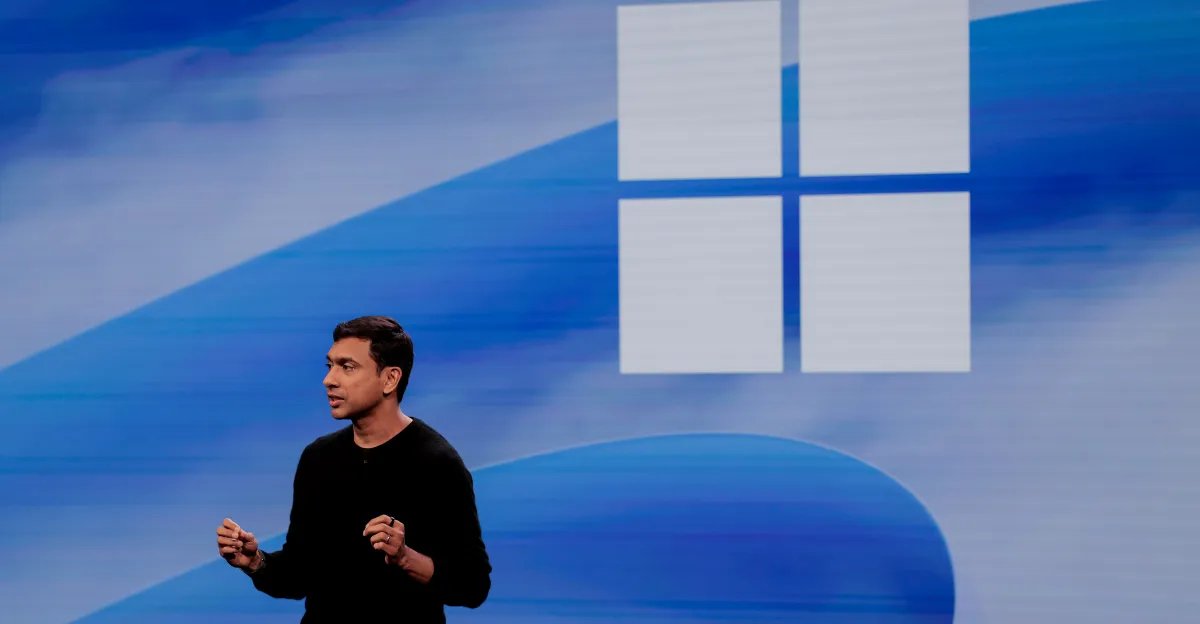
Five years after the initial launch of Windows 11, the operating system remains a work in progress rather than a static product. Instead of pivoting toward a successor, Microsoft is reinforcing Windows 11 as the bedrock for its next strategic shift: the transformation of the platform into an agentic operating system. During a recent event dedicated to Windows and Surface, leadership outlined a roadmap for integrating AI agents that leverage hybrid intelligence, allowing tasks to shift between local hardware and cloud resources.
The Shift Toward Hybrid AI Intelligence
Microsoft CEO Satya Nadella framed this development as a significant evolution of the computing ecosystem. The core of this vision is hybrid intelligence, a mechanism that enables Windows to balance the efficiency of local model processing with the vast capabilities of the cloud. By utilizing local processing, tasks such as coding in GitHub Copilot can be completed without the latency or expense associated with constant cloud token requests.
This approach is intended to provide developers and creators with powerful, responsive tools that function independently of high-bandwidth network requirements. The demonstration showcased models such as OpenClaw, Hermes, and Perplexity running locally, signaling a clear push to make the operating system a native home for sophisticated AI workflows. By minimizing the dependence on expensive cloud resources, Microsoft hopes to make high-end AI development more accessible and cost-effective for users who require significant computational throughput.
Hardware Prowess: The Surface Laptop Ultra
To support these ambitious goals, Microsoft introduced the Surface Laptop Ultra, a device engineered to serve as the hardware flagship for this agentic ecosystem. Powered by Nvidia’s RTX Spark chips, the machine is designed to handle AI models that exceed 120 billion parameters, all locally. This level of local compute capacity is specifically targeted at power users—developers, researchers, and creative professionals—who need to perform intensive tasks without the logistical friction of offloading data to external servers.
While the Surface Laptop Ultra starts at a premium price point of $2,599, it is part of a broader rollout. Similar RTX Spark-equipped laptops are arriving from established partners including Asus, Dell, HP, Lenovo, and MSI. For high-end configurations that include 128GB of unified memory, these devices can reach price points as high as $6,999. While these figures may be steep for casual consumers, the potential for reduced cloud token costs provides a clear financial justification for professional AI builders.
Refining the Core User Experience
Beyond the high-level focus on agents and hardware performance, Microsoft is also addressing the utility of the Windows interface itself. The event highlighted a redesigned Windows Search, which addresses long-standing complaints about speed and relevance. The new interface transitions away from being a mere portal for web-based Bing results and toward acting as an efficient, in-line application launcher. This update represents a shift toward a more modern, streamlined aesthetic and functionality that feels integrated rather than bolted on.
This refinement is crucial, as the success of the agentic operating system depends on how easily users can interact with these new features. A faster, more intuitive search UI suggests that Microsoft is learning from previous missteps—such as the complex and controversial rollout of the Recall feature—which faced significant criticism over privacy and implementation concerns.
The Competitive Landscape and Future Strategy
Microsoft finds itself in a challenging position as it attempts to court creators and developers who have increasingly favored Apple’s hardware. The push into local AI is, in part, a defense mechanism; as AI agents running on Linux virtual machines grow more capable, the threat of developers migrating away from Windows increases. By making Windows inherently more “agent-friendly,” Microsoft is attempting to maintain its dominance in software compatibility and enterprise workflow management.
Nvidia’s role in this transition is pivotal. The GPU maker’s influence on modern computing is profound, and the collaboration behind the RTX Spark platform may prove to be a more effective catalyst for adoption than previous iterations like the Copilot Plus PCs. While Copilot Plus PCs initially struggled to gain traction due to a lack of NPU-optimized software, the RTX Spark strategy focuses on a more mature market segment: professionals who require immediate, measurable gains in productivity.
Challenges for Mass Adoption
Despite the clear technical roadmap, Microsoft still has a long road ahead in proving that these capabilities are relevant to a broad user base. Currently, the most advanced features remain tucked away in expensive, high-performance machines. To truly cement the agentic OS vision, the company must eventually scale these capabilities down to more affordable, mainstream hardware.
The transition reflects a broader realization by leadership: the way individuals interact with computing is fundamentally changing. The historical advantages of the PC are no longer sufficient to ensure long-term relevance. By betting on hybrid intelligence and secure, agent-driven workflows, Microsoft is betting that Windows can remain the central hub for the next generation of computing, even as that computing moves further away from the traditional constraints of the desktop. The success of this transition will depend on whether Microsoft can successfully translate these sophisticated engineering feats into practical, reliable tools for everyday users.
Disclaimer: This content is auto-generated for informational purposes only.
Source: Read Original News