








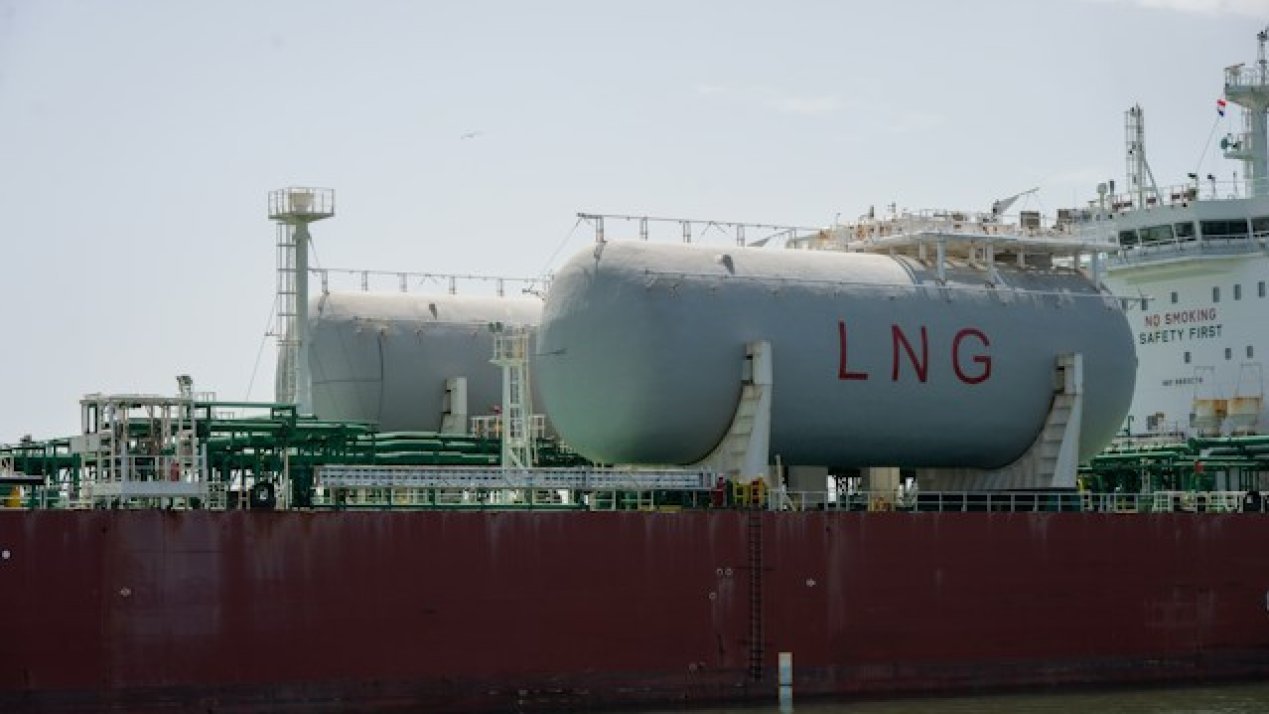
Mexico’s energy sector is facing a critical juncture as its reliance on imported U.S. natural gas reaches unprecedented levels. Data from the U.S. Energy Information Administration (EIA) confirms that imports to Mexico hit a record average of 6.8 billion cubic feet per day (Bcf/d) through July 2026. This trend, which has seen four consecutive years of growth, underscores a deepening dependency that now sees imported gas accounting for nearly 75% of national demand.
## The Growing Vulnerability of Power Generation
The primary driver behind this surge is Mexico’s expanding power generation sector, which now consumes 67% of the nation’s total natural gas supply—a dramatic shift from the 48.5% recorded in 2014. As the country increasingly leans on U.S. pipeline infrastructure to keep its lights on and industries humming, the system has become acutely sensitive to cross-border supply disruptions.
Recent events have highlighted these risks. When a Texas pipeline supplying the critical Los Ramones system in Nuevo Leon underwent scheduled maintenance, the resulting 20% reduction in imports created a 15% supply deficit for Mexico. For a nation that relies on these pipelines to feed its electricity grid, such outages act as an immediate threat to national energy sovereignty. Without domestic storage infrastructure to buffer against these fluctuations, the industrial sector remains exposed to operational volatility that can ripple through the entire economy.
## Seeking Resilience Through Policy and Infrastructure
Industry experts are calling for a definitive shift toward self-reliance. Jonathan Pinzón, Senior Vice President at Valia Energía, emphasizes that while Mexico has taken initial steps to create a legal framework for electricity and energy storage, the project pipeline remains stalled. The core issue, according to Pinzón, is the lack of an investable market design.
For the country to move beyond simple reliance, it requires a clear, transparent model that defines procurement responsibilities, storage operation rules, and sustainable financing. Building grid resilience is no longer just a technical requirement; it is a vital component of national security. As Pinzón argues, energy policy must transition from “intentions to execution” by creating a unified, technology-neutral storage program that can withstand the next regional supply shock.
## Leveraging Technology for Energy Management
In the face of these challenges, the role of data analytics and artificial intelligence is becoming increasingly relevant for global energy stability. Much like how Google leverages AI to optimize its global data center cooling and power usage—often resulting in massive efficiency gains—Mexico’s utility operators could benefit from integrating advanced predictive modeling. By utilizing real-time sensor data from cross-border pipelines and cross-referencing it with AI-driven weather and consumption projections, operators could better manage current thin storage margins.
Furthermore, as global energy markets become more interconnected, the digital transformation of grid infrastructure is essential. Tech industry leaders have pioneered digital twin technology to simulate grid performance under stress, a tool that could prove invaluable for Mexican regulators. By simulating “what-if” scenarios, such as the recent Texas pipeline maintenance, authorities can determine the precise volume of reserve fuel required at key nodes. However, until such technological implementations are backed by solid regulatory enforcement and infrastructure investment, Mexico’s energy landscape will remain highly sensitive to the stability of its northern neighbor’s supply lines. Achieving true energy sovereignty will require the government to bridge the gap between policy declarations and the actual construction of the necessary storage, ensuring that the lights stay on even when the pipelines are constrained.
Disclaimer: This content is auto-generated for informational purposes only.
Source: Read Original News