








Mamata Banerjee’s Pivot: From Kolkata to the Power Corridors of Delhi
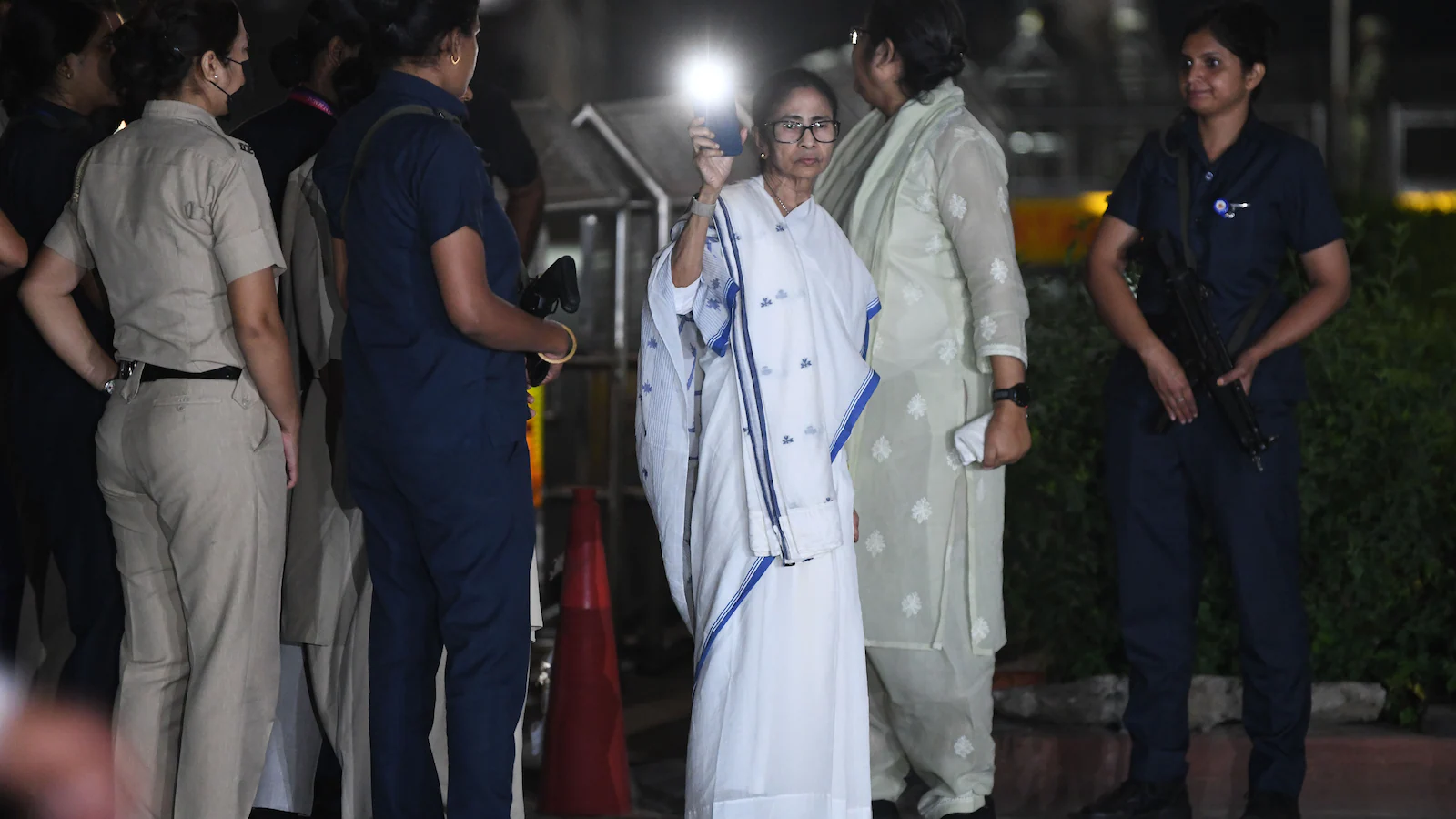
In a significant political maneuver, West Bengal Chief Minister Mamata Banerjee is increasingly shifting her focus away from state-level challenges toward a more central role in national politics. As part of a ten-member INDIA bloc delegation that met President Droupadi Murmu to protest alleged electoral irregularities, the Trinamool Congress (TMC) supremo demonstrated a clear intent to align herself with the national opposition leadership.
Observers note that following the 2026 assembly election setbacks in West Bengal, Banerjee’s political strategy has undergone a profound transformation. With her regional dominance challenged and her party facing internal pressures, the veteran leader appears to be viewing the national stage as her primary arena for survival and influence.
Embracing the INDIA Bloc Strategy
Central to this shift is a newfound diplomatic closeness with the Congress party, particularly with Rahul Gandhi. For years, Banerjee remained a vocal critic of the Congress, demanding that they distance themselves from the Left in Bengal before any cooperation could be discussed. That dynamic has changed. Today, the TMC leader has signaled a willingness to accept Rahul Gandhi’s leadership, including his potential candidacy for the Prime Ministerial post—a concession that would have been unthinkable for her just a few years ago.
This strategic alignment is built upon the opposition’s coordinated effort to challenge the BJP-led government on issues of national significance. By rallying behind controversies like the Special Intensive Revision (SIR) of electoral rolls and the functioning of the Election Commission, Banerjee is attempting to transform her regional grievances into a broader national narrative. She is no longer acting in isolation; by finding common ground with figures like Sharad Pawar, Akhilesh Yadav, and even opening communication channels with CPI(M) leader MA Baby, she is effectively integrating herself into the broader anti-BJP framework.
The Contradictions of the New Mission
Despite this national repositioning, Banerjee faces a fundamental political paradox. In West Bengal, the Congress party continues to position itself as a challenger to both the BJP and the TMC. Local leaders, such as Adhir Ranjan Chowdhury, have even suggested that the only way to resolve the state’s political landscape is for the TMC to merge into the Congress.
For Mamata Banerjee, such a merger would represent an existential crisis, effectively erasing the identity of the party she built from the ground up. She is attempting to navigate a delicate path: utilizing the political weight of the national capital to maintain her relevance while refusing to cede her hard-won autonomy in Kolkata.
A Bid for National Relevance
Analysts suggest that Banerjee’s shift is driven by a cold, pragmatic calculation. At 71, and with an evolving electorate that includes a growing Gen Z constituency, she recognizes that her past regional glory is fading. By positioning herself as a seasoned, aggressive force in Delhi—drawing on her seven terms as an MP and her experience as a three-time Union Minister—she is betting that she can survive the current wave of anti-incumbency by becoming indispensable to the national opposition.
As the 2029 Lok Sabha elections loom, the INDIA bloc seeks to turn specific electoral controversies into a mass movement. Whether this strategy will allow Mamata Banerjee to reclaim her political standing or whether it marks the beginning of the end for the TMC’s independent identity remains the central question of her new Delhi mission. For now, the focus has shifted entirely: the battle for the future of the TMC is no longer being fought in the streets of Kolkata, but in the power corridors of the national capital.
Disclaimer: This content is auto-generated for informational purposes only.
Source: Read Original News