









Redefining the Indo-US Trade Narrative
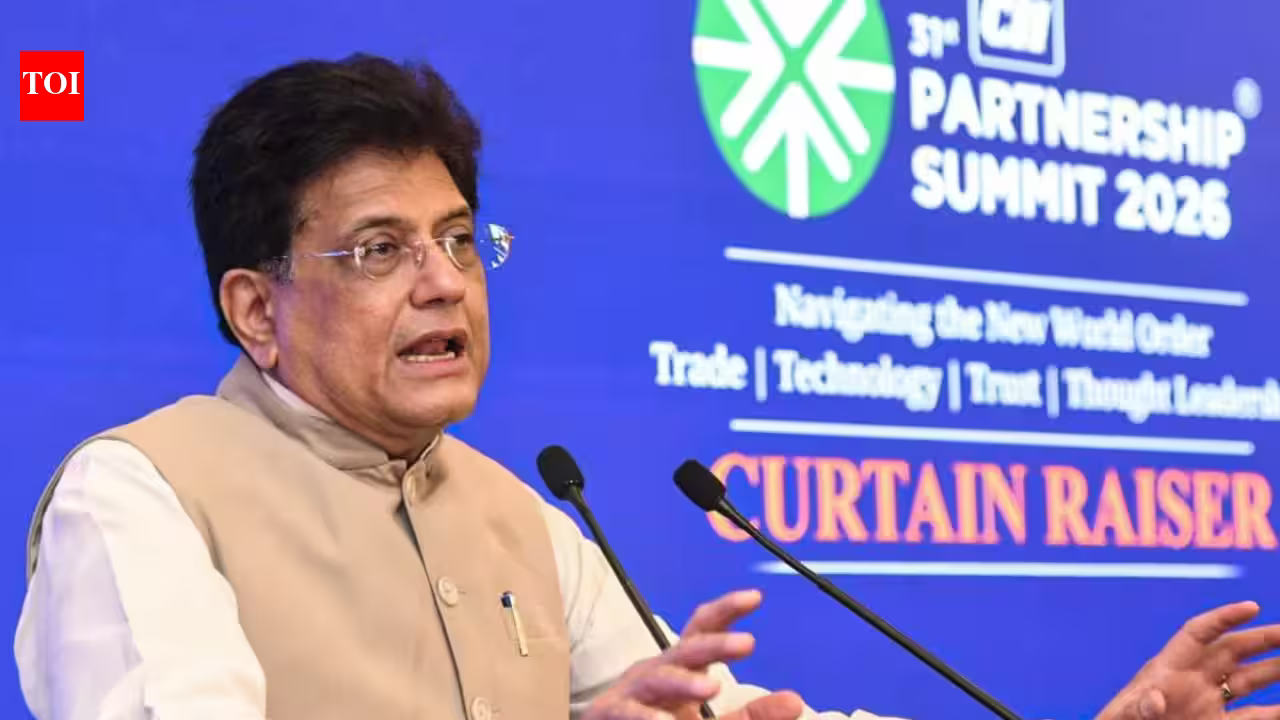
The landscape of international trade relations between India and the United States has entered a phase of complex recalibration. Recent discussions regarding a comprehensive trade deal have underscored a shift in priorities, moving away from quick, superficial agreements toward the meticulous drafting of the fine print. Commerce and Industry Minister Piyush Goyal recently noted that while talks are progressing steadily, the process requires high-level legal precision that transcends automated processes or generalized diplomatic discourse.
For Indian industry stakeholders, this signifies a maturation of the bilateral partnership. Rather than seeking immediate concessions, the Indian government is focused on structural advantages and long-term economic integration. The current impasse, described by some as a plateau, is more accurately characterized as a period of intense negotiation where both nations are grappling with the legal intricacies of comparative advantages previously discussed. This strategic patience reflects India’s growing confidence in its role as a global economic powerhouse, less dependent on immediate pacts and more focused on sustainable growth frameworks.
The Strategic Shift in Human Capital Mobility
One of the most noteworthy dimensions of the current trade dialogue is the evolving stance on the H-1B visa program. Traditionally, Indian policy circles viewed tighter visa restrictions as a direct threat to the outsourcing industry. However, the current administration has pivoted to an analytical perspective that reframes these restrictions as a catalyst for domestic development. By asserting that every H-1B visa not granted by the United States serves as a potential win for India, the government is highlighting a structural transition in the global labor market.
When skilled professionals remain in India, the talent pool within the country deepens, which is a fundamental requirement for the scaling of deep technology firms and Global Capability Centers (GCCs). The logic is straightforward: the brain drain phenomenon of the previous two decades is being countered by an environment that makes it economically and professionally viable for high-skill workers to remain within the Indian ecosystem. This shift is not merely a reactionary policy but a proactive embrace of talent retention as a primary driver of the domestic startup economy.
The Rise of GCCs and Domestic Tech Competitiveness
The proliferation of Global Capability Centers (GCCs) across Indian cities like Bengaluru, Hyderabad, and Pune represents a definitive shift in the value chain. Large multinational corporations are no longer viewing India merely as a cost-arbitrage location for basic support functions. Instead, India has become the primary destination for sophisticated research and development, complex engineering, and high-end analytics. The increasing flow of technology work into India is a testament to the country’s ability to provide high-quality output that meets global standards while maintaining a competitive cost structure.
This trend is bolstered by the maturation of India’s digital infrastructure and the availability of a workforce that is increasingly adept at working on emerging technologies. When American firms look toward India, they are not just looking for labor; they are seeking an innovation partner. The alignment of this corporate strategy with domestic policy priorities—specifically the ambition to foster deep-tech startups—creates a symbiotic relationship where international investment directly fuels the growth of the local technology sector.
Decoding the Comparative Advantage Framework
The core of the current Indo-US trade discussions lies in securing a comparative advantage that provides tangible benefits to Indian enterprises. Minister Goyal’s emphasis on the need for legal expertise to navigate these negotiations highlights the disconnect between standard trade theories and the reality of modern economic diplomacy. The objective is to secure market access and operational terms that recognize India’s unique position as a service provider and an emerging manufacturing hub.
This involves moving beyond the commoditized views of trade that dominated the late 20th century. Today’s negotiation environment is defined by intellectual property, data flows, and the integration of supply chains. By focusing on the fine print, the government is signaling that it is not interested in symbolic agreements that lack depth. Instead, the focus is on creating a legal and commercial architecture that protects Indian interests while facilitating the seamless integration of Indian businesses into global value chains. This level of granular negotiation ensures that when a deal is eventually formalized, it will be robust enough to withstand fluctuations in political climate or economic cycles.
The Future of the Indian Startup Ecosystem
The long-term success of India’s economic strategy hinges on its ability to leverage its human capital to foster a robust internal startup environment. As deep technology sectors such as artificial intelligence, biotechnology, and advanced manufacturing gain traction, the necessity for high-skilled labor becomes acute. The current reality of the H-1B visa environment acts as a natural forcing function for this shift. With fewer outlets for talent to migrate, the domestic ecosystem is compelled to provide challenging and lucrative roles for the brightest minds in the country.
This development is likely to accelerate the maturity of Indian startups. Access to elite talent—who might have otherwise been absorbed into the US technology corridor—is a significant competitive advantage. As these individuals apply their skills to solve complex domestic challenges or innovate for the global market from within Indian borders, the technological density of the nation increases. The ultimate success of this strategy will be measured by the emergence of Indian-born, globally relevant firms that do not rely on international labor arbitrage but on genuine intellectual and technological superiority.
Synthesizing Global Ambitions with Local Realities
The ongoing trade discussions between India and the United States serve as a lens through which to view India’s broader economic trajectory. By decoupling the necessity of visa-heavy trade models from the goal of building a sophisticated domestic economy, policymakers are positioning India to capture a larger slice of the global high-value service market. The emphasis on GCCs and deep-tech growth illustrates a clear understanding that sustainable development requires an integrated approach to labor, capital, and innovation.
As the two nations work through the legal complexities of their trade agreements, the Indian business community should expect a shift toward a more high-value, research-intensive economic model. The current atmosphere of steady, albeit meticulous, progress is indicative of a mature partnership where both sides acknowledge the importance of precision. For India, the path forward involves continuing to refine its domestic ecosystem to ensure that it remains the most attractive destination for talent and investment, irrespective of the fluctuating visa policies in foreign jurisdictions. This transition marks the end of an era defined by labor export and the beginning of an era defined by innovation, engineering, and global integration.
Disclaimer: This content is auto-generated for informational purposes only.
Source: Read Original News