









The Intersection of Microscopy and Artificial Intelligence
The Nikon Small World in Motion competition has long served as a prestigious stage for scientific discovery, highlighting the aesthetic and educational power of microscopic imaging. Since its inception in 2011 as a derivative of the long-standing Small World Photomicrography Competition, the contest has encouraged researchers to document the hidden behaviors of cellular life. However, a recent controversy regarding the disqualification of the original first-place winner has thrust a critical question into the spotlight: where is the line between image enhancement and image fabrication in scientific visualization?
The incident involved a video depicting cilia movement in the airway of a child, which was initially declared the winner. Soon after the announcement, the scientific community raised alarms regarding the integrity of the footage. Expert reviewers noted structural abnormalities that defied known principles of cellular biology, specifically observing features that lacked temporal continuity—an occurrence inconsistent with the fluid dynamics of cilia. Furthermore, forensic analysis reportedly identified artifacts synonymous with generative AI watermarks within the file metadata. While the researcher behind the entry, Ning Xu of Tsinghua University, asserted that artificial intelligence was utilized strictly for contrast enhancement and feature visualization of grayscale data, the investigation conducted by Nikon concluded that the entry violated the fundamental guidelines of the competition.
Revisiting the Standards of Scientific Integrity
The decision to disqualify the entry underscores the rigorous requirements for scientific imaging competitions. In the realm of microscopy, the goal is to capture biological phenomena as they occur in nature. When software is used to “distinguish” or “reconstruct” features, the risk of introducing synthetic data increases exponentially. The scientific method relies on the premise that images are representations of physical reality. If generative models are employed to “fill in the blanks” or smooth out noisy data, the resulting video ceases to be a record of a biological event and becomes a hybrid creation.
For Nikon and the broader scientific imaging community, the impact of this incident is a move toward more stringent submission protocols. Transparency in post-processing has become the new baseline. Researchers are now expected to provide clear documentation of any digital manipulation techniques applied to their footage, including deconvolution, denoising, or image registration. The shift ensures that the distinction between legitimate technological assistance and unauthorized AI synthesis remains clear, preserving the credibility of these awards as a repository of scientific fact rather than creative digital art.
A New Winner and the Beauty of Raw Discovery
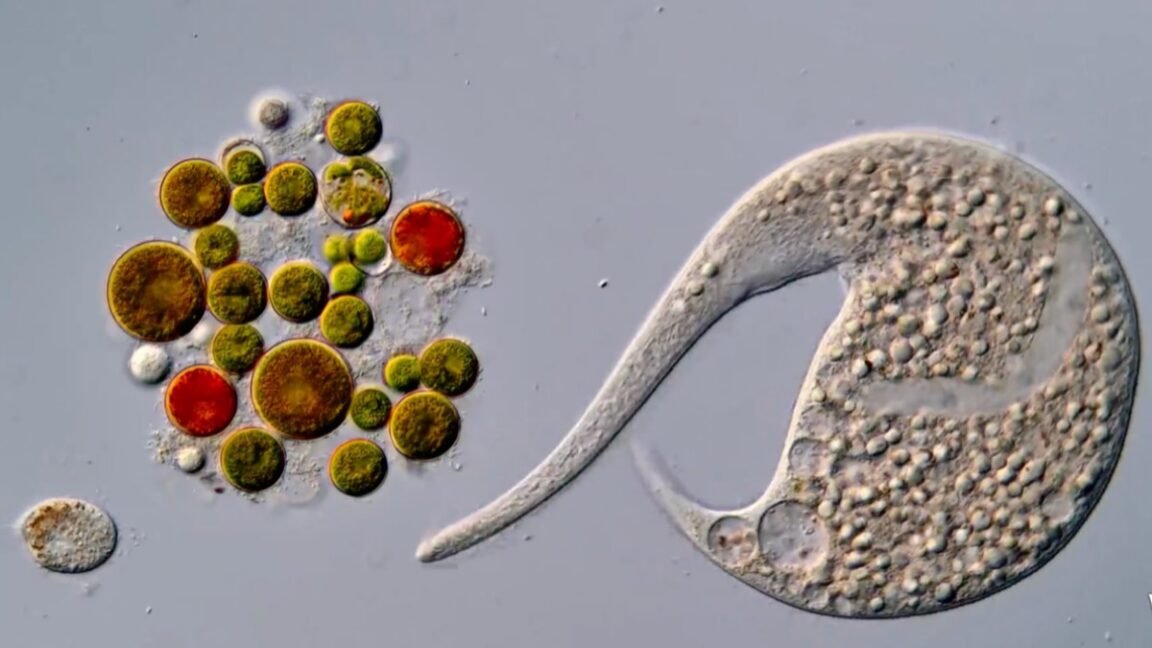
Following the disqualification, the competition organizers elevated the remaining participants, crowning Nguyen Nam Nhat of Vietnam as the new first-place winner. His winning entry, a sophisticated study of a tiny roundworm interacting with a single-celled organism, stands as a testament to the original intent of the competition: capturing the complexity of microscopic life. By observing these organisms in their natural state, the video provides researchers with insights into predation and movement patterns that are difficult to replicate in controlled, highly processed synthetic environments.
The subsequent winners represent the diversity of modern microscopy, showcasing the breadth of the field. Benedikt Pleyer’s second-place video capturing jellyfish larvae within water droplets demonstrates the precision of modern time-lapse technology. Andrew Moore’s third-place work, documenting synchronized cell division, highlights the critical role of intercellular communication in development. These entries serve as a reminder that the most compelling scientific visuals are often those that require the least manipulation, relying instead on high-quality optics and patient observation to reveal the intricacies of the natural world.
Technological Advances in Photovideography
The tools available to researchers today have fundamentally changed the way we perceive the microscopic world. Modern digital cameras, coupled with advanced high-speed and high-resolution light microscopes, allow for the capture of rapid biological events that were previously invisible to the naked eye. Features such as sub-second frame rates and extreme dynamic range allow scientists to record the chaotic motion of mitochondria or the delicate shifts in chloroplast distribution with unprecedented clarity.
However, these technological advances also enable the misuse of post-processing software. As generative tools become more accessible, the barrier between professional scientific observation and digital illustration continues to thin. This necessitates a proactive approach in both academia and industry to ensure that data integrity is maintained. High-resolution video is no longer just a method for dissemination; it is a primary form of data, and its validity must be treated with the same scrutiny as raw spectral data or numerical datasets in a peer-reviewed publication.
The Future of Microscopic Imaging Competitions
As the Nikon Small World in Motion competition moves forward, it faces the challenge of adapting to a technological landscape where AI is a ubiquitous tool. The lessons learned from the recent investigation are likely to influence future submission guidelines, potentially requiring raw data files as proof of origin for winning entries. This shift toward “open data” verification would protect the legitimacy of the competition while still allowing researchers to benefit from legitimate computational tools.
The broader impact on the scientific community is a reinforced commitment to the ethics of visual evidence. By holding winners to a standard of absolute transparency, competitions like Nikon’s maintain their status as authoritative showcases of microscopic life. The goal remains to bridge the gap between technical research and public education, providing a lens through which everyone can witness the fundamental mechanisms of biology. As long as these competitions prioritize the authenticity of the biological process, they will continue to serve as essential tools for both scientific discovery and the public appreciation of the natural world.
Disclaimer: This content is auto-generated for informational purposes only.
Source: Read Original News