








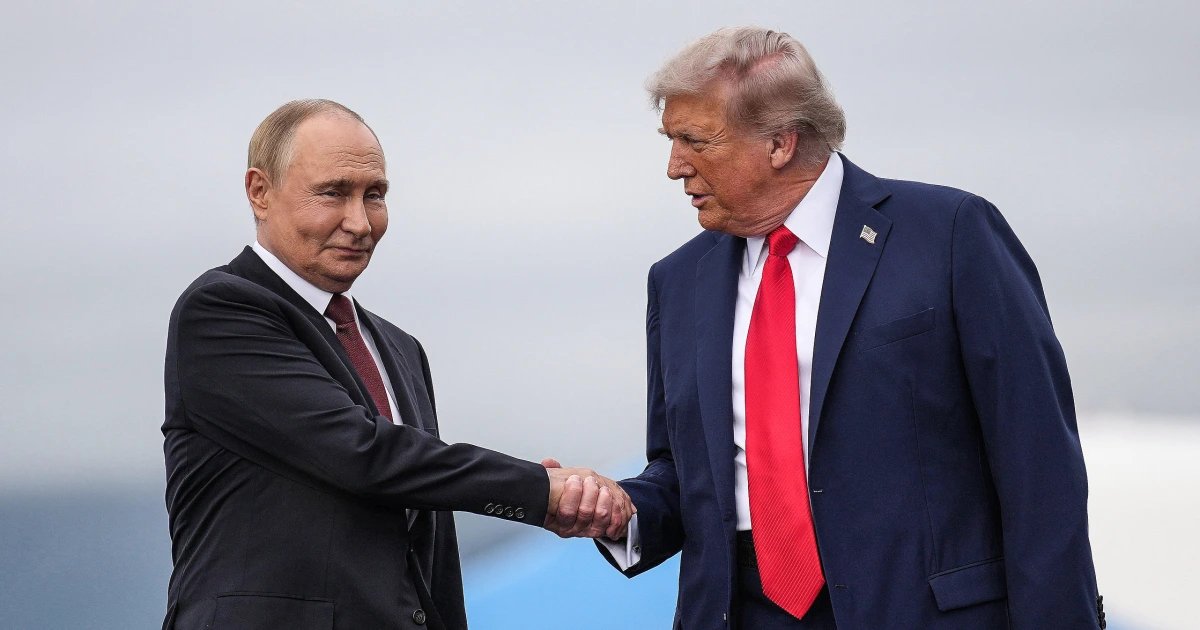
President Donald Trump announced on Friday that Russian President Vladimir Putin has agreed to “immediately” release hundreds of thousands of tons of diesel fuel onto the global market, a move intended to combat surging energy costs that have rattled the international economy.
The announcement, delivered via Truth Social, marks a significant shift in U.S. foreign and energy policy. To facilitate the influx of fuel, the Treasury Department simultaneously confirmed that it is easing wide-ranging sanctions on Russia through April 7. The Office of Foreign Assets Control (OFAC) issued a temporary general license, officially authorizing the sale, delivery, and importation of Russian-origin diesel fuel into the United States and abroad.
The intervention comes as the global economy reels from the compounded effects of the Russia-Ukraine war and the ongoing conflict in Iran, which broke out in February. The price of diesel has soared nearly 70% since the start of the Iran war, leading to record-breaking costs that economists warn are fueling widespread inflation. Diesel’s price trajectory had spiked even further in recent weeks following intensified military engagements and attacks on energy infrastructure.
In July, the Kremlin responded to strikes on its energy assets by imposing a total ban on diesel fuel exports, a restriction that had been set to remain in place through the end of October. Friday’s announcement suggests a breakthrough in diplomatic negotiations, though it raises questions about the long-term effectiveness of the policy.
Earlier this year, the Trump administration attempted a similar easing of sanctions to curb oil prices, a maneuver that ultimately failed to alter the market’s trajectory. That decision drew sharp rebukes from international partners, including German Chancellor Friedrich Merz, who labeled the move “wrong.” Ukrainian President Volodymyr Zelenskyy also voiced strong opposition at the time, arguing that any relaxation of economic pressure would only serve to subsidize Russia’s “war machine.”
Market reactions to Friday’s announcement were mixed. In the immediate aftermath, European-traded diesel futures fell by 4%. However, traders remained cautious, noting that despite the dip, diesel prices are still up 135% since the beginning of the year. The broader energy market showed even less enthusiasm; Brent crude oil prices barely budged, trading at roughly $104 per barrel—a marginal decline of just 0.3%.
As the temporary sanctions waiver takes effect, observers are watching closely to see if this surge in supply will offer meaningful relief to consumers or if the structural issues plaguing the global energy market will keep prices at historic highs. With the license set to expire in the spring, the administration faces immense pressure to prove that this controversial pivot will provide the cooling effect that previous attempts failed to deliver.
Disclaimer: This content is auto-generated for informational purposes only.
Source: Read Original News