







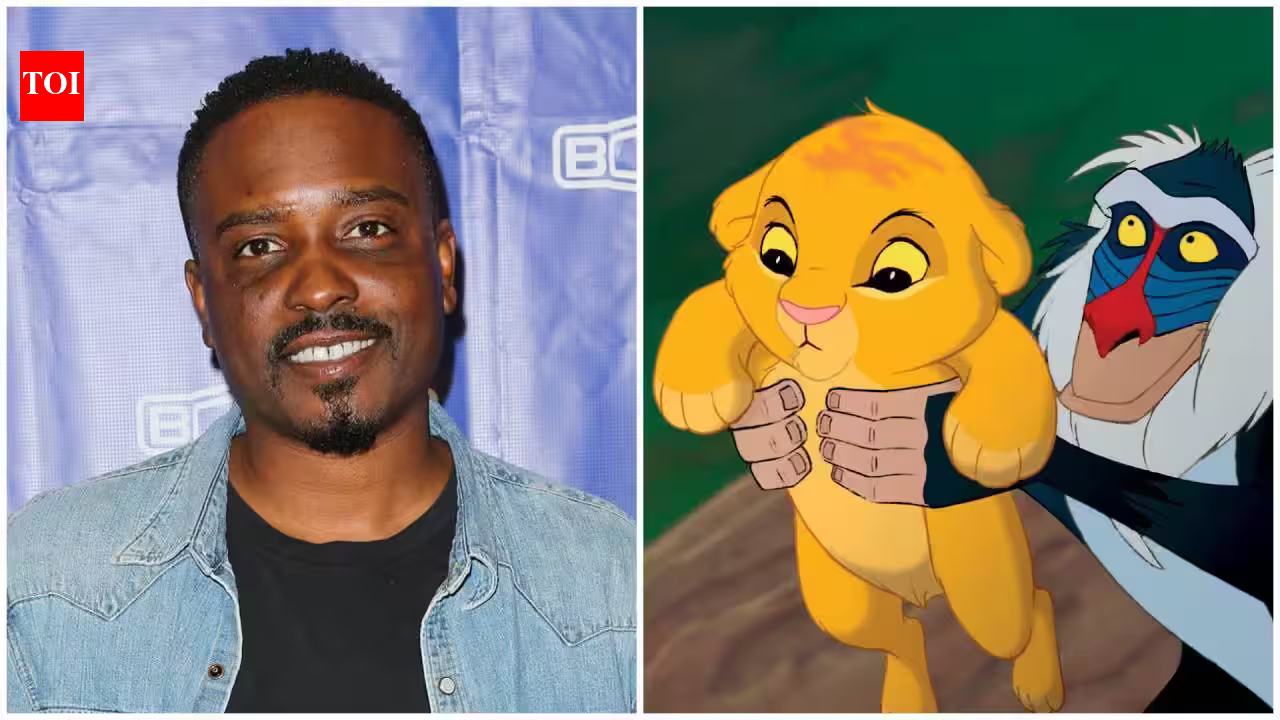
The $2 Million “Mistake”: Why Jason Weaver’s Mother Gambled on Simba’s Future
In the cutthroat world of Hollywood, the “big payday” is often the ultimate goal. Agents salivate over lump-sum contracts, and young stars are frequently encouraged to take the money and run. But 32 years ago, a 13-year-old Jason Weaver was presented with a life-altering choice that would have tempted even the most hardened industry veteran: $2 million in cash, or a smaller upfront payment with the long-term gamble of residuals.
Most would have snatched the $2 million without a second thought. But Weaver’s mother and manager, Marilyn “Kitty” Haywood, was not playing for the short term. By choosing to bet on the longevity of a project that was, at the time, merely an animated experiment, she secured a financial legacy that continues to deposit into her son’s bank account today.
The Strategy Behind the Refusal
To understand why Haywood turned down what was, by 1990s standards, an astronomical sum, one must look at her background. As a seasoned musician who had toured with the legendary Aretha Franklin, Haywood understood the mechanics of the entertainment industry better than most stage parents. She knew that in music and film, the real wealth isn’t found in the initial performance fee; it’s found in the ownership of the work itself.
When Disney approached Weaver to voice young Simba in The Lion King, they were operating with a traditional mindset: pay the talent, own the work, and move on. Haywood saw the trajectory of the studio’s previous hits like Aladdin and Beauty and the Beast and realized that Disney’s model relied on the perpetual re-release of their intellectual property. She didn’t want a flat fee; she wanted a seat at the table. She negotiated for a lower upfront payment—roughly $100,000—and insisted on a royalty structure that would tether her son to the film’s global success for decades to come.
Betting on the House
The industry standard in the early 90s made this move look risky, if not outright foolish. Royalty arrangements for child actors were virtually unheard of, typically reserved for A-list stars who had the leverage to dictate terms. Disney, sensing the massive potential of the Pride Lands, likely wanted a clean slate. Haywood’s refusal to sign the $2 million buyout was essentially a bet that The Lion King would become more than just a summer blockbuster—it would become a permanent pillar of global culture.
She was right. The Lion King grew into a monolithic franchise encompassing merchandise, Broadway adaptations, home media, and eventually, a $1.6 billion live-action remake. As the revenue streams expanded, so did the checks. Weaver has candidly admitted in interviews that the original $2 million offer—while life-changing for a family from Chicago in 1994—would have been a pittance compared to the cumulative total of his royalty payments over the last three decades.
Protecting the Future
Looking back, Weaver acknowledges that his mother’s decision served a dual purpose. It wasn’t just about maximizing profit; it was about financial maturity. A 13-year-old coming into a $2 million windfall in the mid-90s would have faced immense pressure to spend, and very little guidance on how to preserve that wealth.
“I wasn’t thinking about a portfolio, or diversifying,” Weaver confessed. By opting for a steady, long-term drip of income rather than a massive, singular injection of cash, Haywood protected her son from the pitfalls of youthful excess. She essentially forced the wealth to be distributed over his adult life, ensuring that even if his acting career ebbed and flowed, he had a “Simba check” waiting in the wings to provide stability.
The Gift That Keeps on Giving
Today, the recurring nature of these payments has become something of a pop culture legend. Whenever a new generation discovers The Lion King on a streaming platform, or a new piece of merchandise hits the shelves, Weaver’s royalty stream continues to flow. It is a rare example of a “passive income” dream, and one that doesn’t just benefit the actor.
Weaver has noted that the agreement is structured to pass down to his own children. This wasn’t just a decision for the short-term benefit of a young actor; it was a generational move. What began as a voice-acting gig in a recording booth has morphed into a family asset. The irony is not lost on him—he notes that the checks are not just appreciated, they are genuinely helpful, serving as a reminder of his mother’s sharp foresight every time one hits his account.
Beyond the Pride Lands
While The Lion King is the financial gift that keeps on giving, Weaver’s career did not stall in the shadows of the savanna. He successfully transitioned into a multi-hyphenate career, starring in hit sitcoms like Smart Guy and Thea, as well as playing pivotal roles in films like Drumline and ATL. His music career, too, saw significant peaks, including his chart-topping collaboration with Chingy on “One Call Away.”
Despite his professional range, the Lion King story remains the most profound lesson in his repertoire. It stands as a testament to the fact that in show business, the most valuable asset you own is your name and your participation in the project’s long-term success. While most of his peers from the 90s saw their initial paychecks vanish into the ether of taxes and lifestyle inflation, Weaver has a living, breathing connection to his earliest work.
In a town defined by the “next big thing,” Jason Weaver’s story is a refreshing reminder that the biggest career win isn’t always the loudest one. Sometimes, the smartest move you can make is simply knowing the true value of your work—and having the patience to wait for it to pay off. For Weaver, that patience has lasted 32 years and counting, and he isn’t finished collecting just yet.
Disclaimer: This content is auto-generated for informational purposes only.
Source: Read Original News