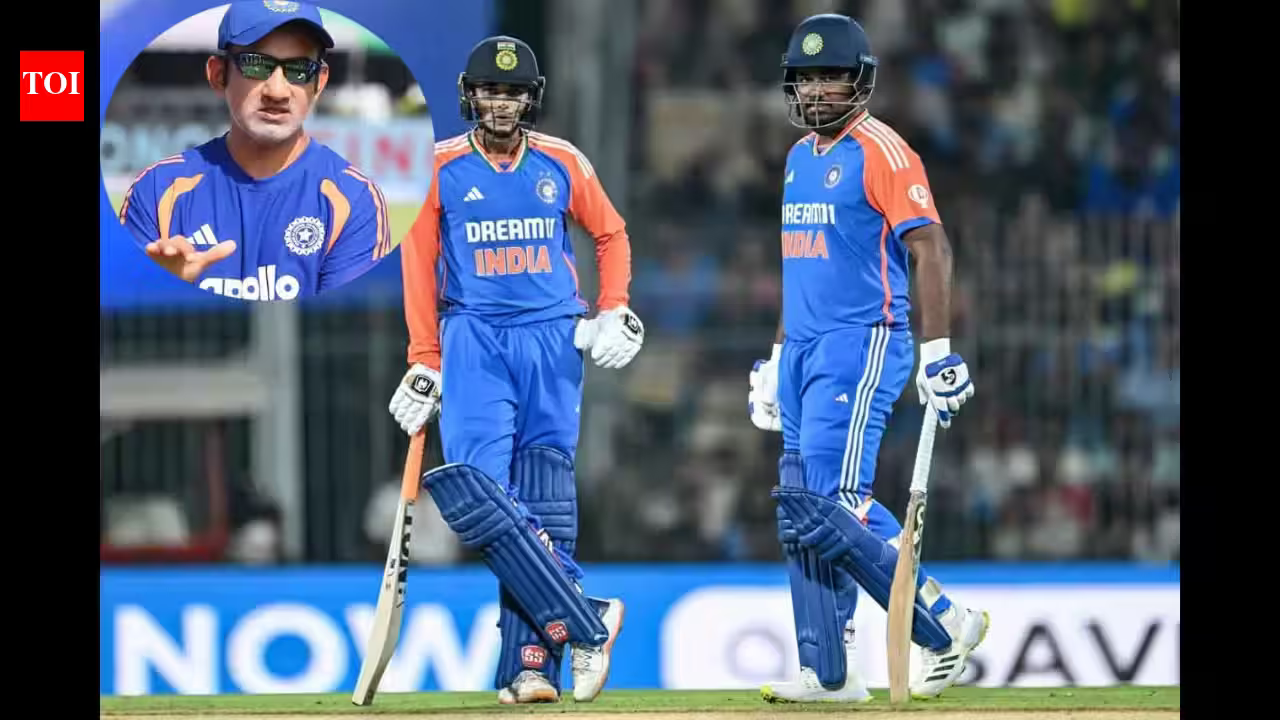







RANCHI — The cricketing landscape was left stunned at the JSCA International Stadium on Sunday as the West Indies pulled off a record-shattering chase, hunting down a formidable 250-run target to snatch a six-wicket victory and level the five-match T20I series at 1-1. While the visitors deserve immense credit for their historic performance, the post-match discourse has shifted firmly toward the tactical lapses of the Indian captaincy, with legendary former skipper Sunil Gavaskar leading the critique.
India, having posted a commanding 249/5, appeared to be in the driver’s seat for much of the first half. However, the bowling unit faltered in the death overs, allowing the Caribbean side to reach 252/4 with four balls to spare. It stands as the highest successful T20I chase against India, a statistic that has invited intense scrutiny regarding the team’s tactical deployment of personnel during the pressure-cooker moments of the game.
## The 18th Over Conundrum: A Missed Opportunity
The focal point of Sunil Gavaskar’s frustration lies in the decision-making process during the pivotal 18th over. With the match delicately poised, the Indian think-tank opted for the spin of Axar Patel, a move that failed to stymie the aggressive momentum established by Shai Hope and Sherfane Rutherford.
Gavaskar, speaking on JioStar, was categorical in his belief that India should have trusted their pace battery to close out the game. “Definitely! I would have gone with either Arshdeep Singh or Mayank Yadav,” the batting icon stated.
While acknowledging that Arshdeep had leaked runs earlier in his spell, Gavaskar emphasized that the psychological advantage held by Mayank Yadav—who had already dismantled the West Indies top order with three clinical wickets—made him the prime candidate for the high-pressure situation.
“Mayank had struck the early blows. Of the wickets that had fallen, he had taken three. His economy rate was about 12 an over, and at that stage, the West Indies needed more than that,” Gavaskar noted. He argued that even if a bowler is struggling with rhythm, the prospect of a wicket can fundamentally shift the temperament of an opponent. “If he had taken a wicket, who knows, you would have got a wicket even if it had not been off a great delivery. Once you get a wicket, suddenly, the opposition is on the back foot. A new batter has to come in.”
## Questionable Middle-Over Tactics
Beyond the final stages of the match, Gavaskar also cast a critical eye on the middle-overs strategy. He specifically highlighted the introduction of all-rounder Shivam Dube in the ninth over as a miscalculation.
At a stage where the West Indies batters were still attempting to settle into the crease, Gavaskar argued that the team needed a high-caliber wicket-taking threat rather than a defensive containment option. He suggested that deploying wrist-spinner Kuldeep Yadav during that period could have strangled the opposition’s momentum before the partnership between Hope and Rutherford had the chance to bloom.
“Giving Shivam Dube the ball in that ninth over was not exactly what was required at that stage,” Gavaskar said. “When the batters were still trying to get their eye in, maybe Kuldeep coming in would have been a better idea.”
## A Partnership That Changed History
The defensive lapses in India’s bowling strategy were ruthlessly exploited by the West Indies duo of Shai Hope and Sherfane Rutherford. The pair orchestrated a 120-run partnership that will be remembered as one of the finest displays of counter-attacking cricket in recent T20 history.
Hope, showcasing a masterful range of shots, finished unbeaten on 102 off just 45 deliveries. His partner, Rutherford, was equally destructive, hammering 84 off 37 balls. Their ability to consistently clear the boundaries effectively neutralized the home crowd’s energy and forced the Indian fielders into a state of visible desperation. By the time the final balls were bowled, the bowlers lacked both the plan and the confidence to stop the onslaught, allowing the visitors to record their historic victory with relative ease.
## The Road to Indore
The defeat in Ranchi serves as a wake-up call for the Men in Blue as they pivot toward the third T20I in Indore. The series, now deadlocked, has highlighted glaring gaps in India’s death-bowling rotation and their ability to pivot tactically when a partnership begins to thrive.
For the Indian team management, the challenge will be to reconcile their aggressive batting approach with a more disciplined and reactive bowling plan. Gavaskar’s critique serves as a stark reminder that in the high-stakes world of international T20 cricket, the difference between a victory and a record-breaking defeat often comes down to the individual decision-makers trusting their best performers in the moments that matter most. As the caravan moves to Indore, the spotlight will be firmly on whether India adjusts its bowling hierarchy or sticks to the rotations that cost them the lead in Ranchi.
Disclaimer: This content is auto-generated for informational purposes only.
Source: Read Original News