






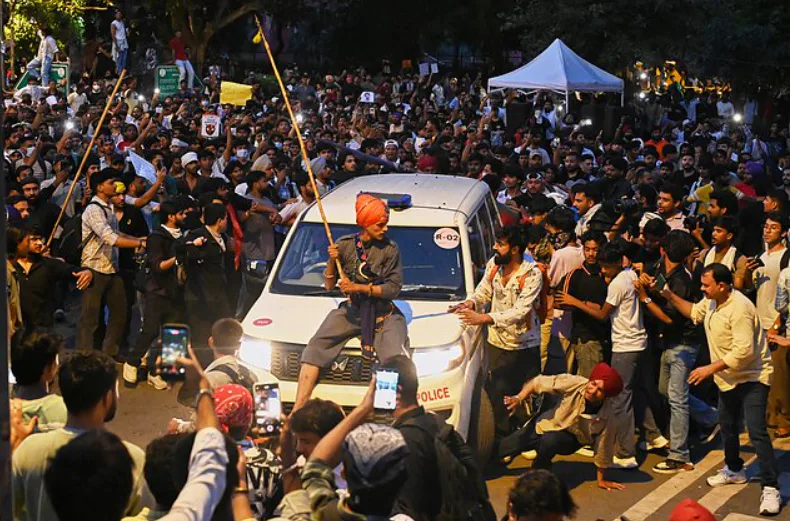
Delhi in Turmoil: Over 200 Detained Amid Protests Against Election Commission
New Delhi was brought to a standstill on Saturday as authorities launched a massive crackdown on demonstrators protesting against the Election Commission of India. The capital saw heavy deployment of security forces, widespread metro station closures, and significant restrictions on mobile internet services, as the government moved to contain mounting public anger over alleged electoral irregularities.
Targeted Arrests and Suppressed Mobilization
The escalation began even before the demonstrations officially commenced. Abhijit Dipke, the prominent leader of the youth organization “Tarakans,” was taken into custody by police the moment his flight landed in the capital. According to reports from the youth group CJP, Dipke and two other senior figures of the movement were intercepted by law enforcement before they could step out of the aircraft, effectively decapitating the leadership of the planned rally.
Throughout the day, police forces were seen patrolling the streets of central New Delhi, detaining more than 200 activists who attempted to gather near key government hubs. To stifle the movement, authorities took the drastic step of shutting down multiple metro stations, disrupting train services into the city, and forcing several local businesses to suspend operations for safety concerns.
Political Backlash and Allegations of Authoritarianism
The heavy-handed response from the administration has drawn sharp condemnation from opposition parties, who have characterized the police actions as an assault on democratic rights. The Aam Aadmi Party (AAP) was particularly vocal in its criticism, with a party spokesperson declaring that the mass detentions are evidence of a slide into “full dictatorship” under the current leadership of Prime Minister Narendra Modi.
“The suppression of peaceful dissent is a dangerous precedent,” the AAP spokesperson stated, noting that the systemic blocking of activists and the disruption of public infrastructure underscore a shrinking space for political discourse in the country.
The Root of the Unrest: Voter Roll Controversies
The wave of protests stems from a long-simmering dispute over the integrity of India’s electoral process. The friction intensified following an investigative report by The Indian Express, which alleged that a massive revision of voter rolls resulted in the unexplained removal of millions of names. Activists and opposition figures argue that these discrepancies were calculated to benefit the ruling party, potentially disenfranchising significant sections of the electorate.
While the Election Commission of India has formally denied all allegations of malpractice, insisting that their processes are transparent and impartial, the public remains unconvinced. The movement has been building for several weeks, with sustained demonstrations occurring in major urban centers like Mumbai and New Delhi.
Protesters continue to demand a high-level inquiry into the voter roll discrepancies and the immediate resignation of the Election Commission’s leadership. As the government continues its hardline approach to containing the unrest, the standoff shows no signs of resolution, leaving the capital in a state of high tension as questions regarding the transparency of India’s democratic foundations continue to dominate the national conversation.
Disclaimer: This content is auto-generated for informational purposes only.
Source: Read Original News