






IAF Chief Questions US Over F-35 Access During Tarang Shakti Exercise
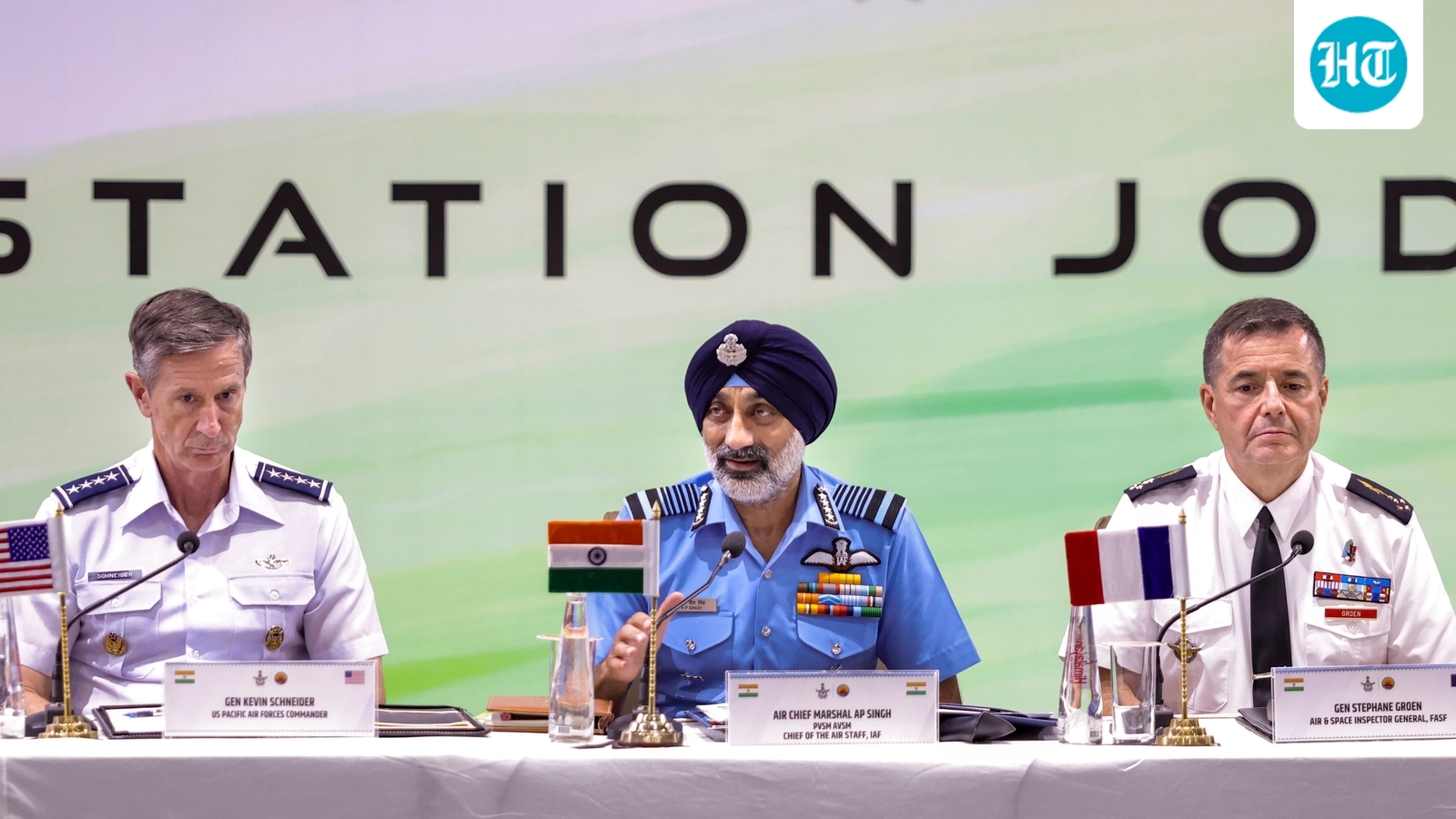
In a rare moment of candid diplomacy, outgoing Indian Air Force (IAF) Chief Air Chief Marshal AP Singh publicly nudged his American counterparts regarding the restrictive policies surrounding the F-35 stealth fighter. Speaking at the culmination of the two-week multinational exercise ‘Tarang Shakti’ in Jodhpur on October 12, the Air Chief utilized a mix of humor and pointed observation to highlight the paradox between Washington’s desire for deeper defense partnerships and its tight operational security protocols.
Seated alongside General Kevin B. Schneider, commander of the US Pacific Air Forces (PACAF), Air Chief Marshal Singh noted the irony of discussions surrounding potential future acquisitions. “I was telling the PACAF commander that your people don’t let us come anywhere close to the F-35, and you talk about selling it to us. There is no offer from the US for us to buy the F-35,” Singh remarked, addressing the lack of formal proposals despite previous announcements from US leadership about paving the way for such a sale.
A Study in Strategic Caution
The two-week engagement in Jodhpur served as the Indian debut for the USAF’s F-35 platform, with six aircraft deployed for the drills. However, the presence of the advanced fighters was tempered by rigid security perimeters. Throughout the exercise, Indian personnel were kept at a considerable distance from the aircraft, a move that prompted the IAF chief to rib the US delegation multiple times during his briefing.
When questioned about the seemingly contradictory stance of partnering on the battlefield while walling off sensitive technology, General Schneider underscored the complexities of US export and security regulations. He explained that access is governed by stringent, centralized programme-level security classification guides rather than individual commander discretion. “There are programme-level security classification guides that determine what we’re able to share, when we share it, as well as how we protect it,” Schneider stated, adding that while policies may evolve over time, the protection of proprietary systems remains paramount.
Balancing Diplomacy and National Interests
Following the event, Air Chief Marshal Singh—who is set to retire on October 31—sought to contextualize his comments as “friendly banter” within an evolving security partnership. He likened the situation to an “extended family” where boundaries regarding shared sensitive assets are expected to exist. He clarified that his remarks were intended as a playful nudge toward deeper operational integration rather than a formal grievance.
The dialogue occurs at a pivotal juncture for India’s air power modernization. While foreign entities, including Russia with its Su-57, have courted India to bolster its fifth-generation capabilities, New Delhi remains firmly committed to its self-reliance mandate.
Focus on Indigenous Capability
Beyond the spotlight on foreign hardware, the event reiterated India’s strategic pivot toward domestic innovation. Defence Minister Rajnath Singh, also present at the closing ceremony, emphasized that the Advanced Medium Combat Aircraft (AMCA) program remains the country’s primary vehicle for mastering stealth technology.
As India balances its relationships with global military powers, the ‘Tarang Shakti’ exercise has highlighted both the potential and the inherent limitations of strategic interoperability. For the IAF, the path forward appears increasingly defined by the transition from reliance on foreign platforms to the development of indigenous systems like the AMCA, ensuring that the next generation of Indian air superiority is built from within.
Disclaimer: This content is auto-generated for informational purposes only.
Source: Read Original News