








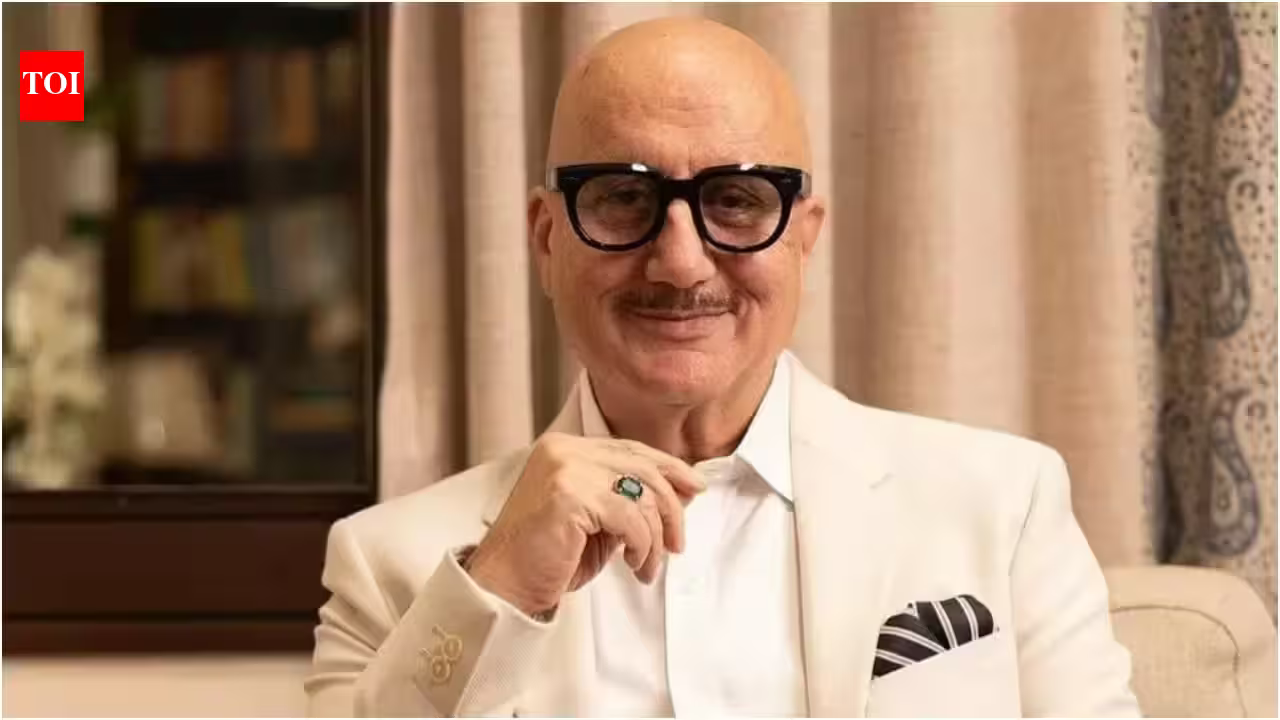
In the high-stakes, high-pressure world of Indian cinema, the term “superstar” is often synonymous with a gilded cage. For most, the trappings of fame—the security details, the gated communities, the curated public image—serve as both a pedestal and a prison. But for veteran actor Anupam Kher, the secret to longevity isn’t in how well you wear the crown, but in how quickly you take it off.
Sitting down for a candid conversation during a break from rehearsals for his latest stage venture, Jaane Pehchaane Anjaane, Kher offers a perspective that feels jarringly grounded for a man who has graced the screen for over four decades. “I do not carry the burden of Anupam Kher on my shoulders,” he says, with the casual matter-of-factness of someone discussing the weather. For Kher, the myth of the “lonely star” is a self-inflicted wound, one he has spent his career aggressively avoiding.
The Myth of the Ivory Tower
The concept of the “star” as a distant, untouchable figure is something Kher actively rejects. As he navigates a grueling 45-day tour across the United States and Canada, he isn’t hiding behind the tinted windows of a luxury SUV or sequestered in five-star suites far from the reach of the public.
“Anupam Kher as a star will start looking very lonely if he does not sit in this lobby where there is a bread and butter shop, a sushi bar, or travelling by buses,” he explains. He argues that the horror stories of celebrity isolation—the so-called “loneliness epidemic” that plagues the upper echelons of fame—are almost always the product of an ivory tower existence. By staying embedded in the rhythm of everyday life, Kher manages to bypass the malaise that claims so many of his peers. He isn’t interested in being a monument; he’s interested in being a witness to the human condition.
Bridging the Distance with Theatre
Kher’s return to the stage with Jaane Pehchaane Anjaane serves as a poignant reminder of his roots. While his filmography is a sprawling, multi-generational tapestry, his heart has always remained tethered to the intimacy of the proscenium. This particular production, a musical exploration of modern relationships, marks a new chapter for the veteran, and the reception from the Indian diaspora in North America has been nothing short of rapturous.
“People outside India are emotionally attached to the country,” Kher notes. “When they see a story, especially being done by a popular actor on stage, they feel closer to the person and closer to the subject.” It’s a symbiotic relationship; the audience isn’t just there to see a celebrity, they are there to see a reflection of their own stories played out in real-time.
Four Decades of Connecting the Dots
Kher’s commitment to theatre is not a “side project.” From his iconic collaborations with wife Kirron Kher in Saalgirah to the deeply personal Kuch Bhi Ho Sakta Hai, he has consistently treated the stage as his most honest workshop. Over forty years, he has mastered the classics—Shakespeare and Brecht included—but he has found his true calling in the mundane, the relatable, and the deeply human.
“I like to do plays which are easily identifiable by the audience,” he says. “A father in the audience can watch and sort of say, ‘Oh, this is my story.'” That ability to distill a lifetime of experience into a single, relatable human interaction is what keeps Kher relevant. He isn’t selling a lifestyle; he’s selling a mirror.
The Loneliness Epidemic in the Digital Age
The narrative of Jaane Pehchaane Anjaane, directed by Gajendra Ahire, feels particularly urgent in our current cultural climate. The play weaves together the disparate lives of a widow, a widower, a young paying guest, and a woman navigating a mid-life separation. It is, at its core, a clinical look at the loneliness epidemic.
Kher is strikingly articulate about what the digital age has cost us. “The revolution in mobile phones, the internet, and everything has led to a loneliness epidemic,” he observes. “We have reached a stage where smiles and hugs are replaced by emojis.” He frames this shift not with the cynicism of a critic, but with the sadness of a participant. He recognizes that while technology has bridged the physical distance between people, it has simultaneously eroded the texture of our daily interactions. In his eyes, the stage has become one of the last remaining sanctuaries where the “human touch” can be recovered.
A Reunion of Titans
The production also carries an extra layer of emotional weight, marking the return of Swaroop Sampat to the stage after a two-decade hiatus. Seeing two powerhouse actors like Kher and Sampat reunite under Ahire’s direction has been a major draw for audiences abroad, facilitated by Houston-based Star Promotion Inc.
For the audiences attending these shows, the play represents more than just a night out. It is a communal experience—a temporary break from the isolation of modern living. As Kher continues his tour, he does so without the heavy cloak of his own stardom, choosing instead to be just another person in a lobby, watching the world go by, and feeding his craft with the observations of a life lived outside the tower. In a world increasingly dominated by curated filters and digital distance, Anupam Kher remains an analog soul in a high-definition world, proving that the best way to handle the weight of fame is to simply put it down.
Disclaimer: This content is auto-generated for informational purposes only.
Source: Read Original News