







Iran’s Foreign Minister highlights contamination risks following US-Israeli strikes on the Bushehr nuclear power plant, affecting Gulf neighbours.
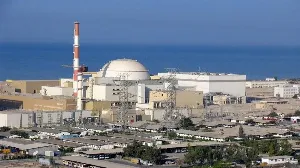
On 4 April 2026, combined U.S. and Israeli military strikes targeted an area close to Iran’s Bushehr nuclear power facility. This incident has raised international concerns regarding the potential risks of nuclear contamination in the region.
Iranian Foreign Minister Abbas Araghchi emphasised that any fallout from continued attacks on the Bushehr site would pose the greatest threat to countries in the Gulf Cooperation Council (GCC), rather than to Iran itself. Araghchi stated, “the threat will end life in GCC capitals, not Tehran”. This warning is particularly alarming given that Bushehr is geographically closer to nations such as Kuwait, Bahrain, and Qatar.
The airstrike near the nuclear plant resulted in the death of a security guard and prompted a swift reaction from Russia, which has a role in the construction and operation of the facility. Russian authorities announced the evacuation of 198 workers as a precautionary measure following the incident.
Rafael Grossi, the head of the International Atomic Energy Agency (IAEA), expressed his profound concern regarding the recent attack. He noted that this strike marked the fourth such incident in recent weeks, although he confirmed that no increase in radiation levels had been detected at the plant. Grossi stated unequivocally that “Nuclear power plant sites or nearby areas must never be attacked.”
Simultaneously, the situation within Tehran remains volatile, with continued military strikes reported. Witnesses have observed heavy smoke blanketing the city, exacerbating the already unstable conditions. One local photographer described the dire situation, saying, “Things are really hard right now. You can’t even plan six hours ahead.”
Uncertainty looms as military operations intensify in the region. The strikes correlate with ongoing efforts to locate a missing U.S. airman whose aircraft went down over Iran. Additionally, Iran’s Revolutionary Guards revealed they had executed a drone strike on a commercial vessel in Bahrain, which they allege is connected to Israel.
The conflict, which has escalated since the assassination of Iranian Supreme Leader Ali Khamenei during previous strikes over a month ago, has led to significant instability in the area, affecting both regional and global economic conditions. As tensions rise, the international community is watching closely for potential escalations and the impact on nuclear safety in the region.