








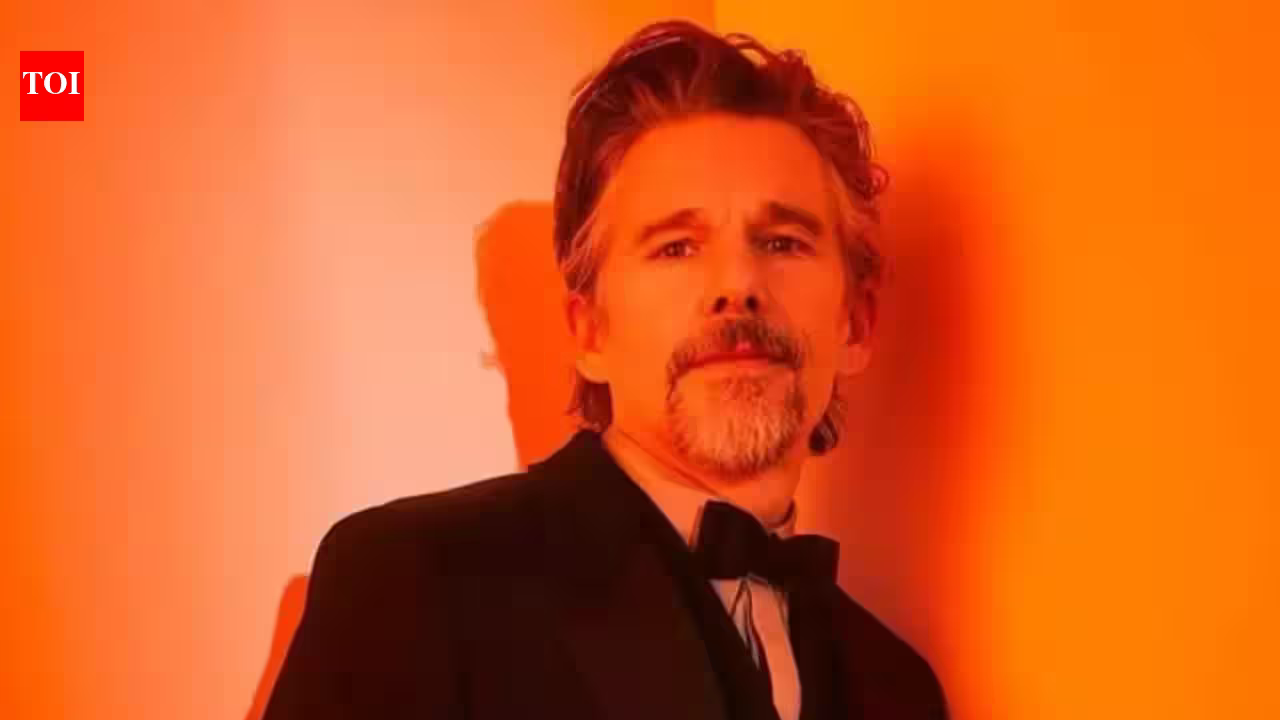
The magic of Dead Poets Society wasn’t just on the screen—it was, by all accounts, an immersive, life-altering experience for the young actors who walked those hallowed, austere hallways of Welton Academy. For a teenage Ethan Hawke, the 1989 masterpiece felt less like a job and more like a profound awakening. But as the saying goes, what goes up must come down, and for Hawke, the descent from that artistic high proved to be a decade-long exercise in disillusionment.
In a recent, candid conversation while moderating a book talk for Kyle MacLachlan’s new memoir, Fictional Selves, Hawke pulled back the curtain on the harsh reality of Hollywood that awaited him once the dust settled on the Peter Weir-directed classic. For a young actor who had been baptized in the collaborative, soulful environment of a prestige drama, the industry at large turned out to be a stark, uninspiring mirror image of his debut experience.
The Illusion of the Ideal Set
When you are eighteen years old and cast in a film that defines a generation, you are prone to assuming that lightning strikes every time you step on a soundstage. Hawke, playing the introverted Todd Anderson, found himself surrounded by peers and a director in Peter Weir who valued the sanctity of the work above all else. The atmosphere was one of intellectual rigor, poetic exploration, and deep camaraderie—a rare alchemy that can make a film resonate for decades.
“I thought Dead Poets Society was what making a movie was like,” Hawke admitted to the audience, reflecting on the profound naivety that followed his breakout role. It is a sentiment that cuts to the heart of the “starving artist” syndrome; when you start at the summit, the only way is down. Hawke spent the next ten years moving from project to project, waiting for that same communal magic to reappear, only to be met with the sterile, assembly-line mechanics of a business that viewed art as a product to be packaged rather than a story to be told.
A Rude Awakening to the “Cold and Crass”
The realization didn’t happen overnight, but it was absolute. As Hawke continued his career, the luster of the industry began to fade, replaced by a grittier, colder reality. He candidly described his post-1989 professional life as a trial by fire, noting, “A lot of people are really cold and crass and mean, and they really want to sell something, and they want to manipulate you, and they don’t respect actors.”
This isn’t just the gripe of a jaded celebrity; it is a critique of a systemic culture that often places commerce over craft. For an actor who cut his teeth under the guidance of Weir—a filmmaker known for his patience and atmospheric storytelling—the demands of commercial, studio-driven filmmaking must have felt like a betrayal. The struggle was not just in finding good scripts; it was in navigating environments where the very tools of his trade—vulnerability, intuition, and collaboration—were treated as obstacles to efficiency.
The Robin Williams Factor: Chemistry That Couldn’t Be Replicated
It is impossible to discuss the atmosphere of Dead Poets Society without mentioning the man at its epicenter: the late, legendary Robin Williams. Playing the unorthodox John Keating, Williams wasn’t just a lead actor; he was a mentor, a force of nature, and a grounding wire for the young cast. His performance was characterized by a genuine, infectious desire to uplift those around him.
Hawke’s ten-year dry spell in terms of “great experiences” is likely a direct result of being spoiled by Williams’ presence. How does one transition from working with a comedic genius who genuinely cared about the craft to working on sets where actors are treated as interchangeable parts in a studio machine? That gap in experience highlights just how special the Welton Academy days were. It was a period where, for a fleeting moment, the industry seemed to care as much about the spirit of the work as the box office receipts.
Learning to Navigate the Industry
The decade-long slump Hawke describes was ultimately a period of maturation. Surviving ten years of “cold and crass” environments forced him to recalibrate his expectations and, eventually, to take control of his own trajectory. It is perhaps no coincidence that Hawke eventually gravitated toward the work of Richard Linklater—a filmmaker who prioritizes the kind of long-term, collaborative, and deeply personal storytelling that Hawke first fell in love with in 1989.
By weathering the storm of those early years, Hawke learned a fundamental lesson that many in Hollywood never grasp: the film set is not a democracy, nor is it always a sanctuary for art. It is a workspace. By recognizing the toxicity of the industry early on, he was able to protect his own artistic integrity, eventually becoming a director and writer himself.
Legacy and the Lessons of Welton Academy
The story of Hawke’s frustration serves as a powerful reminder of the ephemeral nature of “magic” in entertainment. Dead Poets Society remains a beloved pillar of cinema not just because of its plot—the story of a teacher inspiring students to “seize the day” at a suffocating boarding school—but because that spirit was actually present on the set.
As Hawke reflected on Kyle MacLachlan’s memoir, it was clear that he wasn’t just complaining about bad producers or lackluster directors. He was lamenting the loss of an ideal. Yet, in that loss, he found his own voice. He didn’t let the “cold and crass” environment break his love for acting; instead, he used it as a compass to find his way back to projects that mattered.
Today, Ethan Hawke is recognized as one of our most authentic and dedicated actors. His journey shows that while your first experience might set the bar, it’s the grit you develop in the years that follow—the years spent navigating the cold and the crass—that truly defines the longevity of a career. For the students of Welton Academy, the lesson was Carpe Diem. For Hawke, he spent ten years learning how to do that even when the world told him it wasn’t profitable.
Disclaimer: This content is auto-generated for informational purposes only.
Source: Read Original News