







Port Said Boosts Green Canopy as Egypt Launches Fifth Phase of “100 Million Trees” Initiative
PORT SAID – The Egyptian government’s ambitious campaign to transform the nation’s landscape into a more sustainable and climate-resilient environment has reached a new milestone. Dr. Manal Awad, Minister of Local Development and Environment, officially announced the commencement of the fifth phase of the presidential initiative “Planting 100 Million Trees” in Port Said Governorate, marking a significant step in the ongoing national effort to combat climate change.
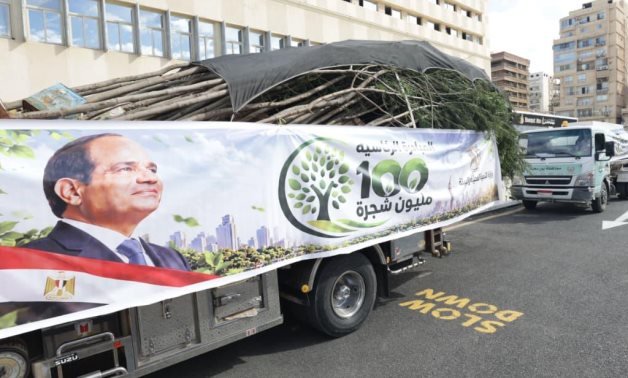
The latest operation in Port Said saw the delivery of 1,000 saplings, featuring ornamental varieties such as poinciana and jacaranda. These species were specifically selected not only for their aesthetic appeal but also for their ability to thrive in the local climate, providing shade and improving air quality along major thoroughfares, city streets, and school perimeters.
During the launch, Minister Awad emphasized that this phase is part of a broader, sustained strategy to expand Egypt’s vegetation cover. “The importance of this initiative lies not just in the planting process, but in the long-term survival and maintenance of these trees,” the Minister noted. She underscored that local authorities must prioritize the care of these new green spaces to ensure they fulfill their role in enhancing public health and urban well-being.
To professionalize the management of these assets, Dr. Awad directed local executive bodies to implement a comprehensive coding and identification system for every newly planted tree. This digital tracking measure is designed to streamline monitoring, simplify maintenance schedules, and provide data-driven insights into the success rates of various species across different urban environments.
The “100 Million Trees” initiative, which was inaugurated by President Abdel Fattah El Sisi in 2022 to coincide with Egypt’s hosting of the COP27 climate summit, serves as a cornerstone of the nation’s climate adaptation strategy. The project is designed to span seven years, concluding in the 2028/2029 fiscal year. By increasing the per capita share of green space, the government aims to significantly reduce greenhouse gas emissions, combat urban heat islands, and improve overall air quality for millions of citizens.
The scale of the project is immense. With an initial government allocation of LE 3 billion, the plan designates 9,900 specific sites across all governorates, covering a total area of approximately 6,600 feddans. The implementation is a collaborative effort between the Ministry of Local Development and the Ministry of Housing and New Urban Communities, supported by a specialized environment unit. According to figures provided by the State Information Services (SIS), the initiative has already seen approximately 12.8 million trees planted between 2022 and early 2026.
Under the current division of labor, the Ministry of Local Development and Environment is tasked with overseeing the planting of 80 million trees, while the Ministry of Housing focuses on adding 7 million trees, with the remainder distributed through local administrative units.
As the fifth phase expands across the country, the focus is shifting from simply meeting numerical targets to ensuring the sustainability of the newly established ecosystems. By integrating systemic maintenance, community engagement, and careful species selection, Egyptian authorities are working to ensure that this decade-long endeavor creates a lasting, positive footprint on the nation’s environment, fostering a greener, healthier future for the urban population.
Disclaimer: This content is auto-generated for informational purposes only.
Source: Read Original News