








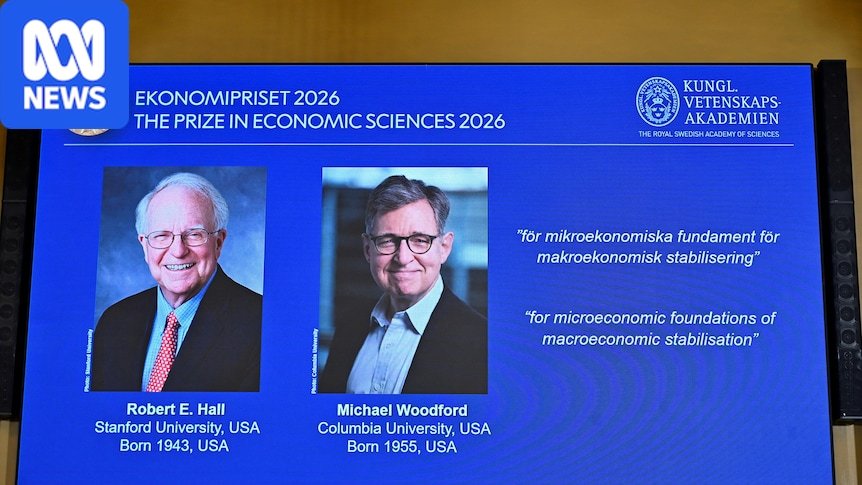
American economists Robert E. Hall and Michael Woodford have been awarded this year’s Nobel Memorial Prize in Economic Sciences for their pioneering work on the micro-economic foundations of macro-economic stabilisation. The announcement was made by the Royal Swedish Academy of Sciences in Stockholm, honoring the pair for providing the theoretical architecture that currently guides global central banking and government economic policy.
Robert E. Hall, 83, of Stanford University, and 71-year-old Michael Woodford, of Columbia University, were recognized for creating models that allow policymakers to better anticipate and mitigate economic shocks, such as energy crises or volatile fluctuations in household consumption.
“The laureates’ work has provided us with a stable theoretical foundation for the models that are now used by central banks and governments around the world,” said John Hassler, chair of the Committee for the Prize in Economic Sciences. “With them, we are better equipped to deal with shocks in the economy.”
Speaking to reporters via telephone shortly after the announcement, Professor Woodford expressed his gratitude, describing the award as “a tremendous honour.” Reflecting on the real-world application of their theories, Woodford highlighted the 2008 financial crisis as a critical turning point. He noted that when traditional monetary policy tools—such as lowering interest rates to zero—proved inadequate, the strategies he and Hall helped develop provided a path forward.
One such approach, widely adopted by central banks globally, involves providing more explicit guidance on the future trajectory of interest rates to manage market expectations. “I think it did contribute to better stabilisation,” Woodford said. “It didn’t magically solve the problem, but I think it was an important contribution.”
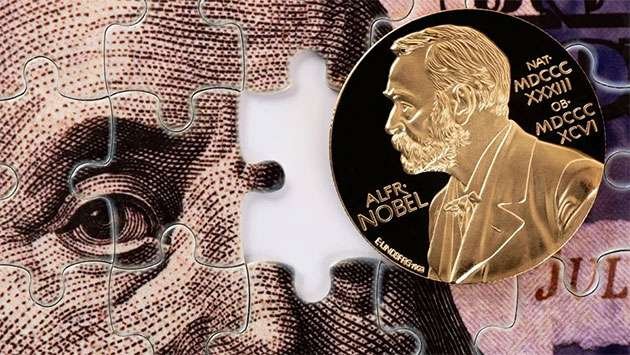
The economics prize, formally known as the Bank of Sweden Prize in Economic Sciences in Memory of Alfred Nobel, was established in 1968. While “Nobel purists” often distinguish it from the original five prizes founded by the Swedish chemist, it remains a prestigious fixture of the Nobel season and is presented annually on December 10, the anniversary of Nobel’s death. The laureates will share the prize money of 12 million Swedish kronor (approximately $1.8 million USD), receiving roughly $900,000 each.
The selection of Hall and Woodford continues the trend of US-based researchers dominating the economics category. This year’s announcement follows a 2023 prize that honored research into business innovation and its role in promoting economic growth.
As the academic community digests the selection, the focus remains on how these theoretical frameworks will continue to serve as the bedrock for navigating an increasingly complex global financial landscape. Following the announcements for medicine, physics, chemistry, literature, and peace last week, this prize concludes the 2026 Nobel cycle.
Disclaimer: This content is auto-generated for informational purposes only.
Source: Read Original News