








The Enduring Commitment to Physical Media
In a rapidly shifting gaming landscape defined by the increasing dominance of digital storefronts and cloud-based services, Nintendo has formally solidified its commitment to physical media. Bill van Zyll, Vice President and General Manager for Nintendo in Latin America, recently provided clarity on the company’s hardware strategy during an interview. While competitors are aggressively transitioning toward discless ecosystems, Nintendo maintains a strategy rooted in consumer choice, ensuring that physical cartridges remain a core component of the hardware experience for the foreseeable future.
This stance serves as a counterpoint to the broader industry trend of phasing out tangible game copies. As modern console manufacturers look to reduce hardware costs and increase profit margins by eliminating physical media drives, Nintendo continues to provide hardware—such as its latest generation consoles—that supports both cartridge slots and digital storefront access. By prioritizing an agnostic approach, the company ensures that users are not locked into a single method of software acquisition, allowing the market demand to dictate the longevity of physical formats.
Understanding the Hybrid Cartridge Ecosystem
The Nintendo strategy centers on a hardware architecture that accommodates both digital downloads via the eShop and physical game cartridges. This hybrid model provides a distinct utility for users. Unlike traditional optical discs, which require large capacity reads and often necessitate significant “day-one” patches to be playable, Nintendo cartridges act as high-speed read-only memory modules. These modules facilitate near-instant game loading, which is a critical feature for portable hardware where power efficiency and speed are paramount.
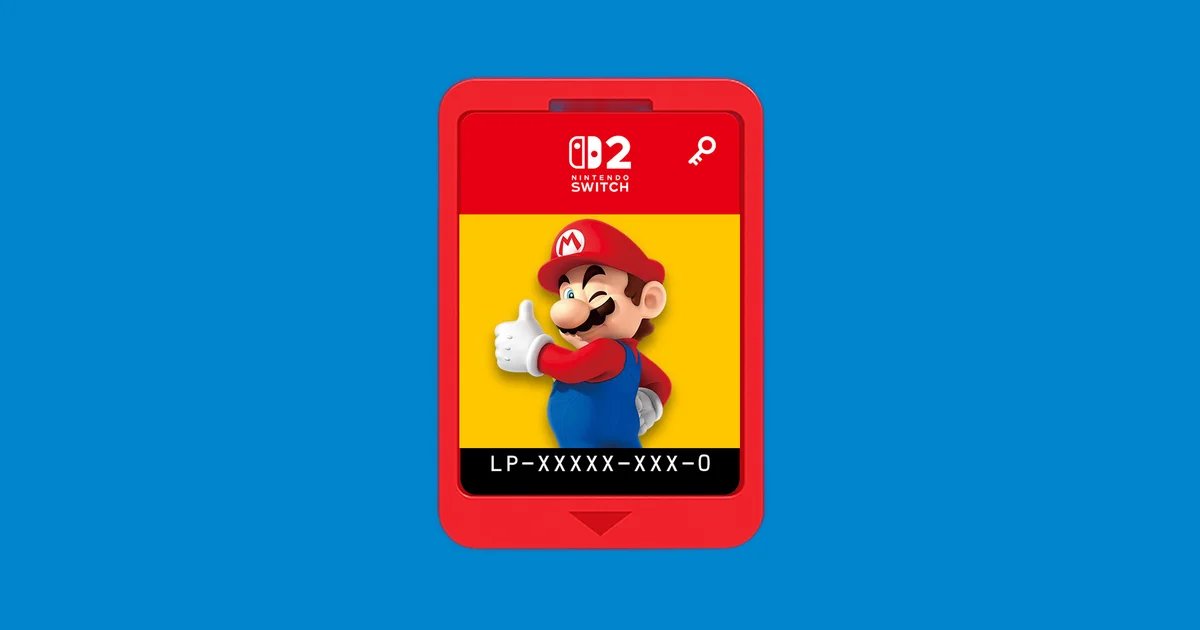
However, the definition of “physical media” has become nuanced in recent years. Nintendo utilizes two primary distribution methods: the standard cartridge containing the full game data and the controversial “game key-card.” These key-cards function essentially as hardware-based authentication tokens. When inserted, they verify ownership and grant the console permission to execute digital data already present on the storage drive or downloaded from the server. This transition toward key-cards has surfaced technical concerns regarding storage management, as users frequently find that even with a physical purchase, significant portions of the game data must be downloaded to the device’s internal storage, consuming valuable space.
Technical Implications and Consumer Feedback
The prevalence of key-cards versus full-data cartridges has sparked technical discourse within the gaming community. From a development standpoint, key-cards provide a solution for large-scale AAA titles that exceed the current storage capacity of standard proprietary cartridges. By utilizing a key-card, developers can bypass the physical size constraints of the media while still offering a tangible item that collectors and retail customers desire.
Despite the convenience of this distribution method, there is substantial push-back regarding the transparency of these products. Consumers often discover after purchase that the physical cartridge they bought does not contain the complete game experience. This creates a reliance on digital servers that may, in the future, go offline. As Nintendo continues to refine this process, they must balance the technical requirement for larger game files with the consumer expectation that a physical purchase equates to a complete, standalone product that can be played without an active internet connection.
Comparative Analysis of Industry Strategies
Nintendo’s current positioning stands in stark contrast to the trajectory projected by other major players in the hardware sector. For instance, recent industry reports have suggested that certain competitors are planning for an entirely discless hardware ecosystem by 2028. Such a move would remove the ability for players to trade, resell, or share physical media, effectively granting the platform holder full control over the lifecycle of the software.
This shift toward digital-only ecosystems has drawn criticism from developers and industry figures who argue that physical media acts as a safeguard against digital rights management (DRM) overreach. If a console is strictly digital, the user’s access to their library is permanently tethered to the longevity of the manufacturer’s server infrastructure. If the manufacturer removes a game from their store or shutters their operations, the consumer loses access. Nintendo’s decision to maintain physical support provides a necessary check on this trend, preserving a market where users retain possession of their game software independent of corporate server status.
Future Outlook and Strategic Resilience
While Nintendo has pledged to keep physical media as a component of its strategy, the long-term sustainability of this approach depends heavily on manufacturing costs and market adoption rates. The logistics of distributing cartridges—which involve specialized factories, supply chains, and plastic waste—are increasingly expensive compared to the near-zero cost of digital distribution. However, Nintendo’s success is built upon a strong retail presence and a demographic that heavily values the collectability of physical items.
For now, Nintendo serves as the final major bastion for physical console media. By refusing to follow the industry’s push toward complete digitization, the company protects the interests of a diverse player base. Whether this persists will depend on the scalability of their storage solutions and their ability to address the functional differences between data-rich cartridges and authentication-only key-cards. As the industry evolves, Nintendo’s commitment to an agnostic platform strategy offers a stable, consumer-focused alternative to the restrictive models being explored by other hardware manufacturers.
Disclaimer: This content is auto-generated for informational purposes only.
Source: Read Original News